Quranic Answer
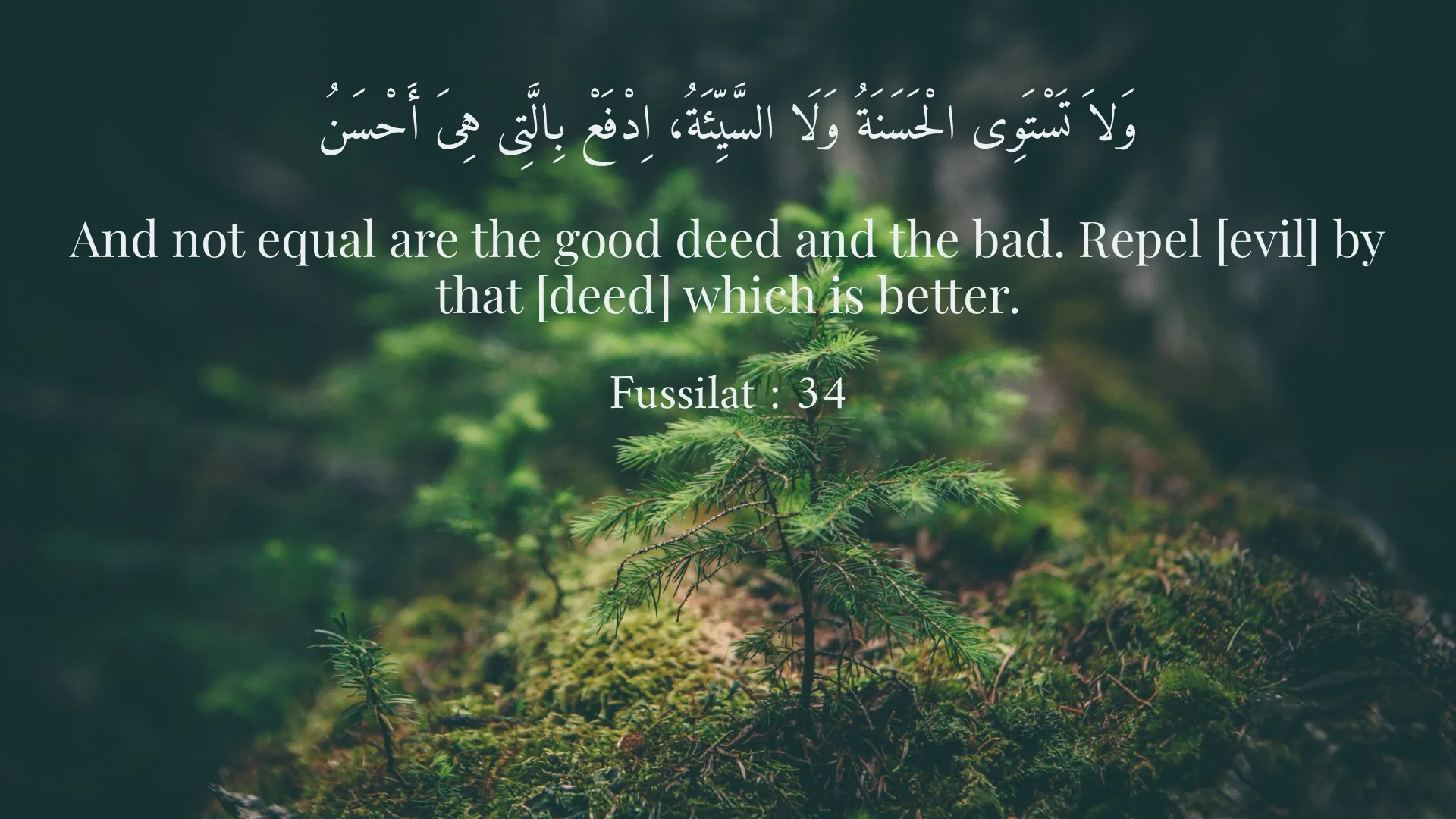
The Holy Quran, regarded as the divine scripture of Islam, presents profound teachings that guide the behavior and interactions of its followers. Among these teachings, there exists a significant emphasis on the importance of speaking kindly and using good words. This fundamental principle serves not only as a directive for personal conduct but also as a framework for nurturing social relationships and fostering a harmonious community. The Quranic verses articulate these values clearly, establishing kindness in speech as an essential character trait for believers. One of the pivotal verses that encapsulates this idea is found in Surah Fussilat, verse 34. It states, 'And not equal are the good deed and the bad. Repel [evil] by that [deed] which is better.' This verse emphasizes the notion that encounters with negativity or ill behavior should be met with a response that is positive and constructive. The directive to 'repel [evil] by that [deed] which is better' serves as a call to action for individuals to embody kindness in their communication. By opting for gentle responses instead of retaliatory words, a person not only adheres to the moral code of Islam but also enhances their own character. Furthermore, Surah Al-Baqarah, verse 83, reinforces the importance of kindness by commanding believers to be good to one another. This directive includes speaking in a loving and considerate manner, fostering an environment where individuals uplift and support one another. The specific mention of good speech is vital, as it acknowledges the power words hold in shaping relationships, either positively or negatively. When individuals commit to employing beautiful, good, and pleasant words in their daily interactions, they pave the way for establishing robust connections while simultaneously mitigating animosities and misunderstandings. The focus on gentle speech resonates deeply within Islamic teachings, serving as a guide for how believers should conduct themselves in both personal and social spheres. The Quran repeatedly underscores the value of gentleness, which is not merely an option, but rather a necessity for fostering a community underpinned by trust, respect, and mutual understanding. Indeed, the Quran places a premium on the ethical dimensions of speech, prompting adherents to consider the impact of their words carefully. In addition to the Quranic verses, the teachings and sayings of Prophet Muhammad (peace be upon him) underscore the importance of good speech. Various hadiths, sayings attributed to the Prophet, elucidate his guidance on interactions with others, emphasizing that the use of kind words is a reflection of a person's faith. As the Prophet stated, 'A good word is a gift from God.' This profound observation highlights not only the divine reward associated with kind speech but also the inherent value it brings to the community. By acknowledging the power of words as divine gifts, believers are encouraged to be generous in their speech, cultivating an atmosphere where kindness and good manners prevail. Living by these principles has far-reaching implications. Practicing good speech involves deliberate effort and conscious choices in daily interactions. This practice extends beyond mere politeness; it develops a habit of empathy and compassion that can transform relationships. For instance, when faced with a disagreement or conflict, choosing to respond with kindness rather than anger or hostility can lead to resolution and understanding. This approach fosters a climate of low conflict where individuals feel valued and respected, reducing the likelihood of disputes escalating into more significant issues. Moreover, the essence of good speech is not restricted to verbal communication only; it encompasses written forms of communication as well. In a world where digital interactions dominate, the same principles apply. Kindness should resonate through emails, texts, and social media posts, reminding individuals of the influence their words carry, regardless of the medium. As many messages can be easily misconstrued in text format, it becomes even more imperative for individuals to articulate their thoughts thoughtfully and considerately. Embracing this holistic view of communication enables individuals to maintain a level of integrity and care in their exchanges, promoting a culture where kindness is reciprocated. As the teachings of the Quran and the Prophet Muhammad (peace be upon him) reinforce, kind and ethical language is essential in constructing a nurturing and cohesive community. Generosity in speech plays a pivotal role in not only individual character-building but also in promoting collective values such as compassion, understanding, and resilience against challenges faced as a community. When speaking with kindness becomes a personal principle, it creates a ripple effect that encourages others to follow suit, ultimately nurturing a supportive and empathetic society. In conclusion, the emphasis on speaking kindly and using good words in the Quran and the teachings of the Prophet Muhammad (peace be upon him) is a reminder of the profound impact communication has on relationships and societal well-being. As believers, it is vital to integrate these teachings into everyday life, striving to interact with one another using thoughtful and ethical language. By doing so, we not only align ourselves with divine directives but also take active steps toward fostering an environment rich in understanding, love, and community spirit. Indeed, the practice of good speech serves as an invaluable tool for building healthier relationships and nurturing a loving community, benefiting all involved in the process.
Related Verses
وَلاَ تَسْتَوِی الْحَسَنَةُ وَلَا السَّيِّئَةُ، اِدْفَعْ بِالَّتِی هِیَ أَحْسَنُ
And not equal are the good deed and the bad. Repel [evil] by that [deed] which is better.
Fussilat : 34
وَإِذْ أَخَذْنَا مِيثَاقَ بَنِی إِسْرَائِيلَ لَا تَعْبُدُونَ إِلَّا اللَّهَ وَبِالْوَالِدَيْنِ إِحْسَانًا
And [mention] when We took the covenant from the Children of Israel, [enjoining upon them], 'Do not worship except Allah; and to parents, do good.'
Al-Baqarah : 83
Short Story
One day in a neighborhood, a man named Hassan decided to influence his neighbors with kind words and affection. Every day he greeted them and inquired about their well-being. His demeanor brought peace and friendship to the community, and everyone began to live with greater happiness. Hassan realized that good speech and kind interactions could change the world.