Quranic Answer
In the Holy Quran, God places great emphasis on slanderous speech and has urged believers to avoid such actions. Slander is defined as speech that unjustly harms the reputation of another individual. This can include gossip, spreading rumors, or speaking ill of someone behind their back. The act of slander is not only harmful to the target but also to the community at large, as it fosters an environment of distrust and negativity. In recent times, we have witnessed the destructive power of slanderous speech in various facets of society, including politics, social media, and personal relationships. For instance, in Surah Al-Hujurat, verse 12, it states: 'O you who have believed, avoid much [negative] assumption. Indeed, some assumption is sin. And do not spy or backbite each other. Would one of you like to eat the flesh of his brother while he is dead? You would detest it.' This verse is particularly poignant as it establishes a strong moral analogy. The Quran likens backbiting—speaking ill of someone else—to the abhorrent act of consuming the flesh of a deceased brother, which evokes a visceral reaction. Most people would find the idea of cannibalism to be repulsive and abhorrent; therefore, the Quran uses this shocking metaphor to illustrate just how repugnant slanderous speech is in the eyes of God. Moreover, the Quran's emphasis on kind and respectful interaction with others underlines the importance of integrity and morality in communication. Believers are urged to engage compassionately, maintaining their dignity and that of others, while dismissing unfounded rumors and malicious speech. This directive encourages believers to think critically about the information they receive and share and to seek understanding and clarity before passing judgment on others. To control slanderous speech effectively, one must first seek assistance from God, as faith plays a pivotal role in moral development. Regular prayer and reflection not only deepen one's connection with the Divine but also cultivate a sense of moral accountability. When individuals consciously strive to be better versions of themselves through divine guidance, they are more likely to reflect on their words and the potential harm they can cause. Self-discipline is another crucial component in reigning in harmful speech. This includes recognizing the impulse to gossip or speak negatively and consciously choosing not to do so. Developing mindfulness in speech can take practice, and it can be helpful for believers to engage in self-reflection, asking themselves questions like: 'Will my words uplift or harm others? Am I certain of the truth of what I am about to say?' Such introspection not only fosters a more supportive and positive environment but also nurtures personal growth. One of the most effective methods for promoting moral character and gaining control over behavior is through recitation of the Quran. Reciting the Quran regularly allows individuals to keep the teachings of God at the forefront of their minds, providing a foundational guide for how to treat others. The verses act as a constant reminder of the need for kindness and love in the way we communicate. Additionally, contemplating the meanings of the verses during recitation leads to deeper understanding and application of moral tenets in daily life. Incorporating the remembrance of God, or ‘Dhikr’, in daily routines can also help keep speech clean. Regularly engaging in practices that remind individuals of their faith—such as prayer, reading scripture, and reflecting on God's attributes—serves to reinforce a commitment to virtuous behavior. When the act of remembering God becomes a habitual part of life, it sets the tone for all interactions, allowing one to approach conversations with grace and respect. Drawing examples from the lives of the Prophets and the righteous can also serve as a significant source of inspiration. The lives of Prophets such as Muhammad (peace be upon him) are filled with instances demonstrating the power of kind words and good character. Their patience in the face of negativity, their ability to forgive, and their consistent practice of positive communication can serve as models for contemporary believers. Stories of their kindness in relationships, their wisdom in dealing with conflict, and their ability to uplift others can illustrate that true strength lies in the ability to speak well and intentions rooted in love and compassion. It is also essential to recognize how the culture of slander is perpetuated by modern-day media, particularly through social media platforms that amplify gossip and negative speech. In an age where information spreads rapidly, it becomes even more crucial for believers to be conscientious of what they consume, share, and create. The digital landscape, while offering tremendous opportunities for connection and dialogue, can also be a breeding ground for slander if individuals do not exercise restraint and mindfulness. Ultimately, the Quran's clear directive against slanderous speech represents a powerful moral framework for living. It emphasizes the importance of compassion, understanding, and respect for others while urging believers to cultivate their inner qualities. By fostering an environment that promotes kind communication, believers not only fulfill their religious obligations but also contribute to a more harmonious society. In conclusion, controlling slanderous speech requires a multifaceted approach involving divine guidance, personal responsibility, and communal support. Through God’s help, self-discipline, and learning from righteous role models, it is possible to establish a culture of kindness and positivity in all spoken interactions.
Related Verses
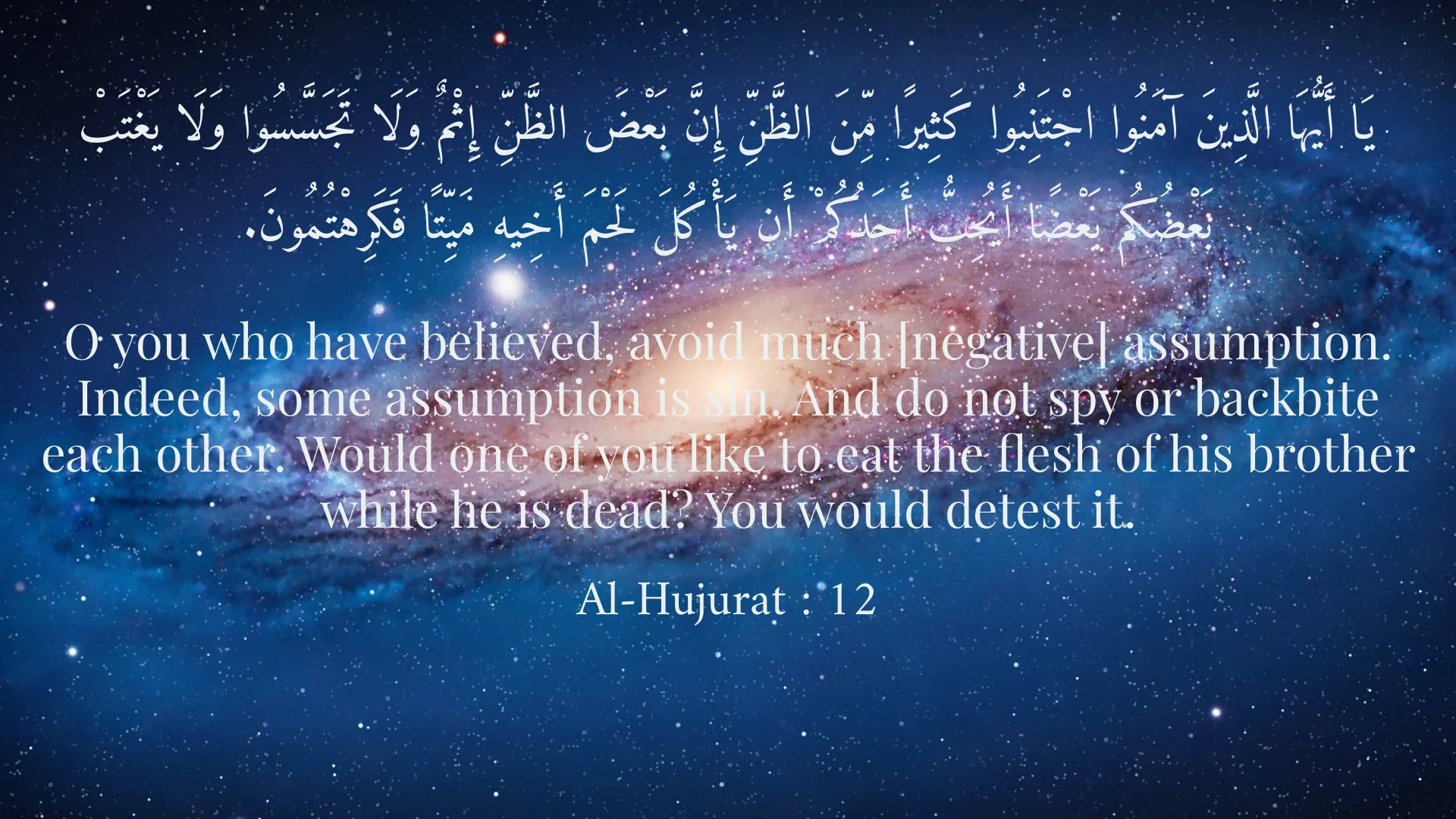
يَا أَيُّهَا الَّذِينَ آمَنُوا اجْتَنِبُوا كَثِيرًا مِّنَ الظَّنِّ إِنَّ بَعْضَ الظَّنِّ إِثْمٌ وَلَا تَجَسَّسُوا وَلَا يَغْتَبْ بَعْضُكُم بَعْضًا أَيُحِبُّ أَحَدُكُمْ أَن يَأْكُلَ لَحْمَ أَخِيهِ مَيِّتًا فَكَرِهْتُمُونَ.
O you who have believed, avoid much [negative] assumption. Indeed, some assumption is sin. And do not spy or backbite each other. Would one of you like to eat the flesh of his brother while he is dead? You would detest it.
Al-Hujurat : 12
وَلَا تَمْشِ فِي الْأَرْضِ مَرَحًا إِنَّكَ لَن تَخْرِقَ الْأَرْضَ وَلَن تَبْلُغَ الْجِبَالَ طُولًا.
And do not walk upon the earth exultantly. Indeed, you will never tear the earth [apart], and you will never be as tall as the mountains.
Al-Isra : 37
Short Story
One day, Zayd was sitting with his friends and they started talking about others. Suddenly, he remembered the verses of the Quran and realized that this was wrong. He said to his friends, 'Let’s talk about the kindness of others and keep our speech free from slander.' All his friends agreed and decided that from then on, they would only refer to the good traits. From that day forward, their gatherings were filled with smiles and positivity.