Quranic Answer
The pursuit of contentment and satisfaction is a fundamental aspect of human existence. Throughout history, individuals have sought various means to attain a sense of fulfillment in their lives. The Holy Quran, revered as a divine source of guidance, provides profound insights into the concepts of contentment and patience, which play pivotal roles in fostering a robust sense of satisfaction within individuals. In our contemporary society, where materialism often takes center stage, the teachings of the Quran serve as a beacon of hope, urging us to reflect on our inner state and the relationships we cultivate with others. One of the most powerful verses addressing the notion of contentment is found in Surah At-Talaq, verse 7, which states: "Let a man of wealth spend from his wealth, and he whose provision is restricted, let him spend of what Allah has given him. Allah does not burden a soul beyond that it can bear." This verse emphasizes the importance of understanding one's circumstances and embracing a mindset of gratitude. Here, we see a profound message: individuals are encouraged to be content with what they have, regardless of their material wealth or limitations. The concept of being mindful of our provisions and recognizing the blessings we possess leads to a deeper appreciation for our lives. Moreover, the verse articulates a crucial teaching of the Quran - that Allah, in His infinite wisdom, does not impose burdens that are beyond our capacity to handle. This assurance provides comfort and encourages individuals to cultivate a sense of patience in the face of challenges. In moments of difficulty, when we may feel overwhelmed, recalling this teaching can foster resilience and help us navigate our tribulations with grace. Another essential verse that encapsulates the virtue of patience is found in Surah Al-An'am, verse 41: "Indeed, whoever is forced by severe hunger, not intending to commit sin, then indeed, Allah is Forgiving and Merciful." This verse reinforces the notion that life can present us with various trials, and it is natural to experience hardship. However, the key lies in how we respond to these circumstances. The Quran reassures believers that even in the face of significant challenges, including hunger and deprivation, there is a pathway to forgiveness and mercy provided by Allah. This idea encourages individuals to practice patience and acceptance, recognizing that even the most difficult situations can yield a sense of satisfaction when approached with the right mindset. Contentment is not solely about personal acceptance; it also extends to our interactions with others. The Quran highlights the importance of maintaining human relationships and exhibiting love towards others as vital components of enhancing our overall sense of satisfaction. Engaging in acts of kindness and performing good deeds contribute not only to the well-being of others but also enrich our own lives. The Quran frequently encourages believers to do good, reflecting the belief that through serving others, we can cultivate a deeper sense of fulfillment in our own lives. In a world characterized by competition and individualism, the Quran's emphasis on community, mutual support, and empathy serves as a reminder that our contentment is interconnected with the well-being of those around us. The act of giving, whether through charitable contributions, offering assistance, or simply sharing words of kindness, fosters not only a loving atmosphere but also lays the groundwork for personal satisfaction. In exploring the themes of contentment, patience, and interpersonal relationships, the Quran encourages a holistic approach to satisfaction. It calls upon individuals to be grateful for their blessings, to practice patience in adversity, and to prioritize the welfare of others. Each of these elements contributes to creating a life rich in meaning and fulfillment. As individuals strive to embody these principles, they cultivate an inner peace that transcends the fleeting nature of material possessions. In summary, the teachings of the Quran provide a roadmap for navigating the complexities of modern life, urging believers to find contentment within their circumstances and to nurture the bonds they share with others. By fostering a mindset of gratitude, practicing patience in adversity, and engaging in acts of kindness, individuals can achieve a profound sense of satisfaction. As we reflect on the wisdom contained within these sacred verses, we are reminded that true contentment lies not in what we possess, but in how we perceive our lives and interact with the world around us.
Related Verses
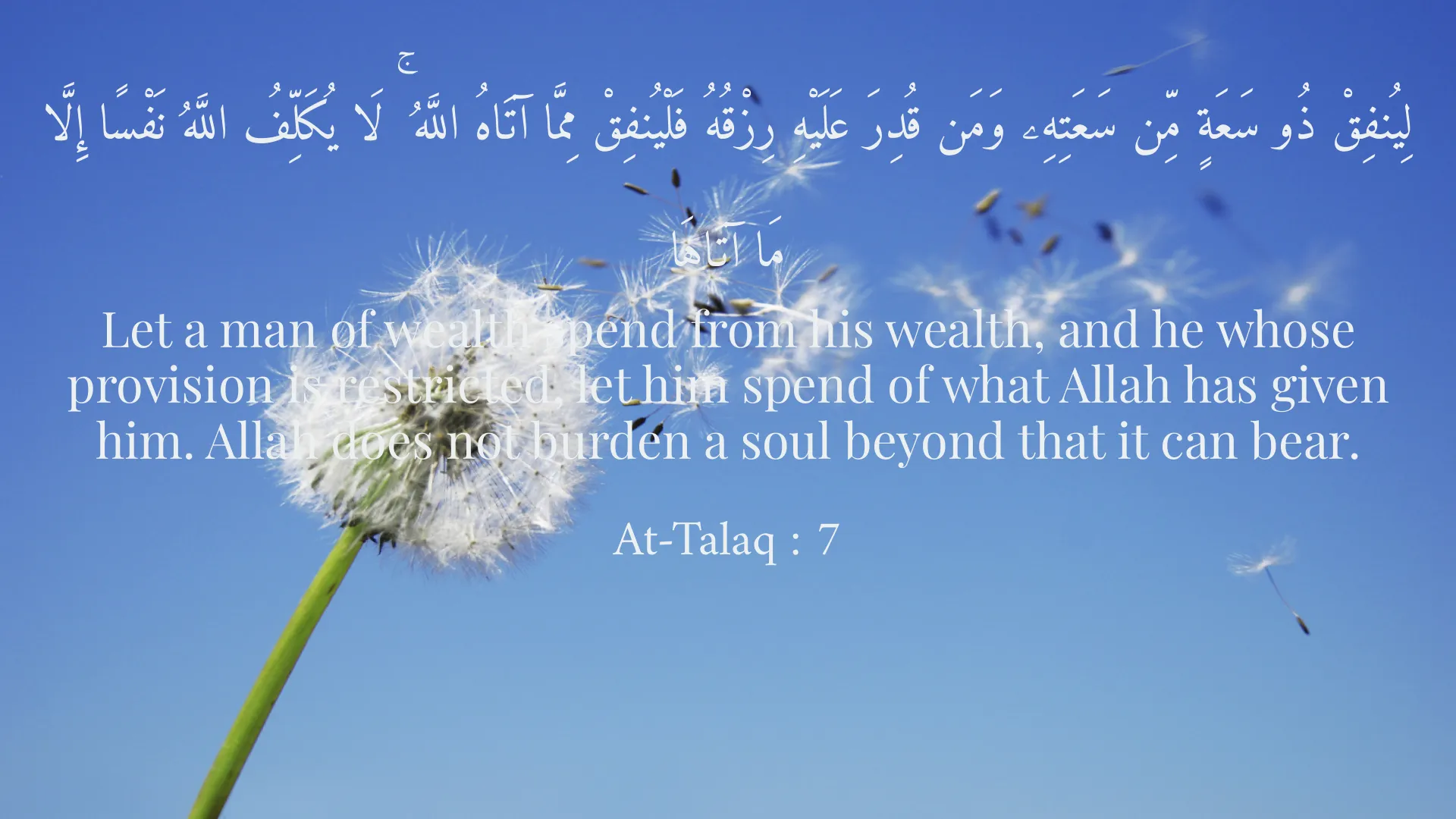
لِيُنفِقْ ذُو سَعَةٍ مِّن سَعَتِهِۦ وَمَن قُدِرَ عَلَيْهِ رِزْقُهُ فَلْيُنفِقْ مِمَّا آتَاهُ اللَّهُ ۚ لَا يُكَلِّفُ اللَّهُ نَفْسًا إِلَّا مَا آتَاهَا
Let a man of wealth spend from his wealth, and he whose provision is restricted, let him spend of what Allah has given him. Allah does not burden a soul beyond that it can bear.
At-Talaq : 7
إِنَّهُ مَن يَكُ مَكْرَهًا غَيْرَ مُتَجَانِفٍ لِإِثْمٍ فَإِنَّ اللَّهَ غَفُورٌ رَّحِيمٌ
Indeed, whoever is forced by severe hunger, not intending to commit sin, then indeed, Allah is Forgiving and Merciful.
Al-An'am : 41
Short Story
Once upon a time, a man named Ahmed was searching for inner satisfaction. He traveled and in the heart of the mountains, he met a wise and ascetic sage. He asked him, "How can one achieve inner satisfaction?" The sage smiled and said, "It lies in contentment and the love you show to others." After this journey, Ahmed realized that inner satisfaction was found only through contentment and love for others.