Quranic Answer
The tongue, this small yet incredibly powerful organ, is one of the greatest blessings bestowed upon humanity by Almighty God. At the same time, this very tongue can be one of the most perilous tools; for its power lies not only in expressing thoughts and feelings but also plays a vital role in shaping human relationships, the fabric of society, and even an individual's ultimate destiny in the hereafter. The Holy Quran repeatedly emphasizes the importance of controlling and guiding the tongue, offering comprehensive guidelines for 'taking care of one's tongue.' This care implies not only refraining from wrongful and destructive speech but also actively and purposefully employing the tongue for good, righteousness, truth, and constructive purposes, thereby transforming it into a means of drawing closer to God and serving humanity. These teachings provide guidance for living in harmony with divine will and building a society founded on mercy and justice. One of the primary and most emphasized aspects of guarding the tongue in Quranic teachings is the absolute avoidance of hurtful and destructive speech. In Surah Al-Hujurat, verse 12, Almighty Allah sternly warns believers against backbiting, spying, and negative assumptions with a profoundly impactful and striking imagery: "O you who have believed, avoid much [negative] assumption. Indeed, some assumption is sin. And do not spy or backbite each other. Would one of you like to eat the flesh of his brother when dead? You would detest it. And fear Allah; indeed, Allah is Accepting of repentance and Merciful." This verse shockingly likens backbiting to eating the flesh of one's dead brother, signifying the utmost detestation and ugliness of such an act. This powerful metaphor clearly illustrates how backbiting demolishes human dignity and mutual respect, thereby weakening trust and empathy within society. Guarding the tongue in this dimension means being acutely aware of the destructive impact of words and abstaining from any speech that harms another's reputation, honor, or even their psychological well-being. This encompasses all forms of negative speech, defamation, slander, and rumor-mongering, which invariably erode the foundation of human relationships and sow seeds of resentment and animosity. Abstaining from these verbal vices is the cornerstone of a healthy and faithful society. Furthermore, the Quran strongly prohibits lying and bearing false witness. In Surah Al-Hajj, verse 30, it states: "...so avoid the uncleanliness of idols and avoid false statement." "Qawl az-Zoor" (false statement) includes not only overt and explicit lies but also any speech that distorts the truth, is used with the intention to deceive or cause harm, or leads to misguidance. The tongue must be an instrument for speaking the truth, not a means to conceal it or fabricate false realities. Upholding truthfulness in speech is a cornerstone of Quranic faith and ethics, strengthening societal bonds and fostering mutual trust. A society built on honesty has a greater capacity for growth and progress. Another aspect of guarding the tongue involves abstaining from mockery, sarcasm, and using offensive nicknames. Continuing in Surah Al-Hujurat, verse 11, we read: "O you who have believed, let not a people ridicule [another] people; perhaps they may be better than them; nor let women ridicule [other] women; perhaps they may be better than them. And do not insult one another and do not call each other by [offensive] nicknames. And whoever does not repent - then it is those who are the wrongdoers." These verses emphasize that every human being, regardless of their appearance, social status, or individual characteristics, possesses divine dignity, and no one has the right to violate this dignity with their words. The tongue must not become a tool for belittling, humiliating, or harming others. Respect for the individual's character, even in the way one addresses or refers to them, is a fundamental principle of Quranic ethics and a sign of mature faith. In addition to refraining from negative and destructive speech, the Quran emphasizes the active importance of using the tongue for good and positive discourse. This aspect of tongue care might even be more crucial than mere abstinence, as it actively contributes to building a healthier and more humane environment. In Surah Al-Isra, verse 53, it is stated: "And tell My servants to say that which is best; indeed, Satan incites [discord] among them. Indeed, Satan is ever, to man, a clear enemy." This verse commands us to choose the best words, even in situations of disagreement or misunderstanding, so that Satan cannot instigate discord by provoking anger and animosity. Choosing "the best" words not only involves selecting respectful and polite language but also entails considering the appropriate tone, time, and place for communication. Good speech is like rain that nourishes hearts, causing the seeds of affection and love to blossom and preventing resentment from taking root. Moreover, in Surah Al-Baqarah, verse 83, Almighty Allah commands: "...and speak to people good words..." (Wa Qulu Lin Nasi Husnan). This command is a general and encompassing principle that applies to all our verbal interactions with others. "Qawl Hasan" (good words) refers to speech that is beautiful, pleasant, logical, and devoid of any harshness or biting remarks. This principle extends to speaking gently to parents (Al-Isra 17:23: "...and speak to them a noble word"), and even to oppressors and transgressors (Taha 20:44: "And speak to him [Pharaoh] with gentle speech that perhaps he may be reminded or fear [Allah]"). Our tongue should be an ambassador of kindness, understanding, peace, and mutual agreement, not a means to erect walls, create distances, and escalate conflicts. Another significant manifestation of guarding the tongue is using it for the remembrance of Allah. The Quran invites believers to "dhikr kathir" (abundant remembrance): "O you who have believed, remember Allah with much remembrance and glorify Him morning and evening." (Al-Ahzab 33:41-42). The remembrance of Allah, the recitation of the Quran, and the articulation of truth not only cleanse the tongue from impurities and slips but also polish the heart and soul, transforming them into a source of light, blessing, and tranquility. A tongue engaged in the remembrance of God is less likely to slip into verbal errors and sins, as a continuous connection with the Creator leads to greater awareness and self-control. This practice makes the tongue a means of drawing closer to the Creator, increasing spiritual awareness, and affirming monotheism in the heart. In conclusion, taking care of one's tongue is not merely an ethical recommendation but a religious obligation and an inner struggle with profound implications for both the individual and society. A tongue preserved from flaws and articulate in goodness and truth is a sign of true faith, individual insight, and divine piety. To achieve this, one must always be mindful of their words, ponder and reflect before speaking, and seek help from Almighty God to guide their tongue. This is a continuous process that requires perseverance and practice. By exercising control over the tongue, one can prevent many problems, regrets, and relationship damages, paving the way for peace, love, and mutual understanding. The tongue is a powerful tool for building; therefore, we must use it in the best possible way to construct the edifice of happiness and success in this world and the hereafter. This great responsibility is reiterated time and again in Allah's words, urging Muslims to always carefully and meticulously regard this vital and influential organ within them and place it under the control of their intellect and faith.
Related Verses
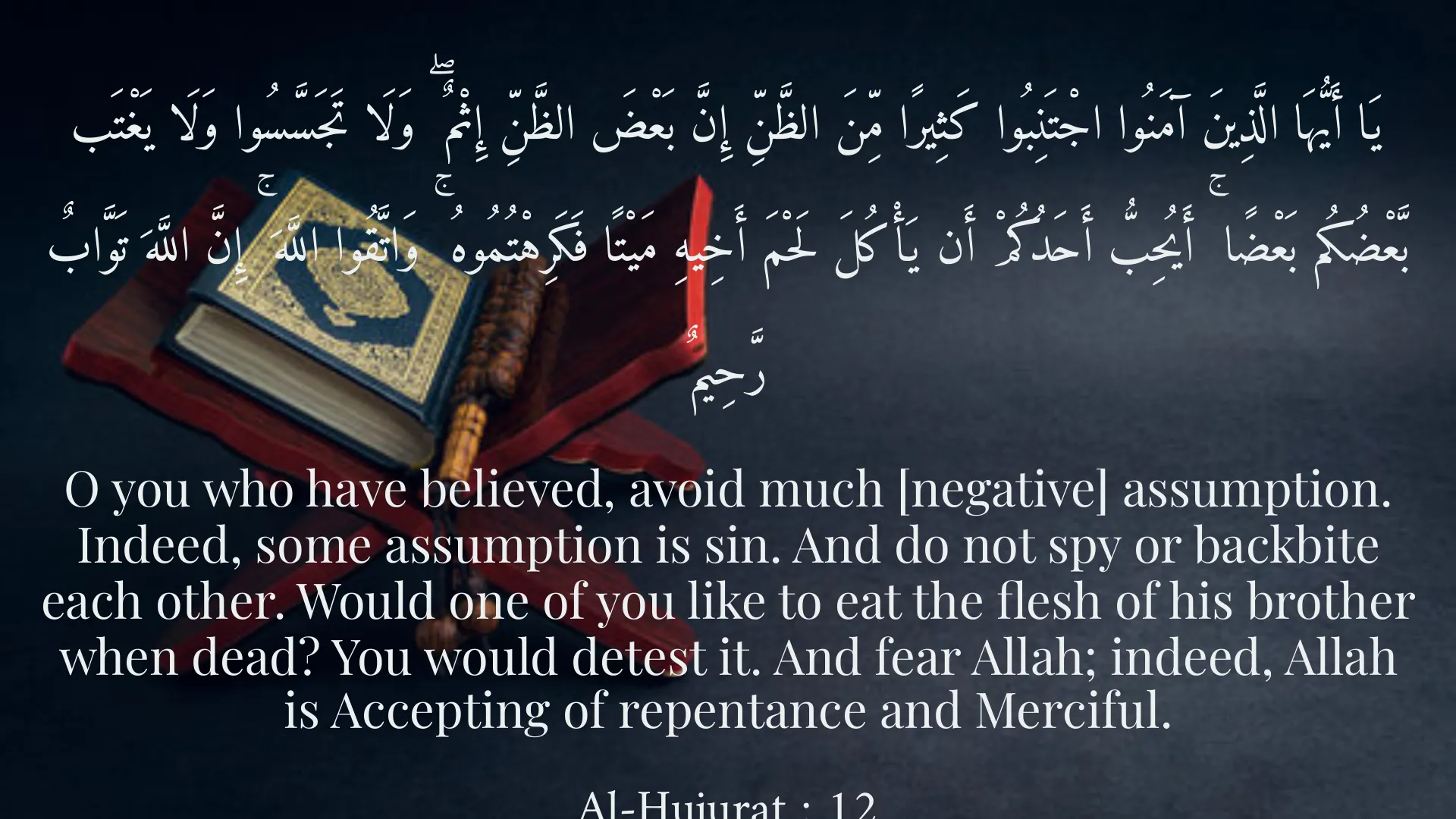
يَا أَيُّهَا الَّذِينَ آمَنُوا اجْتَنِبُوا كَثِيرًا مِّنَ الظَّنِّ إِنَّ بَعْضَ الظَّنِّ إِثْمٌ ۖ وَلَا تَجَسَّسُوا وَلَا يَغْتَب بَّعْضُكُم بَعْضًا ۚ أَيُحِبُّ أَحَدُكُمْ أَن يَأْكُلَ لَحْمَ أَخِيهِ مَيْتًا فَكَرِهْتُمُوهُ ۚ وَاتَّقُوا اللَّهَ ۚ إِنَّ اللَّهَ تَوَّابٌ رَّحِيمٌ
O you who have believed, avoid much [negative] assumption. Indeed, some assumption is sin. And do not spy or backbite each other. Would one of you like to eat the flesh of his brother when dead? You would detest it. And fear Allah; indeed, Allah is Accepting of repentance and Merciful.
Al-Hujurat : 12
وَقُل لِّعِبَادِي يَقُولُوا الَّتِي هِيَ أَحْسَنُ ۚ إِنَّ الشَّيْطَانَ يَنزَغُ بَيْنَهُمْ ۚ إِنَّ الشَّيْطَانَ كَانَ لِلْإِنسَانِ عَدُوًّا مُّبِينًا
And tell My servants to say that which is best; indeed, Satan incites [discord] among them. Indeed, Satan is ever, to man, a clear enemy.
Al-Isra : 53
وَإِذْ أَخَذْنَا مِيثَاقَ بَنِي إِسْرَائِيلَ لَا تَعْبُدُونَ إِلَّا اللَّهَ وَبِالْوَالِدَيْنِ إِحْسَانًا وَذِي الْقُرْبَىٰ وَالْيَتَامَىٰ وَالْمَسَاكِينِ وَقُولُوا لِلنَّاسِ حُسْنًا وَأَقِيمُوا الصَّلَاةَ وَآتُوا الزَّكَاةَ ثُمَّ تَوَلَّيْتُمْ إِلَّا قَلِيلًا مِّنكُمْ وَأَنتُم مُّعْرِضُونَ
And [recall] when We took the covenant from the Children of Israel, [saying], 'Do not worship except Allah; and to parents, good treatment; and to relatives, orphans, and the needy. And speak to people good words and establish prayer and give zakah.' Then you turned away, except a few of you, and you were refusing.
Al-Baqarah : 83
Short Story
One day, an angry man approached the city's judge, complaining that his neighbor had disturbed his peace with harsh and biting words. The judge calmly looked at him and said: "O good man, the tongue is like a sword hidden in the sheath of speech; if not used wisely, it inflicts a deeper wound than any blade. Speak good words, that you may see goodness. And if you do not guard your tongue from evil, how can you expect good from this world?" The man took the judge's advice to heart and resolved to restrain his tongue thereafter, uttering only pleasant words. Soon, peace returned to his heart, and his relationships with others blossomed anew.