Quranic Answer
The transformation of worship from an external obligation to an internal passion is one of the deepest and most beautiful aspects of a person's spiritual journey, repeatedly highlighted and guided by the Holy Quran. Many of us initially perceive worship as a duty or a religious obligation, something that must be done to avoid punishment or earn rewards in the afterlife. However, Islam and Quranic teachings delve deeper than this superficial view; they invite us to connect our hearts with the Creator and find sweetness and tranquility in worship. This profound transformation is a gradual process, achieved through genuine knowledge of God, deepening one's connection with Him, and understanding the true philosophy behind acts of worship. The first step towards achieving this passion is 'Ma'rifah' (knowledge) and 'Mahabbah' (love) for the Almighty. The Quran is replete with verses describing the beautiful attributes (Asma al-Husna) of Allah; He is Ar-Rahman (the Most Merciful), Ar-Rahim (the Especially Merciful), Al-Ghafur (the Forgiving), and Al-Wadud (the Loving), Al-Razzaq (the Provider), and Al-Hakim (the Wise). When a person truly comprehends the grandeur, boundless mercy, infinite forgiveness, and ultimate wisdom of God, their heart overflows with love and reverence. This love becomes a powerful driving force, transforming worship from a dry, empty duty into a sincere expression of affection. Imagine someone deeply in love with another; performing tasks for their beloved is not an obligation but a source of joy and passion. The same applies to Allah; when divine love takes root in the heart, prayer, fasting, supplication, and Quran recitation are no longer burdens but cherished opportunities to commune with the eternal Beloved. Surah Ar-Ra'd 13:28 eloquently states this: “Those who have believed and whose hearts are assured by the remembrance of Allah. Unquestionably, by the remembrance of Allah hearts are assured.” This inner tranquility is the result of that love and continuous remembrance of God, elevating worship from a physical act to a spiritual experience. The second step is 'Shukr' (gratitude). The Quran repeatedly invites humanity to reflect on Allah’s countless blessings. From obvious to hidden blessings, from our own creation to water, food, and health, we are constantly immersed in a sea of divine grace. When a person looks at these blessings with insight and realizes that everything originates from Him, their heart becomes filled with thankfulness. This gratitude naturally compels a person to express appreciation. What better way to show gratitude than through worshipping the Creator who bestows so much upon us without any expectation of return? Worship born out of gratitude transforms a feeling of indebtedness into one of honor and contentment in servitude. This approach generates a positive energy in worship that eliminates the sense of obligation, replacing it with satisfaction and peace. The third strategy is to 'understand the philosophy of worship.' Many of us do not know why we should worship. Does God need our worship? Absolutely not. The Quran states in Surah Adh-Dhariyat 51:56: “And I did not create the jinn and mankind except to worship Me.” This verse identifies the ultimate purpose of human creation as worship, but it is not worship merely for God's benefit. Instead, it is a means for human perfection and growth. Worship is a tool for purifying the soul, refining the self, establishing a connection with the source of existence, and achieving inner peace. When a person understands that every unit of prayer (rak'ah), every day of fasting, every glorification (tasbih), and every supplication is a step towards reaching the pinnacles of happiness and closeness to God, they no longer view it as an obligation. Instead, they see it as an unparalleled opportunity for growth and elevation. This deep understanding strengthens the internal motivation for worship. The fourth approach is 'Ikhlas' (sincerity) and 'Hudhur al-Qalb' (presence of heart). Worship with sincerity means performing it solely for the pleasure of God, not for show or to gain others' attention. When a person purifies their intention, the heavy burden of people's gaze is lifted from their shoulders, replaced by lightness and tranquility. Presence of heart means that during worship, one's mind and heart are fully engaged with the words and movements. This is achieved through practice, reflection on the meanings of verses and invocations, and avoiding worldly distractions during worship. Surah Al-Baqarah 2:45 states: “And seek help through patience and prayer. And indeed, it is difficult except for the humbly submissive [to Allah].” Khushu' (humble submission) is the essence of presence of heart and humility before God. When khushu' is attained, the burden of worship disappears, transforming into lightness and grace. Finally, 'patience' and 'perseverance' are crucial on this path. The transformation from obligation to passion does not happen overnight. Initially, there might still be a sense of obligation, but with repetition, practice, and continuous effort to deepen knowledge and love, one will gradually taste the sweetness of worship. Every small step you take, every prayer you offer with greater presence of heart, every time you sincerely supplicate, brings you closer to this passion. Worship, in essence, is a source of strength that makes us resilient against the storms of life and grants us peace. Once we experience this truth, we will never want to abandon it, and we will eagerly seek it out ourselves. This journey is a journey towards our true selves and a connection with the endless source of love and tranquility.
Related Verses
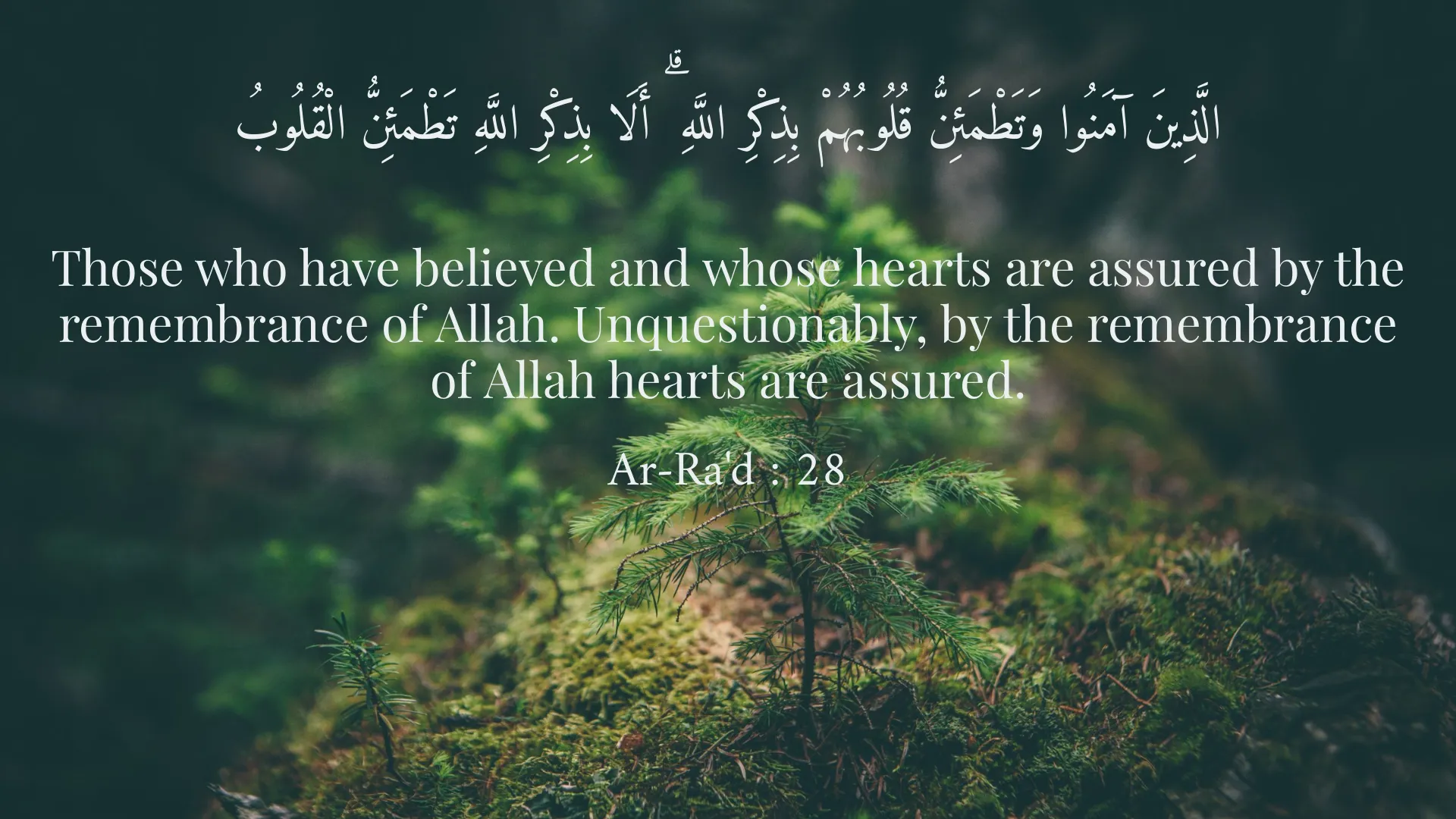
الَّذِينَ آمَنُوا وَتَطْمَئِنُّ قُلُوبُهُمْ بِذِكْرِ اللَّهِ ۗ أَلَا بِذِكْرِ اللَّهِ تَطْمَئِنُّ الْقُلُوبُ
Those who have believed and whose hearts are assured by the remembrance of Allah. Unquestionably, by the remembrance of Allah hearts are assured.
Ar-Ra'd : 28
وَمَا خَلَقْتُ الْجِنَّ وَالْإِنْسَ إِلَّا لِيَعْبُدُونِ
And I did not create the jinn and mankind except to worship Me.
Adh-Dhariyat : 56
وَاسْتَعِينُوا بِالصَّبْرِ وَالصَّلَاةِ ۚ وَإِنَّهَا لَكَبِيرَةٌ إِلَّا عَلَى الْخَاشِعِينَ
And seek help through patience and prayer. And indeed, it is difficult except for the humbly submissive [to Allah].
Al-Baqarah : 45
Short Story
It is narrated that one day, a pious man meticulously performed his prayers with all due rituals, yet found no joy in his heart and felt it as a heavy burden on his shoulders. One day, he approached a wise sage, who was planting the seeds of knowledge in the garden of hearts, and said: "O Sage! I worship, but I find no passion or eagerness in it. It feels as though I am merely fulfilling an obligation." The sage smiled and asked: "O friend! For whom do you pray? For reward, or out of fear of punishment?" The man paused for a moment and replied: "Both for reward and to avoid punishment." The sage then said: "Come, and from today onwards, whenever you stand for prayer, remember that your Lord, without any expectation, provides for you, grants you health, and extends His boundless mercy upon you. Whenever you prostrate, imagine that you are embraced by His infinite love." The pious man took these words to heart, and from that day on, whenever he stood for prayer, he filled his heart with the remembrance of God's blessings and kindness. It wasn't long before prayer ceased to be an obligation for him, becoming instead the sweetest moment of communion with the Eternal Beloved. From then on, he rushed towards worship with indescribable eagerness. Indeed, it is from the spring of knowledge and love that the living water of passion flows.