Quranic Answer
In the journey of life, every human being inevitably encounters various challenges and crises, ranging from financial and familial problems to illnesses and the loss of loved ones. These moments can be incredibly difficult, disorienting, and even debilitating. However, for believers, the Holy Quran is not merely a guide for daily life; it is an unparalleled source of peace, resilience, and practical guidance for navigating the most trying times. Utilizing the Quran for personal crisis management involves a comprehensive and profound approach that incorporates key Quranic concepts and stages, bringing tranquility and strength to the human heart and mind. 1. Patience (Sabr Jameel) and Perseverance: One of the most fundamental concepts the Quran offers in confronting crises is "Sabr" (patience). In the Quran, patience is not merely passive waiting; rather, it signifies active endurance, steadfastness in the face of difficulties, and the unwavering preservation of hope and faith. The Holy Quran repeatedly calls upon believers to be patient and promises that Allah is with the patient. In Surah Al-Baqarah, verse 153, it states: "O you who have believed, seek help through patience and prayer. Indeed, Allah is with the patient." This verse illustrates that patience is a powerful tool which, alongside prayer, empowers individuals to confront hardships. This active patience means that even in the midst of a crisis, one does not complain, become restless, or deviate from the divine path. It helps individuals identify their weaknesses during storms and find the best solutions with tranquility and wisdom. Understanding that every hardship is a divine test, and overcoming it leads to elevation in status and purification of the soul, makes patience easier. 2. Prayer (Salat) and Supplication (Du'a): After patience, prayer and supplication are the most potent tools for a believer in times of crisis. Prayer is the ascension of the believer, a direct channel of communication with the Creator of the universe. In a crisis, when one feels alone and helpless, prayer offers a secure refuge, imparting a sense of divine presence and support. The Quran places great emphasis on establishing prayer and seeking help through it. Furthermore, supplication and earnest pleading to Allah are keys to unlocking difficulties and soothing hearts. When all doors seem closed, one remembers there is a door that never closes: the door to Allah. "And your Lord says, 'Call upon Me; I will respond to you.'" (Ghafir, verse 60). Du'a is not just for changing external circumstances, but also for transforming one's inner state and strengthening reliance on God. When you wholeheartedly entrust your problems to God and seek His help, a heavy burden is lifted from your shoulders, and you feel a sense of lightness and hope. 3. Reliance on Allah (Tawakkul): Tawakkul means, after exerting all human efforts and considering all possible measures, entrusting the outcomes to Allah Almighty and having absolute faith in His wisdom and power. This does not imply abandoning effort and waiting for a miracle; rather, it means that despite one's efforts, there should be no anxiety or apprehension about the future, knowing that the ultimate planning and destiny are in God's hands. "And whoever relies upon Allah – He is sufficient for him. Indeed, Allah will accomplish His purpose. Allah has already set for everything a [decreed] extent." (At-Talaq, verse 3). This verse assures individuals that if they have genuine reliance, Allah will suffice them and open ways for them they could never have imagined. 4. Remembrance of Allah (Dhikr) and Tranquility of Heart: One of the main reasons for anxiety and distress during crises is heedlessness of Allah's remembrance. The Holy Quran states: "Those who have believed and whose hearts are assured by the remembrance of Allah. Unquestionably, by the remembrance of Allah hearts are assured." (Ar-Ra'd, verse 28). Dhikr includes reciting the Quran, tasbih (glorification of Allah), istighfar (seeking forgiveness), and anything that brings Allah to mind. In crises, occupying the mind with the remembrance of Allah helps dispel negative and disturbing thoughts, replacing them with peace and a divine presence in the heart. This continuous remembrance not only brings inner tranquility but also alters one's perspective on the problem, helping to view the situation from a different angle. 5. Reflection on Quranic Stories (Lessons from Prophets and the Righteous): The Quran is replete with stories of prophets and past nations who faced the most severe trials and crises but emerged triumphant through patience, reliance on God, and steadfastness in His path. The story of Prophet Ayyub (Job) (peace be upon him) who, despite extreme hardships, did not lose his faith and attained the status of gratitude through patience; the story of Prophet Yusuf (Joseph) (peace be upon him) who rose from a well and prison to the position of Egypt's minister; and the story of Prophet Musa (Moses) (peace be upon him) and his confrontation with Pharaoh—all are profound lessons in resilience, hope, and reliance during crises. These stories demonstrate that no problem is permanent, and after every hardship, there is ease. 6. The Quranic Perspective on Trials and Tests (An Opportunity for Growth): The Quran presents calamities and afflictions not merely as punishment, but as a means of testing, growth, and purification of the believer's soul. "And We will surely test you with something of fear and hunger and a loss of wealth and lives and fruits, but give good tidings to the patient," (Al-Baqarah, verse 155). This perspective, instead of leading one to despair in crises, motivates them to view this period as an opportunity to strengthen faith, draw closer to God, and achieve personal growth. When we consider a crisis as a divine test, we strive to emerge from it successfully, not just to overcome it, but to learn from it and become stronger. By relying on these Quranic principles, managing personal crises transforms from an arduous experience into a spiritual path for growth and flourishing. The Quran teaches us that even in the darkest moments, there is a light of hope, and Allah never abandons His servants.
Related Verses
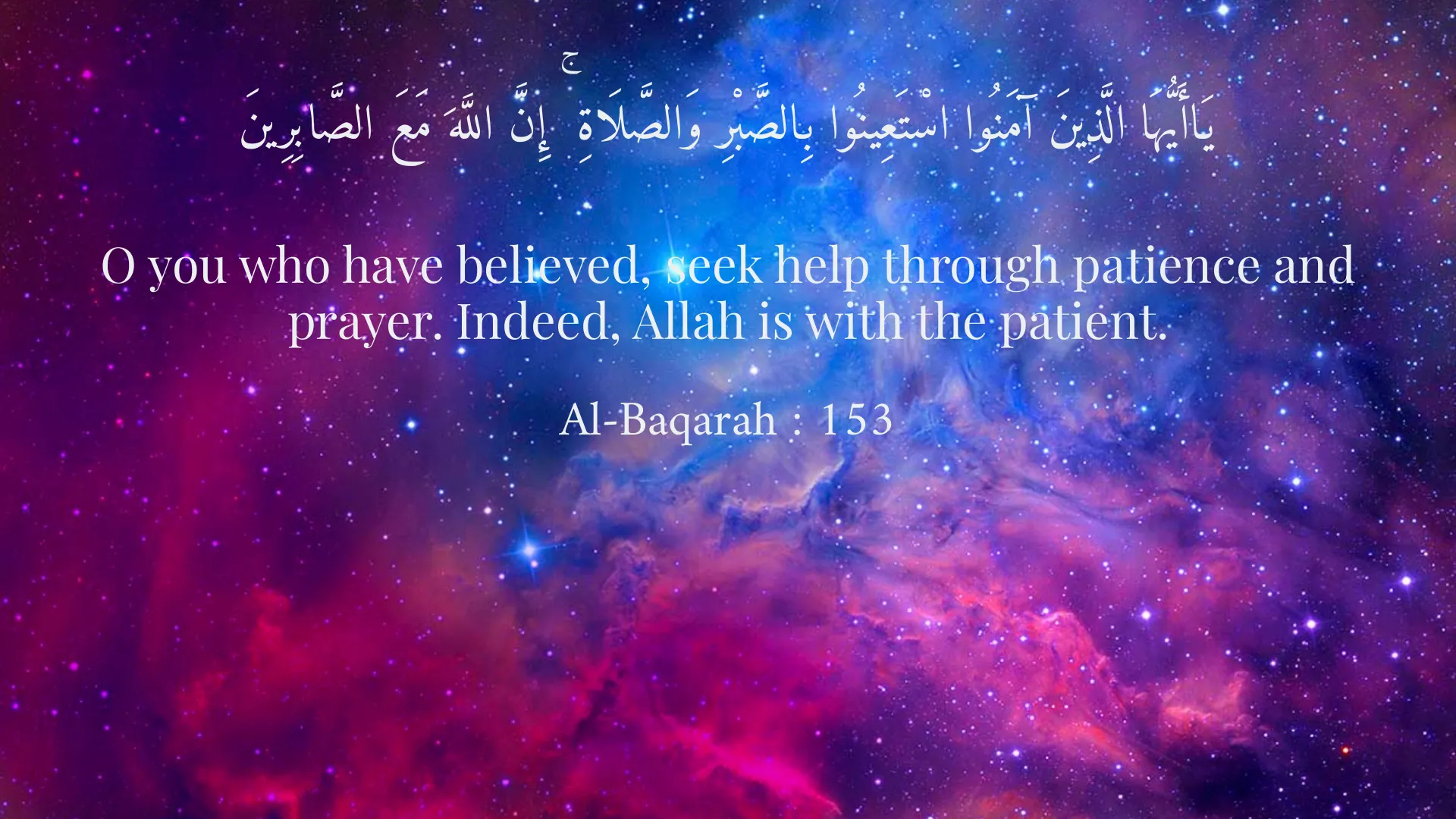
يَاأَيُّهَا الَّذِينَ آمَنُوا اسْتَعِينُوا بِالصَّبْرِ وَالصَّلَاةِ ۚ إِنَّ اللَّهَ مَعَ الصَّابِرِينَ
O you who have believed, seek help through patience and prayer. Indeed, Allah is with the patient.
Al-Baqarah : 153
الَّذِينَ آمَنُوا وَتَطْمَئِنُّ قُلُوبُهُم بِذِكْرِ اللَّهِ ۗ أَلَا بِذِكْرِ اللَّهِ تَطْمَئِنُّ الْقُلُوبُ
Those who have believed and whose hearts are assured by the remembrance of Allah. Unquestionably, by the remembrance of Allah hearts are assured.
Ar-Ra'd : 28
وَمَن يَتَوَكَّلْ عَلَى اللَّهِ فَهُوَ حَسْبُهُ ۚ إِنَّ اللَّهَ بَالِغُ أَمْرِهِ ۚ قَدْ جَعَلَ اللَّهُ لِكُلِّ شَيْءٍ قَدْرًا
And whoever relies upon Allah – He is sufficient for him. Indeed, Allah will accomplish His purpose. Allah has already set for everything a [decreed] extent.
At-Talaq : 3
Short Story
It is narrated that a virtuous and good-natured man, during his travels, found himself in a desert where there was no water and he had no provisions. Thirst and hunger overwhelmed him, and he lost the strength to walk. From the depths of despair, he collapsed to the ground, convinced of his imminent death. But suddenly, he remembered a verse from the Quran which stated: "And whoever relies upon Allah – He is sufficient for him." He thought to himself, "Why should I despair of my Lord's mercy? He is the One who brings forth water from rock and provides sustenance from unexpected sources." So, instead of lamenting, he raised his hands in supplication and wholeheartedly sought help from God. His prayer was not yet finished when a small cloud appeared in the sky, and raindrops fell upon him. He drank from the water, regaining his strength, and shortly after, a caravan appeared in the distance, rescuing him from the desert. The virtuous man understood that the key to unlocking every difficulty is patience and reliance on the Creator, and His constant remembrance, and one should never despair of His door during crises.