Quranic Answer
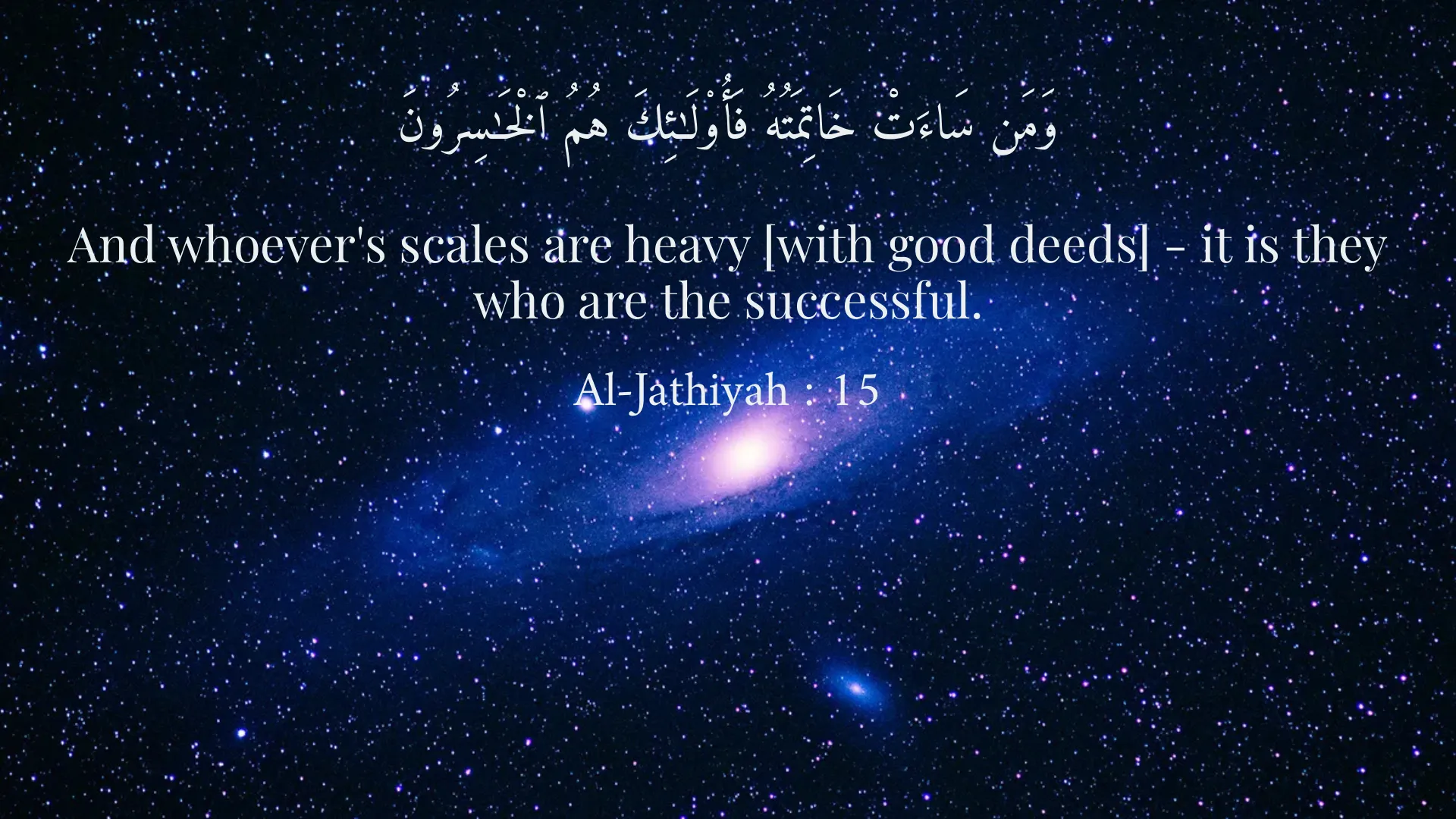
The concept of personal responsibility is a cornerstone in many philosophical, ethical, and religious traditions, and in Islam, this principle holds significant importance as delineated in the Holy Quran. The Quran emphasizes the belief that every person is held accountable for their actions, a teaching that is rooted in various verses throughout the holy text. This notion not only governs individual behavior but also reflects the relationship between mankind and the Creator, underscoring a profound moral framework that guides the lives of Muslims. To understand the significance of personal responsibility in Islam, we can refer to several key verses from the Quran that elucidate this principle. One such verse is found in Surah Al-Jathiyah (Chapter 45, Verse 15), which states: "And those whose balance is heavy [with good deeds] - it is they who are the successful." This verse encapsulates the idea that individuals are weighed by the sum of their actions, suggesting that good deeds lead to success both in this world and the hereafter. The metaphor of a balance signifies the weighing of one's deeds, indicating that individuals must strive to cultivate positive actions in their lives. In this context, it is also essential to acknowledge the contrast drawn between good and bad deeds. The Quran, in its wisdom, makes it clear that those who are accustomed to evil and reckless behavior will ultimately face consequences. This isn't merely a warning but a moral guideline that shapes how believers live their lives. It teaches that one's choices have repercussions not only in the temporal realm but also in the eternal perspective of the afterlife. Another important verse that sheds light on accountability is found in Surah Az-Zumar (Chapter 39, Verse 7): "Indeed, those who have disbelieved will have a severe punishment, and those who have believed and done righteous deeds will have forgiveness and great reward." Here, we find a vivid delineation between two groups: disbelievers and believers. The promise of forgiveness and reward for those who are faithful and perform good deeds reflects an inherent incentive for Muslims to engage in righteous actions. The threat of punishment for disbelievers reinforces the gravity of one’s decisions, emphasizing the urgent need for individuals to recognize their responsibilities and the potential outcomes of their beliefs and actions. The Quran also discusses the importance of seeking divine guidance in making ethical choices. In Surah Al-An'am (Chapter 6, Verse 164), Allah states: "Say, 'Shall I seek a judge other than Allah?' and He is the one who has revealed to you the Book in detail." This verse invites individuals to turn to the Quran as the ultimate source of guidance in matters of morality and ethics. It implies that understanding the framework of right and wrong is inherently tied to seeking knowledge and guidance from the Creator. By adhering to divine instruction, individuals are better equipped to navigate the complexities of life while remaining accountable for their actions. The overarching theme of accountability is also deeply embedded in the Islamic belief in the Day of Judgment. Muslims believe that on this day, each person will stand before Allah and account for their deeds. This doctrine serves as a vital incentive for believers to remain conscious of their actions, as each decision carries weight in determining their ultimate fate. The Quran emphasizes this reality with numerous reminders about the transient nature of life and the permanence of the afterlife. As stated in Surah Al-Mulk (Chapter 67, Verse 2), "[He] who created death and life to test you [as to] which of you is best in deed." Here, the Quran establishes life as a testing ground, with actions being pivotal to the evaluation of one’s faith. Furthermore, the teachings of the Prophet Muhammad (peace be upon him) also mirror these Quranic ideas, focusing on the notion that individual actions lead to collective consequences within society. His hadiths (sayings) often framed ethical conduct as integral to faith, reinforcing that a believer should act with integrity and responsibility toward others. The Prophet emphasized that every individual's actions can reflect on the wider community, highlighting the interconnectedness of society. In conclusion, the understanding of personal responsibility in Islam is profound and multifaceted. The Quran articulates beautifully the essence of accountability, portraying a worldview where each individual is responsible for their actions, holding the promise of reward for good deeds and the consequences of evil. The continual reminders in the Quran encourage believers to reflect on their actions and decisions, guiding them toward a life of righteousness and moral clarity. Responsible action is not merely a legalistic obligation but a spiritual endeavor that connects an individual to their faith, community, and ultimately, their Creator. By embracing the responsibility for one’s actions, individuals are not only nurturing their spiritual growth but are also contributing positively to the fabric of human society, which is vital for harmonious coexistence. Therefore, the teachings of Islam concerning personal accountability serve as a beacon of hope and guidance for individuals navigating the challenges of life, reminding them of the importance of good deeds, ethical conduct, and personal integrity.
Related Verses
وَمَن سَاءَتْ خَاتِمَتُهُ فَأُو۟لَـٰئِكَ هُمُ ٱلْخَـٰسِرُونَ
And whoever's scales are heavy [with good deeds] - it is they who are the successful.
Al-Jathiyah : 15
إِنَّ ٱلَّذِينَ كَفَرُواْ وَلَهُمْ عَذَابٌ شَدِيدٌ وَٱلَّذِينَ ءَامَنُواْ وَعَمِلُواْ ٱلصَّـٰلِحَـٰتِ لَهُمْ مَّغْفِرَةٌ وَأَجْرٌ كَبِيرٌ
Indeed, those who have disbelieved will have a severe punishment, and those who have believed and done righteous deeds will have forgiveness and great reward.
Az-Zumar : 7
وَلَـٰئِن سَـَأَلْتَهُمْ مَّن خَلَقَهُمْ لَيَقُولُنَّ ٱللَّهُ ۚ أَنَّىٰ يُؤْفَكُونَ
Say, 'Shall I seek a judge other than Allah?' and He is the one who has revealed to you the Book in detail.
Al-An'am : 164
Short Story
One day, a man named Ali was deep in thought, pondering his acts and behaviors. He recalled the verses of the Quran that always speak about human responsibility for their deeds. Ali decided to pay closer attention to his actions and to strive each day with good intentions and rightly conduct. He noticed that his life had improved and he felt much calmer spiritually.