Quranic Answer
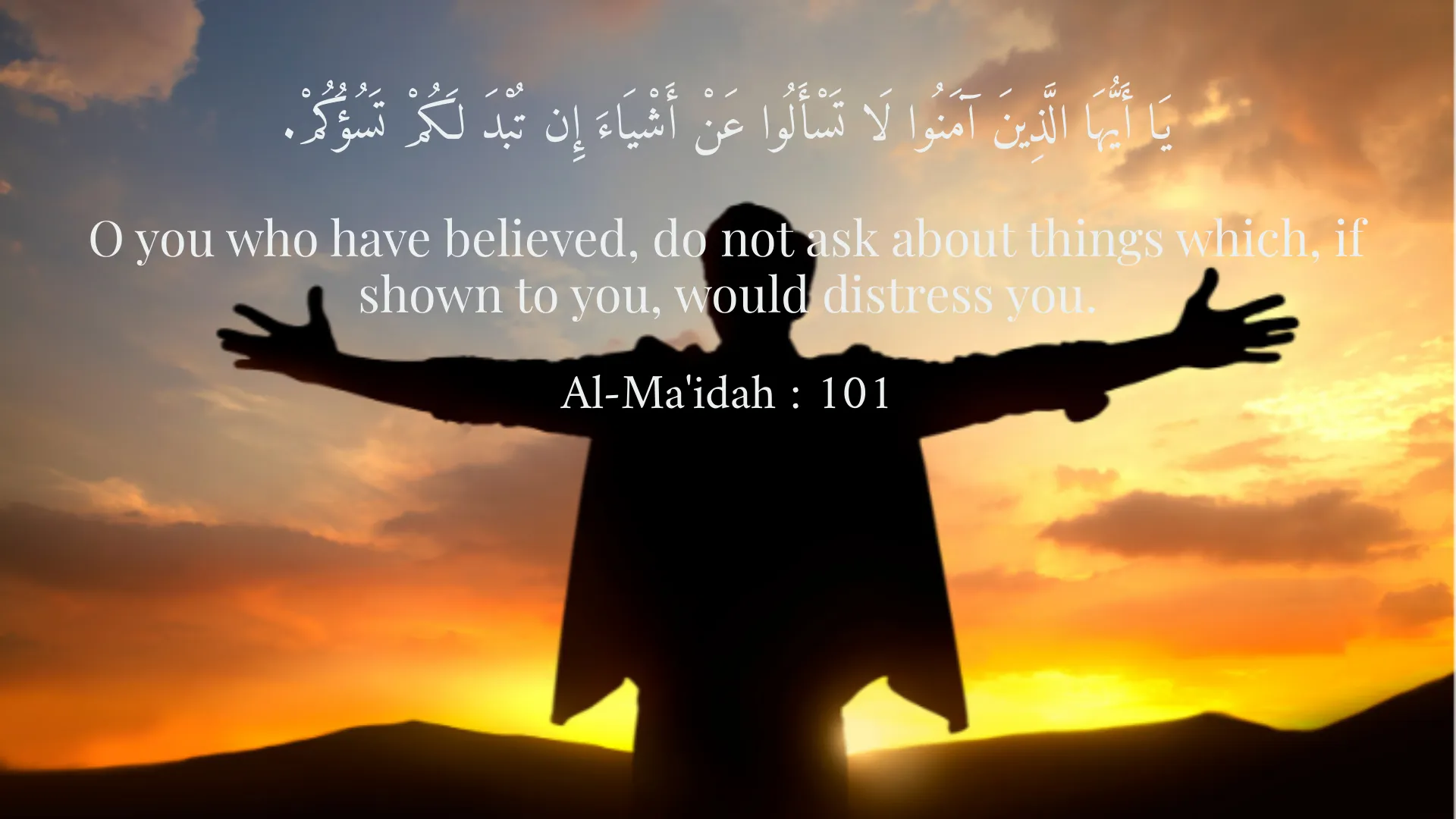
The theme of questioning holds a significant place in the context of faith and spirituality, particularly within the Islamic tradition as presented in the Holy Quran. From the very outset, the Quran emphasizes the importance of knowledge, understanding, and intellectual pursuit as vital components of belief. When examining the verses of the Quran regarding questioning, one can observe that it encourages believers to explore their faith deeply, while also providing guidance on the nature and direction of such inquiries. This essay seeks to explore the theme of questioning in the Quran, its implications for personal growth, and the boundaries within which such questioning should occur. In Surah Al-Ma'idah, verse 101, Allah advises the believers: 'O you who have believed, do not ask about things which, if shown to you, would distress you.' This guidance reflects a profound understanding of the human psyche. It suggests that while it is natural and indeed commendable to seek answers and strive for understanding, there are certain inquiries that may lead to distress and confusion. Therefore, the Quran asserts that questioning should be conducted within a reasonable framework and for constructive purposes. The significance of this approach is multi-faceted, as it reflects the temperance that believers are encouraged to exhibit in their inquisitive endeavors. Constructive questioning in religion is fundamentally aimed at enhancing one’s comprehension of faith, delving into its deeper meanings, and fostering a closer relationship with Allah. With this in mind, Allah nurtures an environment where sincere and meaningful inquiries are not only permissible but also praiseworthy. This perspective is vital as it empowers individuals to engage with their spirituality in a manner that is thoughtful and reflective, rather than aimless or detracting from their faith. In further reinforcing the value of questioning, Surah Al-Baqarah, verse 30 encapsulates the essence of human intellect as a gift from Allah. It states that Allah bestowed intellect upon human beings and elevated them through their ability to question and comprehend. This acknowledges inquisitiveness as an inherent human trait that is encouraged within the context of Islam. By fostering an environment where questioning leads to knowledge and understanding, the Quran positions itself as not merely a book of worship but as a guiding principle for life, promoting the enlightened spirit of inquiry that enriches the believer’s experience. However, it is imperative to delineate the boundaries of questioning in the context of faith. While inquisitive minds may lead to significant intellectual and spiritual growth, one must be cautious not to venture into areas that provoke doubt and uncertainty in the foundational principles of Islam. Questions that undermine the core beliefs or provoke skepticism are typically viewed as unconstructive and potentially harmful. Such inquiries can lead individuals away from the essence of faith and may disrupt the tranquility that comes from unwavering belief. The Quran, therefore, not only encourages questioning but also ensures that the inquiries made are reflective and rooted in respect for the divine message. For instance, when questions arise concerning the nature of God, the purpose of creation, or the meaning of specific verses, believers are guided to seek answers through a process of reflection, dialogue with learned individuals, and seeking knowledge through trusted sources. This pursuit of knowledge should aim to lead individuals closer to Allah rather than drive them into confusion or skepticism. One of the significant attributes of questioning in the context of religion is its impact on personal growth. Engaging in thoughtful inquiries allows individuals to reassess their beliefs, understand their purpose, and foster a deeper connection with their Creator. It empowers believers to cultivate their relationship with Allah through an authentic understanding of His teachings. Therefore, the act of questioning contributes to a dynamic and evolving faith, where individuals can continuously grow and adapt their spiritual journeys in line with their experiences and newfound knowledge. Moreover, this culture of questioning is not limited to the individual alone. It promotes a communal atmosphere where knowledge sharing and discourse become vital components of the Islamic experience. Within communities, when members feel encouraged to ask questions freely and share their insights, a supportive network of growth emerges. This collective exploration of faith can lead to a more vibrant and enlightened community, one that thrives on continuous learning and understanding. Also, dialogues stemming from question-based inquiries allows believers to confront misconceptions and address doubts collaboratively. This process not only reinforces individual faith but enhances the collective understanding of the community. It fosters a culture where differences in perspectives are acknowledged and respected while simultaneously seeking a deeper common understanding rooted in shared beliefs. In conclusion, the theme of questioning in the Holy Quran serves as a vital aspect of faith development and understanding. Through its various verses, the Quran not only endorses the importance of intellectual pursuit and inquiry but also lays down a framework guiding believers on how to question meaningfully and constructively. By encouraging questions aimed at personal growth and increased awareness of God, the Quran positions itself as a powerful catalyst for spiritual exploration and understanding. Meanwhile, it aptly cautions against inquiries that may lead to doubt and uncertainty regarding the essence of faith. Ultimately, questioning, when approached with sincerity and purpose, can lead to profound enlightenment, stronger convictions, and a more enriched relationship with Allah.
Related Verses
يَا أَيُّهَا الَّذِينَ آمَنُوا لَا تَسْأَلُوا عَنْ أَشْيَاءَ إِن تُبْدَ لَكُمْ تَسُؤُكُمْ.
O you who have believed, do not ask about things which, if shown to you, would distress you.
Al-Ma'idah : 101
وَإِذْ قَالَ رَبُّكَ لِلْمَلَائِكَةِ إِنِّي جَاعِلٌ فِي الْأَرْضِ خَلِيفَةً.
And when your Lord said to the angels, 'Indeed, I will make upon the earth a successive authority.'
Al-Baqarah : 30
Short Story
Once upon a time, a young man named Amin found himself at a crossroads. He constantly wondered how he could draw closer to God. After hearing various hadiths and Quranic verses, he decided to ask his teacher about his questions concerning the faith. After some time and discussion with his mentor, Amin gained a deeper understanding of his religion and forged a closer friendship with God.