Quranic Answer
In the rich teachings of the Holy Quran, the relationship between awareness of death and the strengthening of faith is presented not as a 'mandatory prerequisite' but as a 'powerful catalyst' and a 'vital reminder' for deepening one's religious convictions and guiding humanity towards the Creator. The Quran does not explicitly state that one must first be aware of death to believe; however, it consistently emphasizes the truth that worldly life is fleeting and temporary, and that everyone's ultimate return is to God. This awareness of impermanence and the existence of the Hereafter can serve as a strong motivation for deeper reflection on the purpose of life, human responsibilities, and the necessity of preparing to meet the Lord, thereby solidifying faith. The Quran, in numerous verses, emphasizes the certainty of death, considering it an inescapable reality for every living being: "Every soul will taste death" (Al-Imran: 185). This truth, that every soul shall taste death, is not merely a biological fact but a spiritual one that prompts human reflection. When an individual realizes that worldly life is temporary and their ultimate return is to God, their perspective on worldly possessions and aspirations changes. This shift in perspective provides an opportunity to reassess priorities, abandon sins, and turn towards righteous deeds and sincere servitude. Awareness of death shatters the arrogance and pride stemming from power and wealth, awakening a sense of inherent human weakness and dependence before Divine Majesty. This humility and acknowledgment of servitude are fundamental pillars of true faith. Furthermore, the Quran describes worldly life as "amusement and diversion" (لَعِبٌ وَ لَهْوٌ) and emphasizes that "But the home of the Hereafter is best for those who fear God. Then will you not reason?" (Al-An'am: 32). This comparison between the fleeting nature of this world and the permanence of the Hereafter teaches the wise individual to strive for what is eternal and to prepare themselves for that Day. Understanding this distinction causes people to abandon heedlessness and the vain amusements of this world, and to step towards the Almighty with greater insight and awareness. This is precisely where the awareness of death acts as a gateway to spiritual awakening, leading an individual towards a deeper knowledge of God and the purpose of creation. This knowledge not only instills faith in the human heart but elevates it to the stage of certainty. Moreover, the phrase "Indeed we belong to Allah, and indeed to Him we will return" (Al-Baqarah: 156), which is uttered during calamities and especially upon the death of loved ones, is a constant reminder that humanity originates from God and returns to Him. This short sentence encapsulates the entire philosophy of life and death, providing solace and insight that everything is under Divine will and there is an ultimate end where everyone will be held accountable for their deeds. This awareness of return and accountability prompts individuals to reflect on their actions, encourages repentance and seeking forgiveness, and guides them towards a life of piety and righteousness. A person who knows that their life will end with death and that accountability awaits thereafter will strive more earnestly to gain Divine pleasure, and this endeavor itself is a manifestation of true faith. Therefore, it can be concluded that awareness of death is not a preliminary condition for faith but a crucial factor in deepening and strengthening it. This awareness extracts individuals from heedlessness, draws them towards contemplation and reflection on divine signs, and encourages sincere servitude and preparation for the eternal abode. This awakening provides a foundation for faith to transform from a superficial belief into a heartfelt and practical certainty, influencing all aspects of an individual's life. Death, from a Quranic perspective, is not the end of everything, but a gateway to eternity and the beginning of a more real life where the fruits of worldly deeds become apparent. Thus, contemplating and reflecting on this reality guides an individual towards God and eternal values, making their faith firm and enduring.
Related Verses
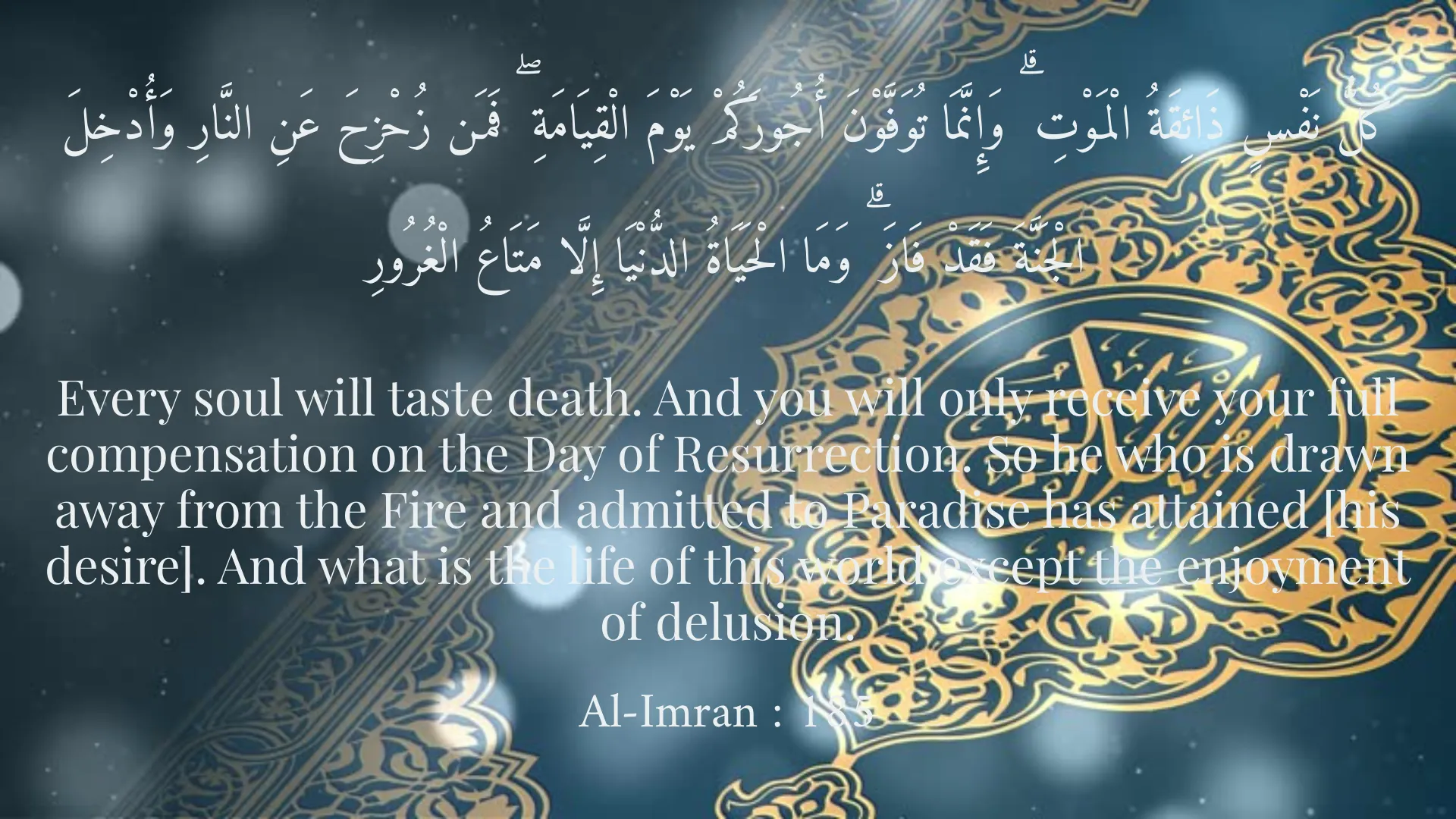
كُلُّ نَفْسٍ ذَائِقَةُ الْمَوْتِ ۗ وَإِنَّمَا تُوَفَّوْنَ أُجُورَكُمْ يَوْمَ الْقِيَامَةِ ۖ فَمَن زُحْزِحَ عَنِ النَّارِ وَأُدْخِلَ الْجَنَّةَ فَقَدْ فَازَ ۗ وَمَا الْحَيَاةُ الدُّنْيَا إِلَّا مَتَاعُ الْغُرُورِ
Every soul will taste death. And you will only receive your full compensation on the Day of Resurrection. So he who is drawn away from the Fire and admitted to Paradise has attained [his desire]. And what is the life of this world except the enjoyment of delusion.
Al-Imran : 185
الَّذِينَ إِذَا أَصَابَتْهُم مُّصِيبَةٌ قَالُوا إِنَّا لِلَّهِ وَإِنَّا إِلَيْهِ رَاجِعُونَ
Who, when disaster strikes them, say, "Indeed we belong to Allah, and indeed to Him we will return."
Al-Baqarah : 156
وَمَا الْحَيَاةُ الدُّنْيَا إِلَّا لَعِبٌ وَلَهْوٌ ۖ وَلَلدَّارُ الْآخِرَةُ خَيْرٌ لِّلَّذِينَ يَتَّقُونَ ۗ أَفَلَا تَعْقِلُونَ
And what is the life of this world except amusement and diversion? But the home of the Hereafter is best for those who fear God. Then will you not reason?
Al-An'am : 32
Short Story
They say a rich but heedless king once approached a wise sage and asked for advice that would benefit him in all circumstances and keep him on the path of truth. The sage paused and said: "O King, every morning when you awaken, remember death." The king was initially perplexed, but the sage continued: "For the remembrance of death shortens longings and drives you towards justice and away from tyranny. One who knows that one day they will depart from this fleeting world and be held accountable for their deeds will never indulge in worldly amusements and will remain steadfast on the path of truth." The king was so deeply moved by this wise counsel that from then on, he began each day with the remembrance of death, established justice and fairness in his rule, and found a heart full of faith and fear of God. This story illustrates how the awareness of death can awaken a heedless heart and guide it towards faith and good deeds.