Quranic Answer
The Holy Quran, a cherished scripture for over a billion Muslims around the world, touches upon numerous subjects, ranging from spirituality and ethics to social justice and compassion towards all living beings. Among these themes, a prominent focus centers around the compassion and care that humans must extend to God's creations, including animals. This concept is not just a footnote in the Quran; it is a fundamental guideline that threads through various verses and prophetic traditions, articulating a profound moral responsibility towards the welfare of all living beings. The Islamic Perspective on Compassion towards Animals Islamic teachings often highlight that all living beings—humans and animals alike—are creations of Allah, deserving respect and dignity. This is supported by numerous verses from the Holy Quran. One notable reference is found in Surah Al-An'am, Ayah 38, which states, "And there is no creature on earth, nor a bird that flies on its wings, but are communities like you. We have not neglected in the Book a thing. Then unto their Lord they will be gathered." This verse indicates that all creatures, not solely humans, are recognized by Allah and are integral to His divine plan. This acknowledgement foreshadows a universe where every being has significance and purpose, thus evoking an obligation among humans to treat them well. In another enlightening verse, Surah An-Nahl, Ayah 8 articulates how Allah created various animals, signifying their role in the ecosystem. This verse serves as a reminder that each creature, whether it be a sheep, a horse, or even insects, contributes to the web of life established by God. Recognizing the role of animals leads to a profound sense of responsibility among humans to ensure their kindness and welfare, nurturing an environment where empathy and compassion flourish. The Prophetic Traditions on Kindness towards Animals Beyond the holy text, the traditions of the Prophet Muhammad (PBUH) further enhance the importance of mercy and empathy towards animals. The Prophet’s life serves as a paradigm of moral conduct, advocating compassion in all aspects of life. Countless hadiths illustrate his gentle treatment of both domestic and wild animals. One particularly poignant narration recounts a woman who was punished by God for her cruelty towards a cat she had kept confined without feeding it. This story, along with others, illustrates how wrongdoing against animals is not taken lightly in Islam, reinforcing the idea that there are spiritual and moral consequences for neglecting their needs or causing them harm. The Prophet once famously said, "Whoever is merciful even to a sparrow, Allah will be merciful to him on the Day of Judgment." This sentiment resonates deeply, underscoring that compassion extends beyond humans to every living creature. Compassion as a Reflection of Humanity Caring for animals is not merely an act of kindness; it is a manifestation of our humanity. When we exhibit compassion towards animals, we reflect our understanding of the interconnectedness of life. The act of caring for a creature in need can reinforce our empathy and teach us valuable lessons about patience, love, and respect. In Islam, the treatment of animals is often seen as a reflection of one’s faith and character. The ability to express kindness is viewed as intrinsic to one's humanity. Moreover, the Quran elaborates on the importance of not only humane treatment but also on the broader implications of causing harm. The principles of justice found in Islamic teachings extend to every living being, emphasizing fairness in all interactions. This ethical approach is imperative, especially in a world where animal rights can often be overlooked in favor of convenience or profit. Recognizing their rights as sentient beings positions us closer to a divine awareness and strengthens our moral compass. Environmental Considerations In recent times, the environmental consequences of our actions towards animals cannot be ignored. The rampant consumption and exploitation of animal products raise questions concerning ethical treatment and sustainability. Islamic teachings, with their emphasis on stewardship of the planet, encourage a responsible and respectful relationship with all creatures. Just as we are caretakers of our bodies and communities, we are also stewards of the environment and the animals within it. By adopting practices that promote animal welfare and environmental conservation, we align ourselves with the core values of compassion and stewardship emphasized in the Quran. Reflecting on our relationship with animals has the power to influence broader ecological and ethical debates, allowing us to advocate for just practices that reflect our responsibility towards every corner of creation. Conclusion In conclusion, both the Quran and the prophetic traditions underscore a pressing need for compassion and respect towards all of God’s creatures, particularly animals. These teachings speak to a deeper moral understanding of our role in the world, urging us to embody kindness, empathy, and responsible stewardship. As we navigate through our busy lives, let us not overlook the impactful responsibilities we hold toward all living beings. By nurturing compassion within ourselves and our communities, we foster a world rich in empathy—a world wherein every creature, no matter how small, is valued and treated with the utmost care. This commitment to kindness not only reflects our humanity but also aligns us with the divine pleasure and a path towards lasting fulfillment.
Related Verses
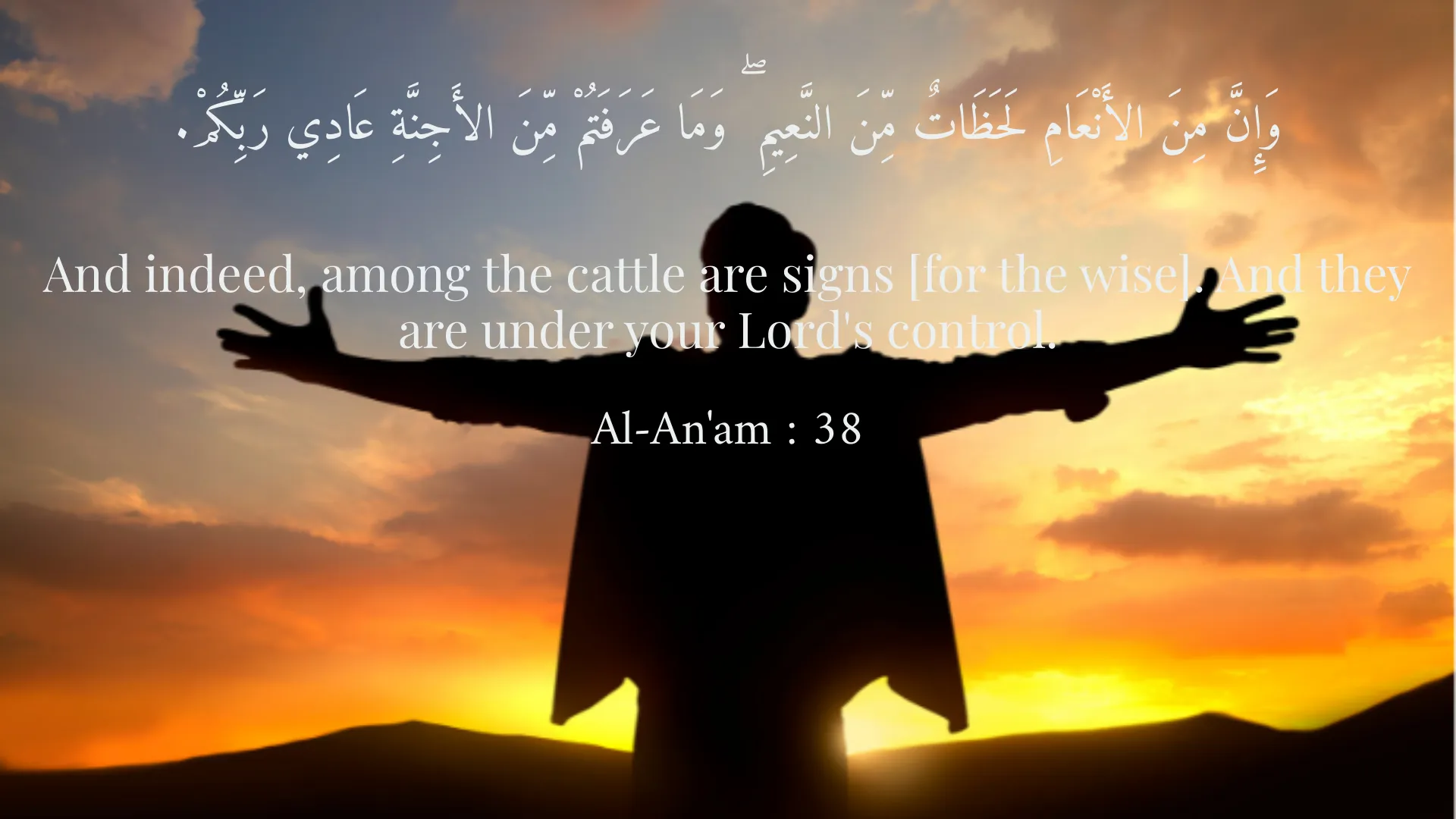
وَإِنَّ مِنَ الأَنْعَامِ لَحَظَاتٌ مِّنَ النَّعِيمِ ۖ وَمَا عَرَفَتُمْ مِّنَ الأَجِنَّةِ عَادِي رَبِّكُمْ.
And indeed, among the cattle are signs [for the wise]. And they are under your Lord's control.
Al-An'am : 38
وَالْأَنْعَامَ خَلَقَهَا لَكُمْ فِيهَا دِفْءٌ وَمَنَافِعُ وَمِنْهَا تَأْكُلُونَ.
And the cattle He created for you; in them is warmth and [numerous] benefits, and from them you eat.
An-Nahl : 8
Short Story
Once upon a time, there was a man named Hassan who lived in a small village. Hassan loved animals and every day he would go to the forest to play with the birds and rabbits. He always looked at them with compassion and love, knowing that all creatures deserve affection. One day on his way home, he saw a bird that had been severely injured. Out of deep compassion, he brought the bird home and cared for it until it recovered. Hassan knew that the Quran emphasizes compassion towards animals and his act brought not only joy to his spirit but also Divine favor.