Quranic Answer
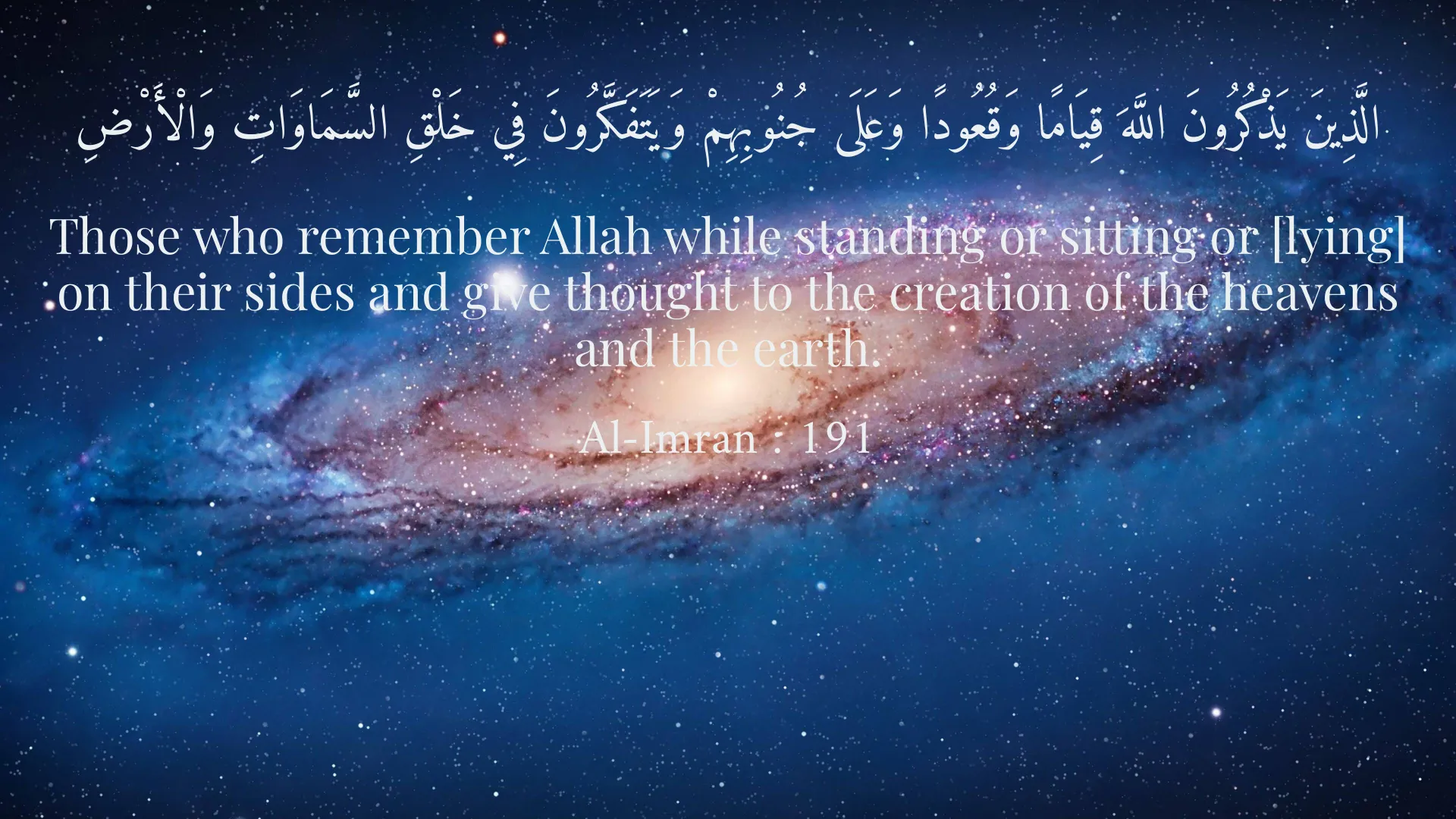
In the Holy Quran, the significance of reflection and contemplation on creation and the signs of Allah is profoundly emphasized. Throughout its verses, believers are encouraged to engage in deep thought about the natural world around them and to recognize it as a reflection of the greatness and majesty of the Creator. This article aims to explore the themes of contemplation and reflection found in the Quran and the Hadith, elucidating their importance in nurturing a profound relationship with Allah and serving as a means of worship. One of the most compelling examples can be found in Surah Al-Imran, verse 191. Here, Allah says: 'Those who remember Allah while standing or sitting or [lying] on their sides and give thought to the creation of the heavens and the earth.' This verse clearly illustrates that contemplation is not a mere pastime; instead, it is a vital act that fosters a connection between the believer and their Creator. The verse emphasizes the necessity of remembrance of Allah throughout the various states of life. Whether one is engaged in prayer, resting, or in a state of activity, the continuous remembrance and contemplation of the divine creation serve to elevate the mind and spirit. The act of reflecting on the magnificence of Allah’s creation draws attention to the universe's sublime design and order, providing insights into God’s omnipotence and wisdom. Such reflection is inseparable from the act of worship because it leads one to acknowledge the divine, understand one’s place in the universe, and develop a sense of gratitude and humility towards the Creator. Moreover, Surah Al-Baqarah, verse 164 underlines this theme by declaring: 'Indeed, in the creation of the heavens and the earth, and the alternation of the night and the day are signs for those of understanding.' This specific verse not only invites believers to recognize signs but emphasizes their availability to those who seek knowledge and understanding. It makes clear that the universe is filled with signs (Ayat) that point towards the existence and unity of Allah. The connection between contemplation and servitude to God is also highlighted in Islamic teachings. The Quran frequently encourages individuals to observe and learn from the world around them, thus fostering a deep sense of connection to the divine. The act of contemplation is portrayed not merely as a cognitive exercise but as a pathway to spiritual nourishment. By observing nature, believers can see how everything operates under the divine command, reinforcing the belief in God's existence and significance in their lives. Reflection, as emphasized in the Quran, parallels a rich tradition within Islam corroborated by numerous Ahadith. One of the most notable sayings of Prophet Muhammad (peace be upon him) states: 'A moment of contemplation is better than a year of worship.' This Hadith encapsulates the idea that deep reflective thought brings about a greater understanding of Allah, leading to a more meaningful life than mindless acts of worship. It suggests that the depth of worship should not be measured merely by the frequency of ritualistic practices but rather by the understanding and mindfulness brought forth through contemplation. Engaging in contemplation has numerous spiritual benefits. For instance, it opens avenues for internal transformation, allowing a believer to recognize their flaws and work towards self-improvement. Reflecting on creation allows individuals to appreciate their innate purpose and instills a sense of duty towards their community and the environment. This leads to a greater sense of responsibility and stewardship over the Earth, aligning with the Islamic principle of Khalifah, or vicegerency. Additionally, the process of contemplation fosters a sense of peace and serenity that is essential in today's fast-paced world. In times of stress and uncertainty, pausing to reflect upon the grandeur of creation can serve as a grounding force. Nature often symbolizes the divine attributes of Allah, exhibiting His power and beauty. Observing mountains, rivers, and the intricacies of life can invoke a profound sense of tranquility and connection that is transformative for the believer's spiritual journey. In the context of modern life, filled with distractions and overwhelming information, the practice of reflection becomes even more crucial. Many individuals find themselves disconnected from their spirituality due to the busyness of everyday life. Reflecting on creation provides both a means to reconnect and an opportunity for self-care by nurturing one's soul amid the chaos. Furthermore, discussions on contemplation in Islamic tradition extend beyond individual reflection; they also encompass collective contemplation for communities. Shared discussions about the wonders of creation and divine signs can strengthen bonds among community members. As believers reflect together, they bolster mutual connections that foster understanding and harmony, ultimately leading to a thriving community centered around shared faith. In conclusion, the Quran and Hadith robustly advocate the importance of reflection and contemplation of creation and divine signs as integral components of worship. The appreciation of the natural world beckons individuals towards recognizing the greatness of Allah and fosters a deep spiritual connection with the Creator. By prioritizing moments of reflection, believers can grow in their faith, cultivate gratitude, and contribute positively to their communities. In this ever-evolving world, returning to the practice of contemplation is paramount to reigniting one's spirit and understanding Allah's will in the human experience.
Related Verses
الَّذِينَ يَذْكُرُونَ اللَّهَ قِيَامًا وَقُعُودًا وَعَلَى جُنُوبِهِمْ وَيَتَفَكَّرُونَ فِي خَلْقِ السَّمَاوَاتِ وَالْأَرْضِ
Those who remember Allah while standing or sitting or [lying] on their sides and give thought to the creation of the heavens and the earth.
Al-Imran : 191
إِنَّ فِي خَلْقِ السَّمَاوَاتِ وَالْأَرْضِ وَاخْتِلَافِ اللَّيْلِ وَالنَّهَارِ لَآيَاتٍ لِأُولِي الأَلْبَابِ
Indeed, in the creation of the heavens and the earth and the alternation of the night and the day are signs for those of understanding.
Al-Baqarah : 164
Short Story
One day, a young man named Hasan was contemplating creation. He wondered how so much beauty and order existed in the world. He recalled the verses of the Quran that invite reflection on creation. Hasan decided to pay more attention to his surroundings and observe Allah's creation with his heart and soul. This reflection guided him to worship and brought him closer to Allah.