Quranic Answer
Tears, this fluid and mysterious emanation, have always reflected the deepest human emotions and inner states. Throughout history, across various cultures and religions, tears have been seen not only as a symbol of sorrow and grief but also, at times, as a sign of humility, repentance, joy, love, and even a profound connection with the transcendental. Within the intellectual framework of Islam, and particularly within the radiant verses of the Holy Quran, while there isn't an explicit verse stating 'tears are a sign of closeness to God,' there are numerous allusions and descriptions that highlight a close relationship between certain types of tears and sublime spiritual states that lead to divine proximity. This means that tears, under specific conditions and intentions, can manifest a deep heartfelt bond with the Creator, rather than being merely a physiological reaction. Indeed, the Holy Quran repeatedly speaks of the states of true believers, prophets, and saints, providing descriptions in which crying and tears emerge not as an end in themselves, but as a result and fruit of humility (khushu'), fear of God (khashyah), being profoundly moved by divine verses, or sincere remorse and repentance (tawbah). For instance, in Surah Al-Ma'idah, verse 83, when describing the truth-seeking Christians and their reaction to hearing divine verses, it states: "And when they hear what has been revealed to the Messenger, you see their eyes overflowing with tears because of what they have recognized of the truth. They say, 'Our Lord, we have believed, so register us among the witnesses.'" This verse clearly indicates that the impact of divine words can be so profound as to cause tears to flow from the eyes of the listeners; tears that stem from the recognition of truth and its heartfelt acceptance, signifying faith and closeness to the Almighty. Furthermore, in Surah Al-Isra, verse 109, after mentioning severe warnings and divine promises, it describes those who possess true knowledge, stating: "And they fall upon their faces [in prostration], weeping, and it increases them in humility." This verse also associates tears with humility and submission before divine majesty. This type of tear originates from the depths of one's being, signaling the breaking of arrogance and absolute surrender to the Lord. This humility and khushu' are, in themselves, among the most crucial steps on the path to divine proximity. Moreover, in Surah Maryam, verse 58, describing a group of prophets and righteous individuals, it mentions: "When the verses of the Most Merciful were recited to them, they would fall in prostration and weeping." This verse further confirms the connection between tears, humility, and being deeply affected by divine verses among God's chosen ones. These tears are tears of profound knowledge (ma'rifah), reverential fear (khashyah), and love (mahabbah), welling up from pure hearts ready to embrace the truth. The crucial aspect is the source of the tears. Tears born of the fear of God, tears of remorse and repentance for sins, tears of longing for the divine presence, or tears ignited by the fervor of divine love, can all be strong indicators of spiritual purity and the depth of one's spiritual connection. Such tears purify the heart, remove barriers between the servant and the Creator, and restore humanity to its monotheistic nature (fitrah). However, it is vital to note that merely shedding tears, without sincere intention and a change in behavior and actions, does not necessarily imply closeness to God. Hypocrisy, ostentation, or tears stemming from transient worldly emotions cannot be symbols of divine proximity. The Holy Quran consistently emphasizes sincerity (ikhlas) and righteous deeds (amal salih) and praises every act of worship and devotion that is performed with pure intention, free from any pretense. Tears are only valuable when they arise from a pure heart filled with humility, repentance, or divine longing. Such tears are like rain that washes away the dust of sins and prepares the heart's soil for the growth of knowledge and love. In essence, tears, in this context, are a manifestation, not a cause. They are a manifestation of the human's inner state, having reached a degree of knowledge and humility where they cannot bear to witness divine grandeur or acknowledge their own errors, and this profound emotion overflows through their eyes. This state is precisely the step that brings a person closer to God. Therefore, it can be concluded that tears shed out of humility, repentance, profound knowledge, and divine love are indeed strong indicators of a deep connection and closeness with the Almighty. These tears open a gateway to divine mercy and prepare the heart to receive spiritual blessings. They not only cleanse sins but also remove the veils of heedlessness, paving the way for spiritual growth and elevation. These tears bear witness to the vitality of the heart and the depth of faith. They are, in truth, born from the majesty of the Most High within the servant's heart, coupled with fear of ignorances and transgressions, and also hope in His boundless mercy. This profound link between emotions and spirituality demonstrates that Islam is not merely a set of outward rituals but an inner, heartfelt transformation that manifests in all dimensions of human existence. Pure tears are drops from the ocean of divine love and awe, guiding lights on the path to closeness, leading humanity towards eternal perfection and felicity.
Related Verses
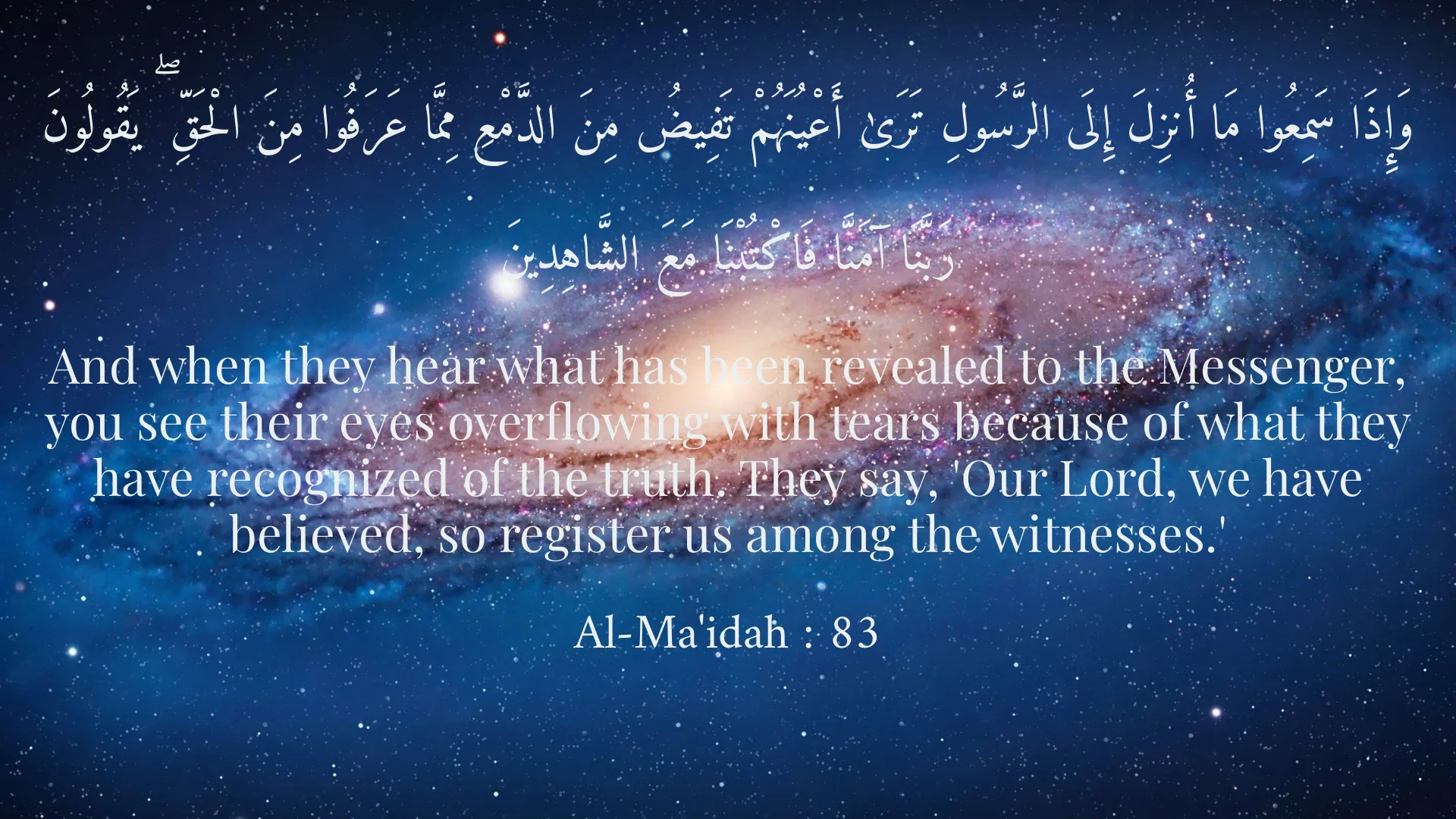
وَإِذَا سَمِعُوا مَا أُنزِلَ إِلَى الرَّسُولِ تَرَىٰ أَعْيُنَهُمْ تَفِيضُ مِنَ الدَّمْعِ مِمَّا عَرَفُوا مِنَ الْحَقِّ ۖ يَقُولُونَ رَبَّنَا آمَنَّا فَاكْتُبْنَا مَعَ الشَّاهِدِينَ
And when they hear what has been revealed to the Messenger, you see their eyes overflowing with tears because of what they have recognized of the truth. They say, 'Our Lord, we have believed, so register us among the witnesses.'
Al-Ma'idah : 83
وَيَخِرُّونَ لِلْأَذْقَانِ يَبْكُونَ وَيَزِيدُهُمْ خُشُوعًا
And they fall upon their faces [in prostration], weeping, and it increases them in humility.
Al-Isra : 109
أُولَئِكَ الَّذِينَ أَنْعَمَ اللَّهُ عَلَيْهِم مِّنَ النَّبِيِّينَ مِن ذُرِّيَّةِ آدَمَ وَمِمَّنْ حَمَلْنَا مَعَ نُوحٍ وَمِن ذُرِّيَّةِ إِبْرَاهِيمَ وَإِسْرَائِيلَ وَمِمَّنْ هَدَيْنَا وَاجْتَبَيْنَا ۚ إِذَا تُتْلَىٰ عَلَيْهِمْ آيَاتُ الرَّحْمَٰنِ خَرُّوا سُجَّدًا وَبُكِيًّا ۩
Those were the ones upon whom Allah bestowed favor from among the prophets of the descendants of Adam and of those We carried [in the ark] with Noah, and of the descendants of Abraham and Israel, and of those whom We guided and chose. When the verses of the Most Merciful were recited to them, they would fall in prostration and weeping.
Maryam : 58
Short Story
It is narrated that in a certain time, there lived two men: one was a ظاهرپرست (outwardly devout) worshiper who stood in prayer every night until dawn, shedding so many tears that it seemed a stream flowed from his eyes. The other was a simple, sinful man who, occasionally in his solitude, with deep remorse and a single tear of sincerity, sought forgiveness from God. One day, the worshiper said to the sinner, 'O wretched one! How do you hope for divine mercy with all these sins?' At that very moment, a voice from the unseen called out: 'O worshiper! Your pride and self-righteousness in those hypocritical tears are more displeasing to Me than the despair of this sincere sinner before My court. A single drop of repentant tear, with true intention, is more valued by Me than hundreds of your showy tears.' This sweet story by Sa'di teaches us that tears acquire their true worth only when they flow from the fountain of a sincere heart and inner humility, not from ostentation and hypocrisy.