Quranic Answer
Crying out of fear of Allah: A Profound Expression of Worship and Humility In the vast tapestry of human emotions, few experiences resonate as deeply within the spiritual heart as crying out of fear of Allah. This unique form of worship goes beyond mere tears; it is a complex interplay of emotions that encapsulates awe, love, humility, and a profound recognition of the Creator's majesty. In the Islamic tradition, this form of crying symbolizes both a recognition of one’s sins and an unwavering hope for divine mercy, illustrating a deeply rooted affection for God. ### Understanding Fear of Allah Fear of Allah (Taqwa) is often misunderstood in modern discourse. It is not merely an emotion rooted in dread or anxiety; rather, it embodies a sense of awe and reverence. It is a fear that fosters love and humility, guiding human beings toward righteousness. In Surah Maryam, verse 58 of the Holy Quran, a poignant illustration is provided as it mentions how the prophets of Allah and His selected servants weep before His greatness. Their tears are not expressions of fear in the conventional sense but of deep-seated respect and love for the Almighty, recognizing His omnipotence and their own frailty. The powerful imagery of prophets crying in humility invites believers to ponder their own standing before Allah. This verse serves as a reminder that true understanding of God's majesty leads to humility and ultimately to a loving fear that transforms hearts. ### The Dual Nature of Crying: Fear and Hope Crying out of fear of Allah is particularly significant for it embodies two essential components: fear of His punishment and hope for His mercy. This duality reflects a balanced approach to one's relationship with God. Fear, in this context, is a protective force. It acts as a deterrent against sinful actions — individuals who truly comprehend the consequences of their actions are more likely to remain on a righteous path. At the same time, it is vital to remember that this fear is not devoid of hope. Believers harbor an innate desire to seek Allah's mercy and forgiveness. The tears that fall when one recognizes their shortcomings and turns back toward Allah are filled with the aspiration for redemption and love. This complex relationship nurtures the soul, drawing individuals closer to their Creator. ### The Role of Remorse and Repentance Crying due to fear and love for Allah embodies a crucial component of the Islamic faith: remorse and repentance (Tawbah). When one realizes their disobedience to Allah, the inability to fulfill their worship, or the inadvertent sins committed, it can lead to profound emotional responses, including tears. Such remorse can be a catalyst for repentance — turning away from sinful behavior and returning to the path of righteousness. In the Quran, believers are encouraged to embrace their vulnerability. Surah Al-Zumar (39:53) presents a beautiful invitation from Allah to those who have wronged themselves: "O My servants who have believed, fear your Lord. For those who do good in this world is good, and the earth of Allah is spacious. Indeed, the patient will be given their reward without account." This notion of turning back to Allah while in a state of tears and remorse reinforces a sense of deep trust in Allah's mercy. The act of crying serves as a cleansing mechanism for the soul, allowing individuals to purify their hearts and rectify their relationship with Allah. ### A Manifestation of Love and Servitude Crying out of fear and love for Allah transcends beyond mere emotional release; it is also a testament to a person’s servitude and dedication to their Creator. In Islam, worship is not restricted to acts of prayer and fasting; it encompasses the very essence of a believer's life — their actions, intentions, and emotions. When a person weeps before Allah, they cultivate a connection to their faith that reinforces their servitude. This connection is crucial in nurturing the spiritual identity of a believer. The Quranic expression of crying emphasizes the idea that recognizing one's place in the grand scheme of creation fosters sincere worship. This deep emotional engagement strengthens one’s bond with the divine, serving as a spiritual anchor during the tumultuous journey of life. ### The Social Implications of Crying in Worship Beyond the personal impacts of crying in worship, there are significant social implications. When collective grief and humility arise within a community of believers, it fosters a sense of unity and connectedness. Congregational prayers often witness individuals shedding tears, creating an atmosphere where people feel safe to express their vulnerabilities. Such communal expressions serve as a reminder that everyone is in need of Allah’s mercy and forgiveness. This shared experience can reinforce community bonds, encouraging individuals to support one another in their spiritual journeys. Therefore, crying out of fear of Allah transcends individual devotion and shapes a cohesive, compassionate community grounded in mutual respect and understanding. ### Conclusion: A Sign of Profound Connection Crying out of fear of Allah is a multifaceted emotional and spiritual experience that encompasses fear, love, humility, and hope. It signifies an individual's profound understanding of God's majesty and grandeur, creating a bridge that connects believers to their Creator. The act of crying is not only a plea for mercy; it is an expression of love that deepens the connection with Allah. As believers navigate their spiritual journeys, embracing this form of worship serves as a powerful reminder of their identity as humble servants in front of a magnificent and merciful Creator. The tears shed in fear and love reflect a heart committed to repentance and the pursuit of righteousness, illuminating the path of faith with compassion, understanding, and unwavering hope. Thus, the practice of crying out of fear of Allah is not merely an emotional response; it is an essential aspect of worship that enriches the believer's relationship with the divine.
Related Verses
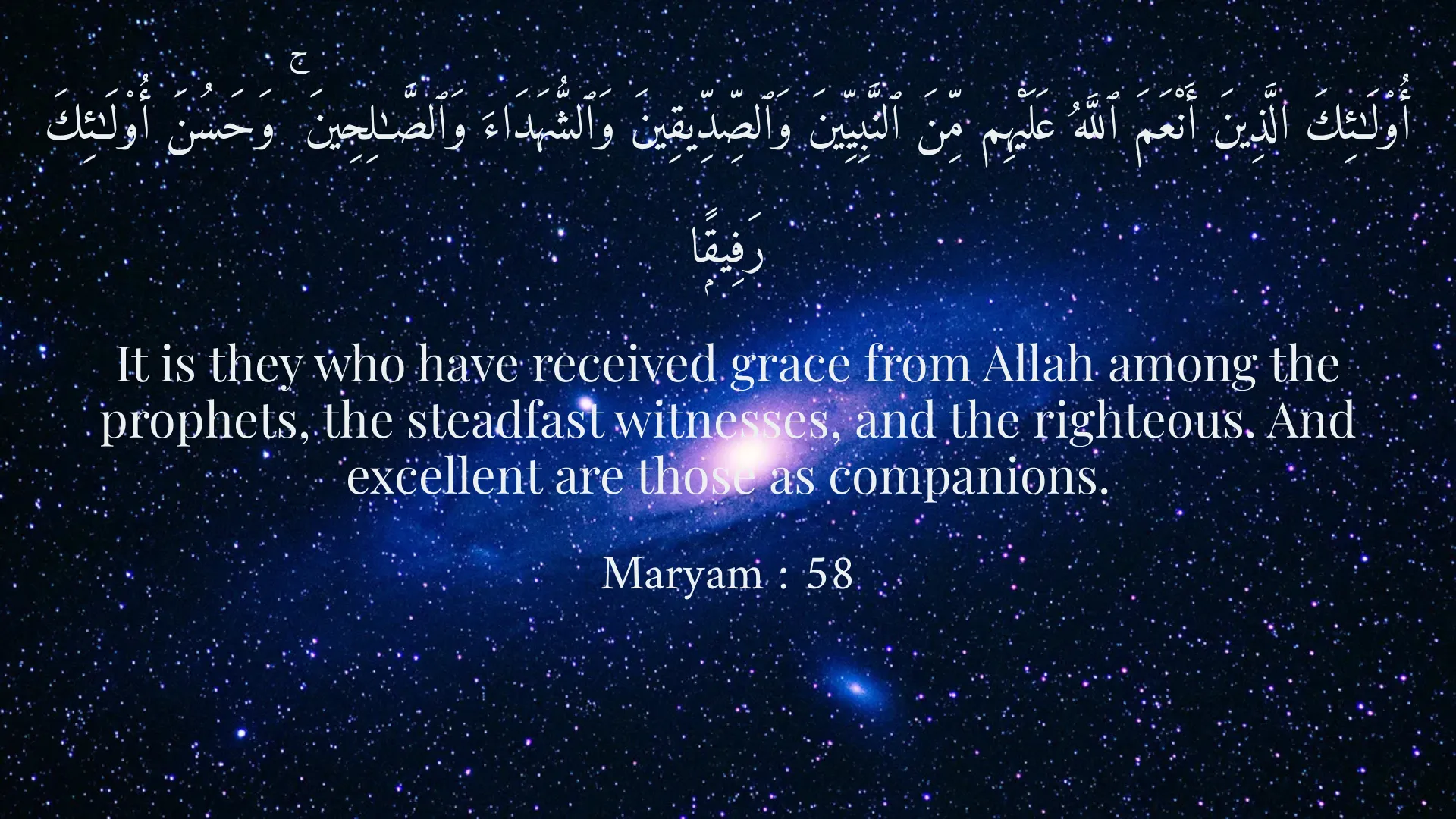
أُو۟لَـٰئِكَ الَّذِينَ أَنْعَمَ ٱللَّهُ عَلَيْهِم مِّنَ ٱلنَّبِيِّينَ وَٱلصِّدِّيقِينَ وَٱلشُّهَدَاءَ وَٱلصَّـٰلِحِينَ ۚ وَحَسُنَ أُو۟لَـٰئِكَ رَفِيقًۭا
It is they who have received grace from Allah among the prophets, the steadfast witnesses, and the righteous. And excellent are those as companions.
Maryam : 58
Short Story
One day, a man named Ehsan felt a fear of divine punishment in his heart. He remembered the verses of the Quran and decided to deepen his connection with Allah through fear and love for Him. After crying and repenting, he experienced a strange peace and realized that this fear was a kind of love for the Almighty.