Quranic Answer
In the sublime teachings of the Holy Quran, repentance, known as Tawbah, signifies a sincere return to God after committing a sin or error, holding a fundamental and vital position. This return is not merely an act of worship but a spiritual and heartfelt process aimed at purifying the soul and restoring the connection with the Creator of the universe. Now, the question arises: Is delaying this sacred act considered a separate sin? By closely examining the verses of the Quran, it can be understood that the Quran does not explicitly classify delaying repentance as a distinct and new sin. However, it strongly discourages it and places immense emphasis on its urgency and importance. In essence, delaying repentance is not a new sin itself, but rather a factor that leads to numerous spiritual and worldly risks, jeopardizing the unique opportunities for divine mercy and forgiveness. In various verses, the Holy Quran calls upon humanity to turn towards repentance and seeking forgiveness (Istighfar), presenting it as a path to salvation and prosperity. For instance, in Surah An-Nisa, verse 17, Allah (SWT) states: "Indeed, Allah accepts the repentance of those who do evil in ignorance and then repent soon after. It is those to whom Allah will turn in forgiveness, and Allah is ever Knowing and Wise." The phrase "min qarib" (مِن قَرِيبٍ), meaning "soon after" or "shortly thereafter," in this verse conveys a clear and decisive message: repentance must be performed as quickly as possible, without any delay. This expression indicates that Allah grants His grace and forgiveness to those who do not procrastinate in returning from their sins and seize the opportunity. This urgency is rooted in divine wisdom; for the human heart is susceptible to change, and the more sin takes root in it, the harder it becomes to cleanse and return. Delay provides an opportunity for Satan to solidify sin and instill despair and hopelessness. One of the most crucial reasons why the Quran emphasizes the urgency of repentance is the instability and unpredictability of worldly life. No one knows how long they will live or when their appointed time will come. In this regard, Surah An-Nisa, verse 18, states: "But repentance is not [accepted] of those who continue to do evil deeds until, when death approaches one of them, he says, 'Indeed, I have repented now,' nor of those who die while they are disbelievers. For those We have prepared a painful punishment." This verse clearly articulates that repentance at the moment of death, when confronting the inevitable, is no longer accepted. This explicit warning signifies that delaying repentance is so dangerous that a person might lose the chance to compensate for their actions forever, entering the Hereafter burdened with a multitude of sins. Therefore, while delaying repentance is not considered a separate sin, it drastically increases the risk of repentance not being accepted and exposes an individual to divine punishment. Furthermore, in Surah Al-Imran, verse 133, Allah commands: "And hasten to forgiveness from your Lord and a Garden as wide as the heavens and earth, prepared for the righteous." The word "sāriʿū" (سَارِعُوا), meaning "hasten" or "hurry," once again emphasizes urgency and the absence of procrastination in seeking forgiveness and returning to God. This haste applies not only to repentance from sins but also to performing any good and righteous deed. A true believer is one who seizes opportunities and does not hesitate for a moment in striving for divine pleasure. Delaying repentance signifies a form of heedlessness towards the gravity of sin and a disregard for Allah's boundless mercy; for Allah awaits His servant at every moment to return and forgive them. Delaying repentance can lead to a hardening of the heart and the loss of spiritual sensitivities. Sin is like a black spot that, with repetition and lack of purification, covers the entire heart, sealing it until the light of guidance can no longer penetrate. This is what the Holy Quran states concerning some individuals whose hearts Allah has sealed. Delay, moreover, might lead to forgetting the sin and the disappearance of the feeling of remorse, which is the greatest obstacle to true repentance. A sincere repentance (Tawbah Nasuh) comprises three fundamental pillars: genuine regret for the sin, immediate abandonment of it, and a firm resolve not to return to it in the future. If the rights of others are involved, restitution to those whose rights were violated is also a condition. Delaying repentance weakens each of these pillars: regret fades, abandoning the sin is postponed, and the resolve not to return becomes feeble. In conclusion, while the Quran does not count delaying repentance as an independent sin, it regards it as an undesirable and perilous act that can have irreversible consequences. Delay burns opportunities, closes the door of mercy to a person, and increases the risk of sudden death without having been purified from sins. A true Muslim is one who consistently strives to purify their soul and, whenever a sin is committed, immediately returns to their Lord, making amends for the past and building the future through regret, seeking forgiveness, and righteous deeds. This urgency in repentance is a sign of a vigilant heart, knowledge of divine majesty, and a correct understanding of the fleeting opportunities of this world. Therefore, one should always hasten to embrace divine mercy and, with every slip, immediately return to Him.
Related Verses
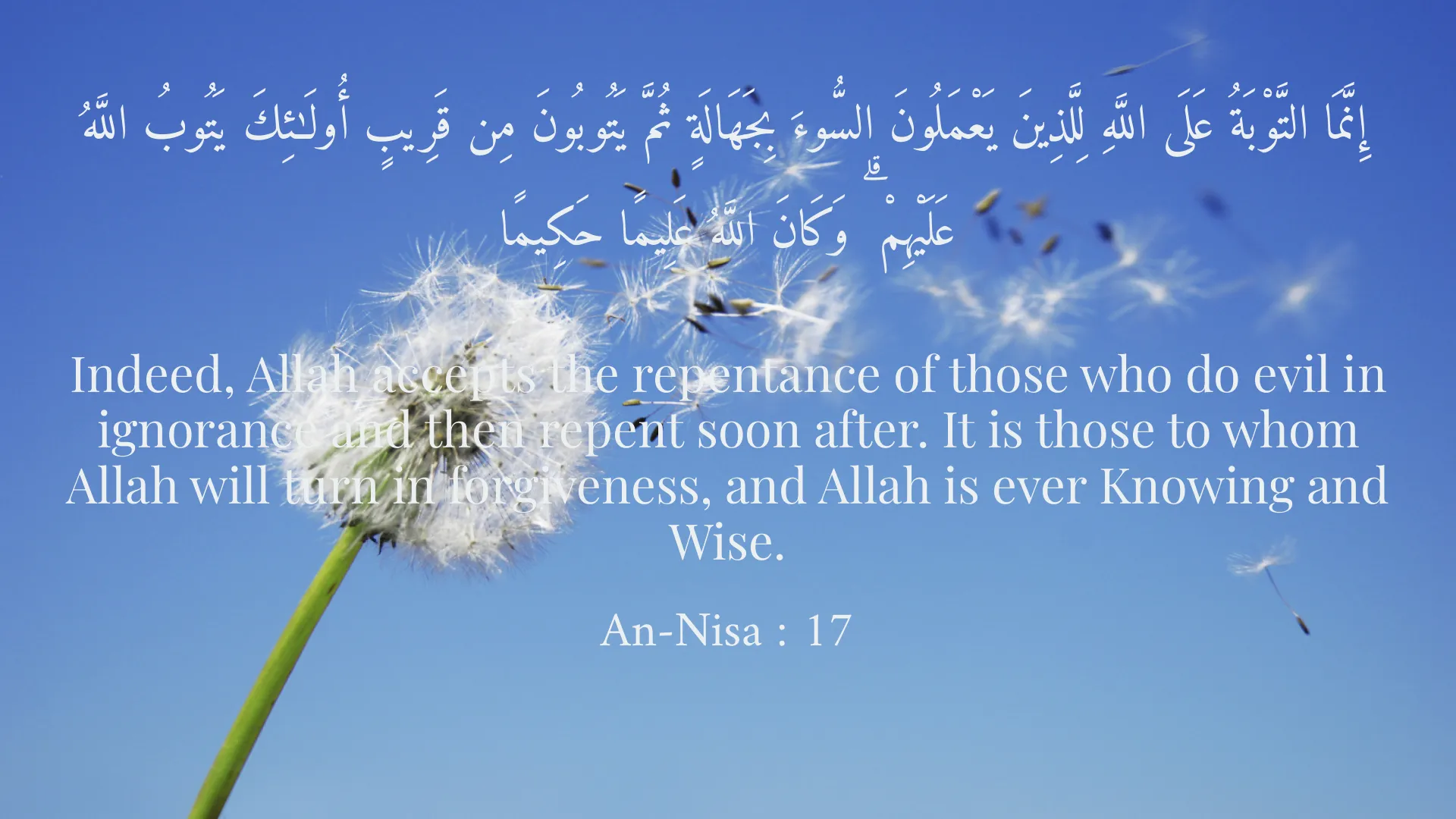
إِنَّمَا التَّوْبَةُ عَلَى اللَّهِ لِلَّذِينَ يَعْمَلُونَ السُّوءَ بِجَهَالَةٍ ثُمَّ يَتُوبُونَ مِن قَرِيبٍ أُولَٰئِكَ يَتُوبُ اللَّهُ عَلَيْهِمْ ۗ وَكَانَ اللَّهُ عَلِيمًا حَكِيمًا
Indeed, Allah accepts the repentance of those who do evil in ignorance and then repent soon after. It is those to whom Allah will turn in forgiveness, and Allah is ever Knowing and Wise.
An-Nisa : 17
وَلَيْسَتِ التَّوْبَةُ لِلَّذِينَ يَعْمَلُونَ السَّيِّئَاتِ حَتَّىٰ إِذَا حَضَرَ أَحَدَهُمُ الْمَوْتُ قَالَ إِنِّي تُبْتُ الْآنَ وَلَا الَّذِينَ يَمُوتُونَ وَهُمْ كُفَّارٌ ۚ أُولَٰئِكَ أَعْتَدْنَا لَهُمْ عَذَابًا أَلِيمًا
But repentance is not [accepted] of those who continue to do evil deeds until, when death approaches one of them, he says, 'Indeed, I have repented now,' nor of those who die while they are disbelievers. For those We have prepared a painful punishment.
An-Nisa : 18
وَسَارِعُوا إِلَىٰ مَغْفِرَةٍ مِّن رَّبِّكُمْ وَجَنَّةٍ عَرْضُهَا السَّمَاوَاتُ وَالْأَرْضُ أُعِدَّتْ لِلْمُتَّقِينَ
And hasten to forgiveness from your Lord and a Garden as wide as the heavens and earth, prepared for the righteous.
Al-Imran : 133
Short Story
It is narrated that there was a wealthy merchant, possessed of immense riches, who constantly contemplated donating a significant portion of his wealth to the needy. However, each day he would tell himself, 'Tomorrow, or perhaps next year, when my fortunes have grown even more, then I shall embark upon this noble act.' He harbored grand dreams of building magnificent mosques and feeding thousands. Yet, as fate would have it, one night, a sudden fire consumed his warehouses, and a subsequent storm sank his ships. In a single stroke, his wealth vanished. He was plunged into despair, lamenting not the loss of his riches, but the countless opportunities he had squandered to do good. For he realized then, with bitter clarity, that 'tomorrow' might never arrive, and 'more wealth' might never materialize. He learned, albeit painfully, that benevolence, like repentance, must be seized in the fleeting moment of ability, for delay is often the bitter root of regret.