Quranic Answer
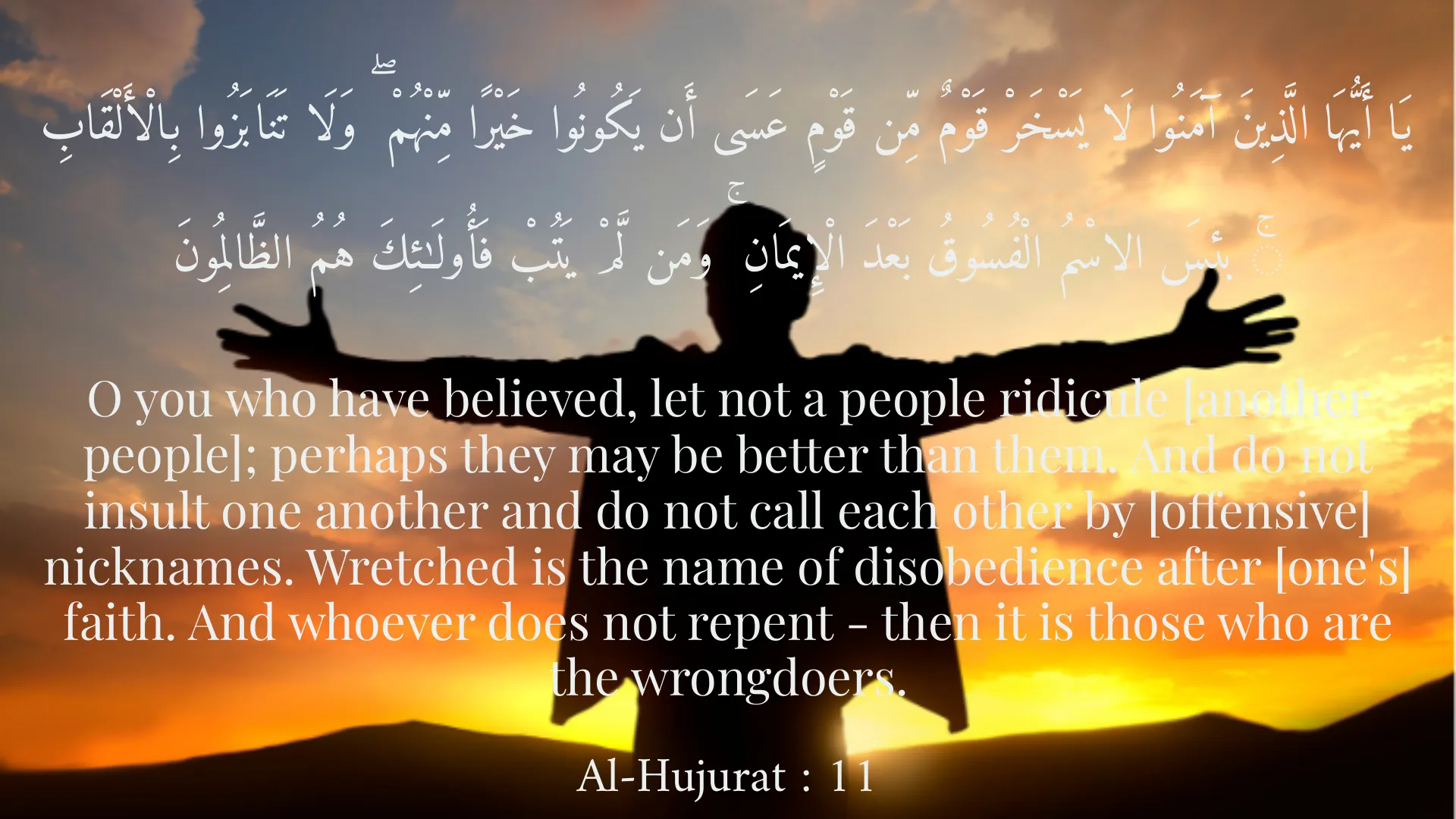
The importance of respect and adherence to God's commandments is a recurring theme in the Holy Quran, emphasizing the fundamental principle that disrespecting others is considered a grave sin. This concept is crucial in fostering harmonious relationships between individuals and in promoting a compassionate society. In this article, we will explore the significance of respect in Islam through various verses of the Holy Quran, the implications of disrespect, and the responsibility of believers to uphold these values in their daily lives. The Quran highlights the importance of mutual respect among individuals in Surah Al-Hujurat, verse 11, which states: 'O you who have believed, let not a people ridicule [another people]...' This verse reflects the essence of respect and propriety in interactions among different communities and individuals. The act of ridicule is not merely a trivial offense; it can lead to a cascade of negative consequences such as animosity, division, and unrest within a community. When individuals engage in contemptuous behavior towards each other, it sows the seeds of discord and may ultimately distance them from Allah's mercy. Thus, this verse serves as a reminder that believers should be conscious of their actions and the impact they may have on others, reinforcing the need for compassion and empathy in human interactions. Moreover, respect for others transcends personal interactions and extends to our views and treatment of various groups based on different characteristics. Surah Al-Isra, verse 70 states, 'And We have certainly honored the children of Adam…' This verse highlights the elevated status that God has conferred upon humanity. As God's creations, every individual is deserving of honor and dignity, regardless of their financial status, race, or other factors. Disrespecting individuals based on these attributes is essentially a form of ingratitude toward the Creator, who has bestowed upon every human being a unique value and purpose. It challenges believers to reflect on their prejudices and biases and strive to treat each person they encounter with the respect and consideration that is their due. Furthermore, Surah Luqman, verse 18 advises, 'And do not turn your cheek [in contempt] toward people...' This verse teaches Muslims the importance of humility and respect in their demeanor towards others. It admonishes against the natural inclination some have to look down upon others, thereby reinforcing the Islamic principle that everyone should be treated with dignity, kindness, and respect, regardless of their social standing. In a practical sense, this means engaging with people in a way that conveys recognition of their worth and refraining from attitudes or behaviors that suggest superiority or contempt. Additionally, the implications of disrespect are multifaceted. Not only can it harm the relationships between individuals, but it can also complicate one’s connection with God. Islam teaches that one's treatment of others directly relates to their standing in the eyes of the Creator. In many instances throughout the Quran, mercy and compassion are linked to an individual's behavior towards fellow human beings. Therefore, by promoting respect and kindness within society, believers not only fulfill their moral duties but also attract God’s mercy and blessings. To further illustrate the profound effects of respect on community life, one can consider the broader implications of failing to uphold this value. Disrespect can lead to societal fragmentation and unrest, manifested in hostility, violence, and division among groups. Conversely, when individuals approach one another with respect and understanding, it fosters a sense of community, cooperation, and peace. The Quran, as a guide for all aspects of life, encourages followers to create a society rooted in mutual respect and compassion, which can ultimately lead to a more harmonious existence. In essence, the teachings of the Holy Quran illustrate that respect for others is not only a social obligation but a spiritual responsibility. Believers must strive to embody the principles outlined in these verses, making respect a foundational aspect of their interactions with others. By doing so, they promote a culture of kindness, reduce the likelihood of conflict, and enhance their relationship with God. In conclusion, the Quran serves as a timeless guide advocating for respect among individuals and communities. Disrespecting others is viewed not just as a social faux pas but as a significant moral failing that can jeopardize one's spiritual well-being. The principles embedded in verses such as those from Surah Al-Hujurat, Surah Al-Isra, and Surah Luqman compel believers to reconsider their attitudes and behaviors towards others, ensuring that they cultivate a spirit of mutual respect, compassion, and empathy in their lives. Ultimately, respect for others is a cornerstone of Islamic life and an essential facet of our humanity, guiding believers towards a life of righteousness and closer communion with God.
Related Verses
يَا أَيُّهَا الَّذِينَ آمَنُوا لَا يَسْخَرْ قَوْمٌ مِّن قَوْمٍ عَسَى أَن يَكُونُوا خَيْرًا مِّنْهُمْ ۖ وَلَا تَنَابَزُوا بِالْأَلْقَابِ ۚ بئسَ الاسْمُ الْفُسُوقُ بَعْدَ الْإِيمَانِ ۚ وَمَن لَّمْ يَتُبْ فَأُولَـٰئِكَ هُمُ الظَّالِمُونَ
O you who have believed, let not a people ridicule [another people]; perhaps they may be better than them. And do not insult one another and do not call each other by [offensive] nicknames. Wretched is the name of disobedience after [one's] faith. And whoever does not repent - then it is those who are the wrongdoers.
Al-Hujurat : 11
وَلَقَدْ كَرَّمْنَا بَنِي آدَمَ وَحَمَلْنَاهُمْ فِي الْبَرِّ وَالْبَحْرِ وَرَزَقْنَاهُمْ مِنَ الطَّيِّبَاتِ وَفَضَّلْنَاهُمْ عَلَى كَثِيرٍ مِّمَّنْ خَلَقْنَا تَفْضِيلًا
And We have certainly honored the Children of Adam and carried them on the land and the sea and provided for them good things and preferred them over much of those We created.
Al-Isra : 70
وَلَا تَصْعَرْ خَدَّكَ لِلنَّاسِ وَلَا تَمْشِ فِي الْأَرْضِ مَرَحًا ۖ إِنَّ اللَّهَ لَا يُحِبُّ كُلَّ مُخْتَالٍ فَخُورٍ
And do not turn your cheek [in contempt] toward people and do not walk through the earth exultantly. Indeed, Allah does not like everyone self-deluded and boastful.
Luqman : 18
Short Story
One day, a man named Hamid was shopping in the market. He insulted a seller by saying that his goods were worthless. Suddenly, he remembered the verses of the Quran that call us to respect both ourselves and others. He regretted his behavior and apologized to the seller. This experience taught him how respecting others could enhance his life.