Quranic Answer
The Holy Quran, as the central religious text of Islam, serves as a guide for millions of Muslims around the world. Within its verses, it emphasizes key virtues that are fundamental to the ethical and moral fabric of society. One of the most commendable characteristics highlighted in the Quran is the act of doing good towards others. This is not just a mere suggestion, but rather an imperative emphasized by Allah, who advises humanity to engage in acts of kindness and benevolence towards one another. The teachings on kindness extend beyond simple acts of assistance; they form an essential part of one's faith and are intertwined with the belief in Allah, the Last Day, and the moral responsibilities of individuals. One of the most profound verses that encapsulates the essence of righteousness and its association with kindness is found in Surah Al-Baqarah, verse 177. The verse states: "Righteousness is not that you turn your faces toward the east or the west, but [true] righteousness is in one who believes in Allah, the Last Day, the Angels, the Book, and the Prophets and gives his wealth, in spite of love for it, to relatives, orphans, the needy, the traveler, those who ask [for help], and for freeing slaves..." This verse articulates a comprehensive definition of righteousness that is rooted in belief and active compassion towards others. It makes it explicit that true righteousness transcends the mere performance of rituals; it is deeply connected with one’s ethical obligations towards fellow beings. The Quran teaches that believing in Allah and performing righteous deeds are intrinsically linked. The expression of faith is not solely about spirituality but also reflects in actions. The verse denotes various categories of people who are deserving of kindness: relatives, orphans, the needy, travelers, and those who plead for assistance. Each of these groups represents a segment of society that is often vulnerable and in need of support. The mention of these groups highlights a significant aspect of social responsibility that is expected of believers. In Islamic teachings, the importance of helping such individuals is paramount and serves as a basis for charitable acts (Sadaqa) and obligatory almsgiving (Zakat). To further comprehend the significance of good deeds in alleviating divine punishment, we can look at another relevant verse in Surah Al-Imran, verse 134, which asserts: "And those who spend [in the cause of Allah] during ease and hardship and who restrain anger and who pardon the people - and Allah loves the doers of good." The notion of spending in the cause of Allah further reinforces the understanding that good deeds encompass not only monetary donations but also acts of emotional generosity, such as forgiveness and patience. This verse serves to remind believers that their actions and reactions during hardship define their character and embody their commitment to Allah’s command. The Quran’s emphasis on good deeds as a means of receiving Allah's love and mercy underscores the reciprocal relationship between faith and virtuous behavior. The idea that good deeds can lead to the forgiveness of sins points to a profound understanding of human fallibility. In Islam, it is recognized that all human beings are prone to mistakes, yet through sincere acts of kindness and compassion, one may seek redemption and growth. In addition to divine forgiveness, engaging in acts of goodness can foster personal growth and social harmony. The act of helping others cultivates empathy and compassion, qualities that are essential in building a cohesive society. When individuals extend kindness to those around them, it creates a ripple effect, inspiring others to act similarly and fostering a communal culture of support and care. This helps not only in alleviating the immediate struggles of those in need but also in enriching the moral landscape of the community as a whole. Furthermore, studies conducted in various sociological contexts reveal that altruism and kindness have profound psychological benefits for the giver, accentuating the concept that such behaviors are fundamentally beneficial, both spiritually and mentally. Individuals who actively engage in charitable acts often report higher levels of happiness and life satisfaction. This phenomenon aligns with the Islamic teachings regarding the intrinsic and extrinsic rewards that accompany good deeds. Additionally, the Quran underscores the importance of intention (niyyah) behind every act of kindness. The purity of intention is often regarded as a prerequisite for the acceptance of any good deed before Allah. Therefore, an individual who performs acts of kindness, not merely for social recognition or material gain, but out of genuine concern for others, aligns with the true Islamic principles of charity and altruism. In conclusion, the Holy Quran addresses the significance of doing good to others as a commendable and essential characteristic of a true believer. The verses underscore the myriad of ways in which one can express kindness and compassion, from charitable giving to emotional support through forgiveness and patience. Not only does the Quran promote these actions as pathways to divine acceptance and forgiveness, but it also recognizes their irreplaceable role in fostering moral character, community cohesion, and personal well-being. It is a call to all individuals to embody these values in their lives and serves as a guiding principle for achieving spiritual and ethical growth. The teachings on kindness and good deeds illustrate that they are not mere recommendations but are integral to the life of a believer, enabling one to navigate through the complexities of existence with grace, empathy, and righteousness.
Related Verses
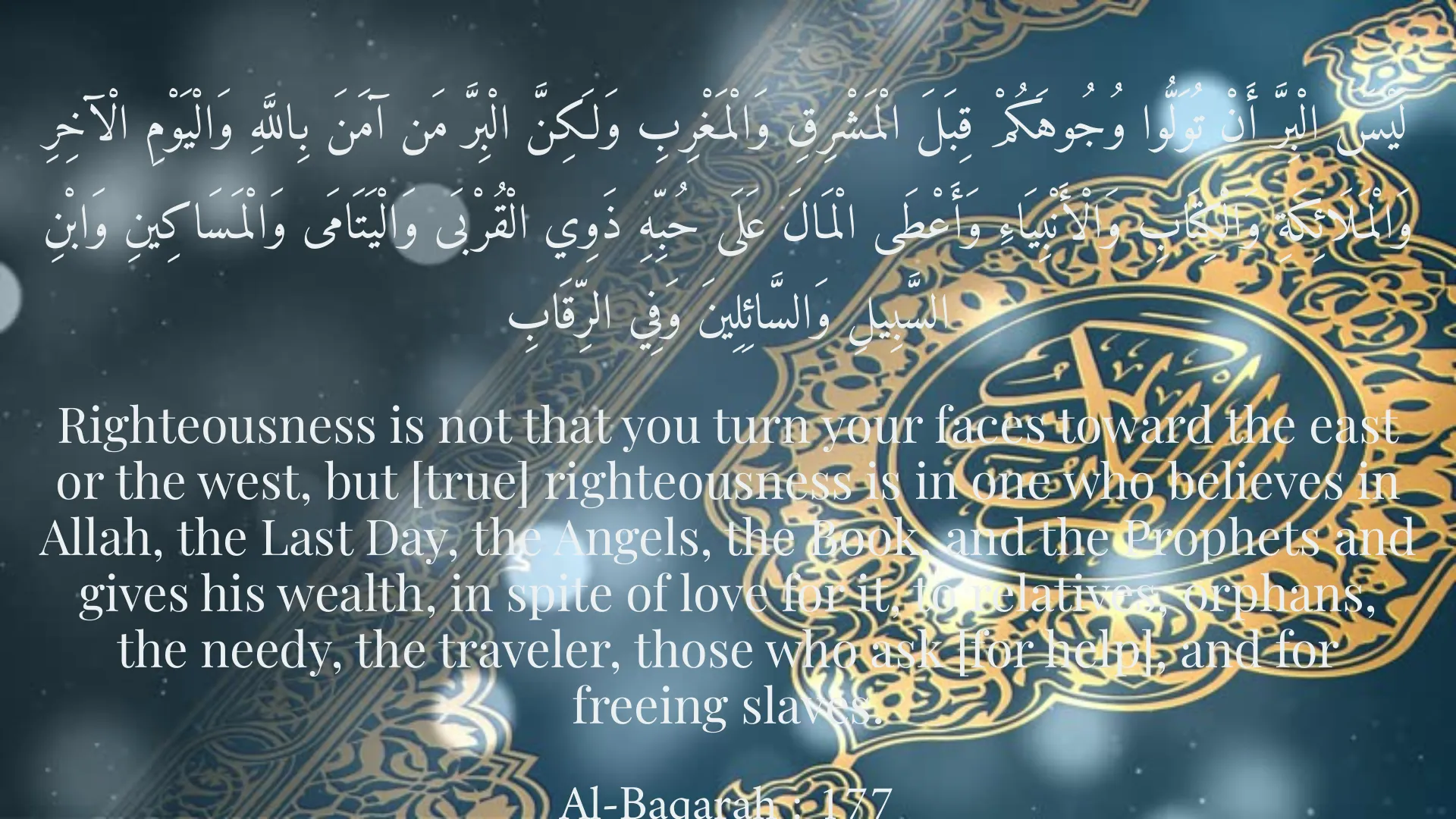
لَيْسَ الْبِرَّ أَنْ تُوَلُّوا وُجُوهَكُمْ قِبَلَ الْمَشْرِقِ وَالْمَغْرِبِ وَلَكِنَّ الْبِرَّ مَن آمَنَ بِاللَّهِ وَالْيَوْمِ الْآخِرِ وَالْمَلَائِكَةِ وَالْكِتَابِ وَالْأَنْبِيَاءِ وَأَعْطَى الْمَالَ عَلَى حُبِّهِ ذَوِي الْقُرْبَى وَالْيَتَامَى وَالْمَسَاكِينِ وَابْنِ السَّبِيلِ وَالسَّائِلِينَ وَفِي الرِّقَابِ
Righteousness is not that you turn your faces toward the east or the west, but [true] righteousness is in one who believes in Allah, the Last Day, the Angels, the Book, and the Prophets and gives his wealth, in spite of love for it, to relatives, orphans, the needy, the traveler, those who ask [for help], and for freeing slaves.
Al-Baqarah : 177
وَالَّذِينَ يُنفِقُونَ فِي السَّرَّاءِ وَالضَّرَّاءِ وَالْكَاظِمِينَ الْغَيْظَ وَالْعَافِينَ عَنِ النَّاسِ ۗ وَاللَّهُ يُحِبُّ الْمُحْسِنِينَ
And those who spend [in the cause of Allah] during ease and hardship and who restrain anger and who pardon the people - and Allah loves the doers of good.
Al-Imran : 134
Short Story
Once upon a time, a kind-hearted man lived in a village. Every morning, he would visit the orphans and provide them with bread and food. He understood that giving and kindness not only brought joy to his heart but could also atone for his sins. One day, one of the orphans asked him, 'Why are you so kind to us?' The man replied, 'Because doing good and spreading love purifies my soul and brings me closer to God.'