Quranic Answer
The question regarding whether enduring humiliation is a type of patience is a profound and practical inquiry that necessitates a careful elucidation of Quranic and prophetic teachings. Unequivocally, yes, enduring humiliation is indeed a form of patience (sabr), but not every type of endurance. This endurance must be accompanied by insight, wisdom, and be within the framework of Islamic principles. Patience (sabr) in the Holy Quran is a vast and multifaceted concept that encompasses steadfastness, perseverance, fortitude, and self-restraint in the face of hardships, calamities, temptations, and even verbal and psychological abuse. The Quran advises believers to exercise patience in various forms: patience in obedience to God (like performing worship despite difficulties), patience in abstaining from sins (like resisting temptations), and patience in enduring afflictions and calamities (like loss of loved ones or financial harm). Enduring humiliation clearly falls into the third category, namely patience in afflictions and harm, and is considered one of the prominent manifestations of "patience in the face of dislikes." One of the primary reasons for believers encountering humiliation is divine testing. Allah states in the Quran that every human being will be tried and tested to measure their faith, patience, and steadfastness. Humiliation and verbal abuse can be one such test, aimed at purifying the soul, strengthening faith, and elevating spiritual ranks. In numerous verses of the Holy Quran, emphasis is placed on the importance of patience in the face of harassment, mockery, and insults. Such abuse often came from opponents of the religion or ignorant individuals. Allah Almighty instructs Prophet Muhammad (PBUH) and the believers to show forbearance in response to such behaviors. For instance, in Surah Al-Imran, verse 186, it states: "You will surely be tested in your possessions and in yourselves. And you will surely hear from those who were given the Scripture before you and from those who associate others with Allah much abuse. But if you are patient and fear Allah - indeed, that is of the matters [requiring] determination." This verse explicitly states that believers will face much verbal and psychological harm ("adha kathira") and the Quranic solution to it is patience and piety. This "adha kathira" can include humiliation, insults, mockery, and slander, and patience in enduring it is a sign of strong resolve and determination. Patience in the face of humiliation is a sign of spiritual strength and high ambition, not weakness, inability, or passivity. A person who responds to humiliation with calmness, dignity, and magnanimity demonstrates that their self-worth is not dependent on the opinions of others, but is founded on faith in God, divine values, and inherent human dignity. Such an individual, by controlling anger and refraining from retaliation, avoids falling into the psychological traps and demeaning games of the other party, and does not allow insulting words to disrupt their inner peace. This type of patience is a conscious and chosen act, aimed at preserving self-respect, attaining divine pleasure, and preventing the escalation of hostilities and evils. This patience, instead of an emotional reaction, is based on reflection and insight to choose the best response that upholds moral and spiritual values. The Holy Quran, in describing the attributes of "Ibad-ur-Rahman" (the special servants of the Most Merciful God) in Surah Al-Furqan, verse 63, states: "And the servants of the Most Merciful are those who walk upon the earth easily, and when the ignorant address them [harshly], they say [only], 'Peace.'" This verse teaches us how to behave with those who speak to us out of ignorance or with the intention of humiliation and annoyance. The response "peace" (salam) here means wishing well-being and dignified, serene withdrawal, not necessarily responding in the same demeaning language and fueling grudges. This manner of conduct is the pinnacle of patience, wisdom, and magnanimity, where a person elevates themselves above engaging in futile arguments with the ignorant and avoids falling into the vicious cycle of insult and retaliation. It must be noted that patience in enduring humiliation does not mean submission to oppression or acceptance of injustice. Islam never permits subservience or surrender to injustice. If humiliation means trampling upon the fundamental rights of an individual or society, and there is a legitimate, lawful, and wise way to counter it, Islam does not allow silence and abasement, but rather emphasizes defending rights and confronting oppression. The patience approved by the Quran is that which aims to preserve religious and human values, achieve perfection, and elevate spirituality. This patience is an active and intelligent strategy for managing emotional crises, maintaining inner peace against external attacks, and choosing the best reaction that does not lead to corruption and ruin. However, on an individual level and when facing personal verbal abuse whose sole purpose is to disrupt peace and provoke, dignified endurance, forgiveness, and refraining from retaliation is the epitome of forbearance, wisdom, and intellectual and spiritual maturity. This type of patience is also accompanied by forgiveness and overlooking, as Allah says in the Quran: "And let them pardon and overlook. Would you not like that Allah should forgive you?" (Surah An-Nur, verse 22). Prophet Muhammad (PBUH) and the infallible Imams (A.S.) were also prime examples of patience in the face of humiliation and harm. Their lives are full of situations where they were insulted, mocked, rejected, and slandered, yet they responded with forbearance, good ethics, prayers for the guidance of the ignorant, and refraining from retaliation. This behavior not only did not diminish their status but added to their greatness and the influence of their words, guiding many to the straight path. This emulation of divine personalities shows how humiliation can be transformed into an opportunity to display moral virtues, win hearts, and draw closer to God. From an Islamic psychological perspective, enduring humiliation with patience leads to the strengthening of true self-esteem. When an individual realizes that their worth and dignity are determined by the Creator and are not affected by the worthless words of others, they achieve inner peace and confidence. This patience also provides an opportunity for reflection on internal weaknesses and working on them; perhaps the humiliating remark, even if with ill intent, contains a wake-up call that can help in self-correction. Even if not, practicing patience in such situations increases one's spiritual and psychological capacity, preparing them to face greater challenges and teaching them how to control their reactions. Ultimately, the reward for the patient is promised in the Quran. Allah says: "Indeed, the patient will be given their reward without account" (Surah Az-Zumar, verse 10). This countless reward not only includes the recompense in the afterlife but also brings peace and blessing in this world, as the individual, through self-restraint and reliance on God, is freed from the cycle of negativity and grudge. Therefore, enduring humiliation in the Quranic way and with the intention of drawing closer to Allah is not only a type of patience but is considered among its highest ranks, requiring self-improvement, deep faith, and complete reliance on Allah. This patience guides humanity towards human perfection and places them among "Ibad-ur-Rahman."
Related Verses
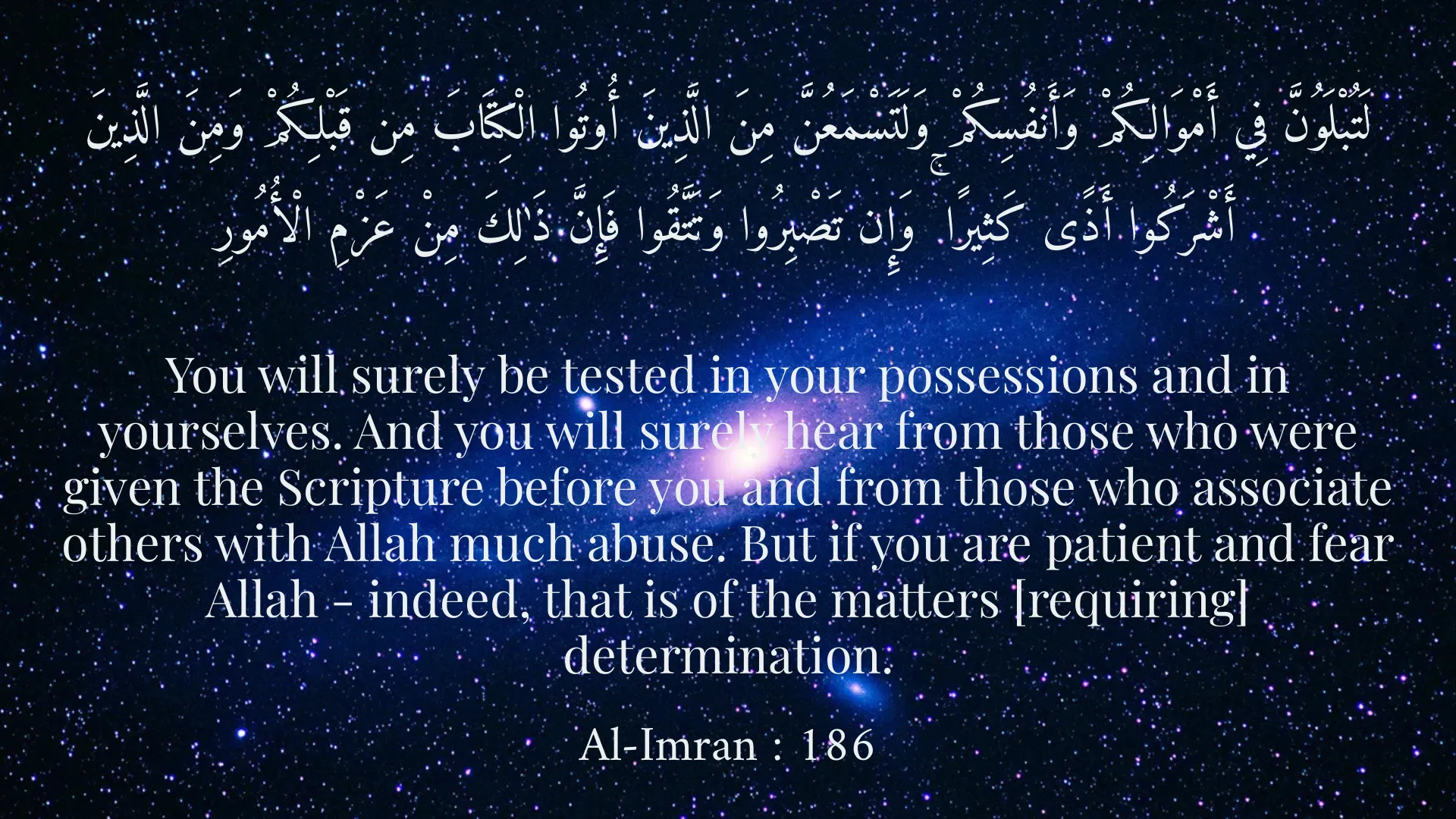
لَتُبْلَوُنَّ فِي أَمْوَالِكُمْ وَأَنفُسِكُمْ وَلَتَسْمَعُنَّ مِنَ الَّذِينَ أُوتُوا الْكِتَابَ مِن قَبْلِكُمْ وَمِنَ الَّذِينَ أَشْرَكُوا أَذًى كَثِيرًا ۚ وَإِن تَصْبِرُوا وَتَتَّقُوا فَإِنَّ ذَٰلِكَ مِنْ عَزْمِ الْأُمُورِ
You will surely be tested in your possessions and in yourselves. And you will surely hear from those who were given the Scripture before you and from those who associate others with Allah much abuse. But if you are patient and fear Allah - indeed, that is of the matters [requiring] determination.
Al-Imran : 186
وَعِبَادُ الرَّحْمَٰنِ الَّذِينَ يَمْشُونَ عَلَى الْأَرْضِ هَوْنًا وَإِذَا خَاطَبَهُمُ الْجَاهِلُونَ قَالُوا سَلَامًا
And the servants of the Most Merciful are those who walk upon the earth easily, and when the ignorant address them [harshly], they say [only], 'Peace.'
Al-Furqan : 63
قُلْ يَا عِبَادِ الَّذِينَ آمَنُوا اتَّقُوا رَبَّكُمْ ۚ لِلَّذِينَ أَحْسَنُوا فِي هَٰذِهِ الدُّنْيَا حَسَنَةٌ ۗ وَأَرْضُ اللَّهِ وَاسِعَةٌ ۗ إِنَّمَا يُوَفَّى الصَّابِرُونَ أَجْرَهُم بِغَيْرِ حِسَابٍ
Say, 'O My servants who have believed, fear your Lord. For those who do good in this world is good. And the earth of Allah is spacious. Indeed, the patient will be given their reward without account.'
Az-Zumar : 10
Short Story
It is narrated that in a certain time, there lived a merchant of good repute, possessing abundant wealth and noble character. However, he had a narrow-minded and envious neighbor who consistently sought to vex him with stinging, humiliating remarks. One day, this neighbor came to the marketplace and, amidst the crowd, spoke ill of the merchant, intending to debase him. People awaited the merchant's wrath and a harsh retort. But the merchant, with a calm smile, lowered his head, and when the neighbor finished speaking, he said: 'O brother! If you see me in such a light, know that the fault lies in your perception, not in my essence. One who knows himself fears not the tongues of people and does not lose heart from his own perfection. Perhaps God will guide you to cleanse yourself of envy and find peace in your heart.' And then, without another word, he turned away and attended to his business. The neighbor was ashamed by the merchant's forbearance and magnanimity, realizing that humiliation stems not from the speaker's greatness, but from their baseness, and that patience is the adornment of great men.