Quranic Answer
In the comprehensive and rich school of Islam, the concept of worship (ibadah) extends far beyond merely performing specific rituals such as prayer and fasting. Worship, in essence, encompasses every action undertaken with sincere intention and for the purpose of gaining divine pleasure, embracing all aspects of human life, including how one confronts challenges and hardships. Therefore, the answer to the question of whether enduring life's hardships is considered an act of worship is emphatically yes, provided that this endurance is accompanied by the correct attitude, encompassing patience (sabr), trust in God (tawakkul), contentment (rida), and gratitude (shukr). The Holy Quran, in numerous verses, emphasizes the significance of patience in the face of afflictions and difficulties, and praises those who exhibit it. Almighty God, the All-Wise and All-Knowing Creator, has established the order of creation based on wisdom and justice. The worldly life itself is a testing ground for humanity, designed to distinguish the believer from the disbeliever, and the truthful from the liar. The Quran explicitly states that afflictions and calamities are an integral part of human existence, from which no one is exempt. These hardships and difficulties are not random or purposeless; rather, they serve as instruments within divine decree for the growth, perfection, and purification of the human soul. When an individual faces pain, illness, poverty, loss of loved ones, or any other form of calamity, their reaction to these events can either draw them closer to God and advance them on the path of servitude, or distance them. Patience in the face of these calamities is not a passive resignation or indifference, but an active and conscious endeavor that requires immense spiritual strength and seeking help from the Lord. The patient person is one who submits to divine will, refrains from excessive complaining, and trusts in God's promises of reward for the patient. The Holy Quran explicitly states that Allah loves those who are patient and is with them. This divine companionship is the greatest blessing for a person in distress. Divine verses promise that the reward of the patient will be given without measure, meaning an recompense beyond human imagination and calculation, bestowed directly from God's boundless treasures. This reward is not only attained in the afterlife but also experienced in this world in the form of inner peace, alleviation of difficulties, and unseen divine assistance. Patience, in this sense, is a manifestation of complete reliance on God; it means the person understands that nothing happens without His permission and knowledge, and that what appears to be adverse may, in reality, contain immense good. This insight transforms one's perspective on problems, turning them from obstacles into steps for spiritual ascent. Furthermore, enduring hardships can lead to the expiation of sins and the purification of the soul from impurities. The Prophet Muhammad (peace be upon him) stated that afflictions and illnesses cause a person's sins to fall away like leaves from trees in autumn. This perspective not only makes enduring hardship easier but also transforms it into an opportunity for repentance and returning to God. When a person, at the peak of weakness and despair, finds their only refuge in God and turns to Him with a broken heart and tearful eyes, these moments represent the pinnacle of spiritual connection and sincere worship. This is how suffering becomes not just a test, but a teacher and a means for greater proximity to the Creator. Therefore, every pain, every difficulty, and every calamity that is accompanied by patience, contentment, and hope in divine grace, is in fact an unveiling of hidden layers of faith and reliance within the human being, elevating them to a higher rank in the sight of God. This active patience and reliance, coupled with effort to resolve the issue (to the extent of one's ability), is considered one of the greatest acts of worship, purifying the human soul and preparing it for high stations in the hereafter. Consequently, life's hardships and tribulations, with the right intention and reliance on Quranic teachings and the prophetic tradition, can become powerful tools for achieving perfection and gaining divine pleasure, thereby attaining the status of a great act of worship.
Related Verses
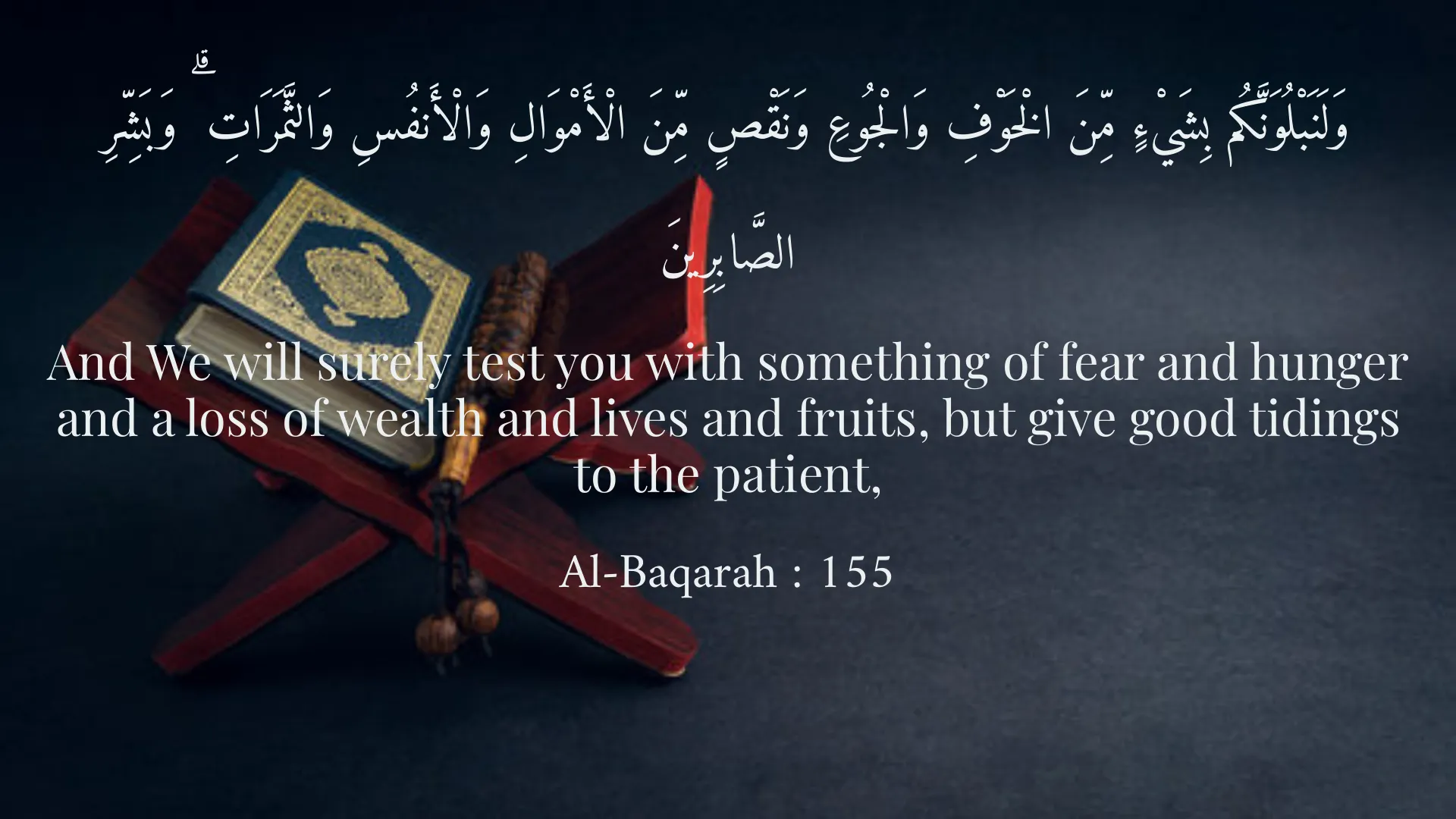
وَلَنَبْلُوَنَّكُم بِشَيْءٍ مِّنَ الْخَوْفِ وَالْجُوعِ وَنَقْصٍ مِّنَ الْأَمْوَالِ وَالْأَنفُسِ وَالثَّمَرَاتِ ۗ وَبَشِّرِ الصَّابِرِينَ
And We will surely test you with something of fear and hunger and a loss of wealth and lives and fruits, but give good tidings to the patient,
Al-Baqarah : 155
الَّذِينَ إِذَا أَصَابَتْهُم مُّصِيبَةٌ قَالُوا إِنَّا لِلَّهِ وَإِنَّا إِلَيْهِ رَاجِعُونَ
Who, when disaster strikes them, say, 'Indeed we belong to Allah, and indeed to Him we will return.'
Al-Baqarah : 156
قُلْ يَا عِبَادِ الَّذِينَ آمَنُوا اتَّقُوا رَبَّكُمْ ۚ لِلَّذِينَ أَحْسَنُوا فِي هَٰذِهِ الدُّنْيَا حَسَنَةٌ ۗ وَأَرْضُ اللَّهِ وَاسِعَةٌ ۗ إِنَّمَا يُوَفَّى الصَّابِرُونَ أَجْرَهُم بِغَيْرِ حِسَابٍ
Say, 'O My servants who have believed, fear your Lord. For those who do good in this world is good, and the earth of Allah is spacious. Indeed, the patient will be given their reward without account.'
Az-Zumar : 10
أَحَسِبَ النَّاسُ أَن يُتْرَكُوا أَن يَقُولُوا آمَنَّا وَهُمْ لَا يُفْتَنُونَ
Do people think that they will be left alone because they say, 'We believe,' and will not be tested?
Al-Ankabut : 2
Short Story
It is narrated that in a time not so long ago, there lived a merchant named Kamal, who possessed great wealth and whose life was perfectly content. One day, a fierce storm suddenly swept away all his possessions, leaving him poor and alone. His friends turned away from him, and his relatives blamed him. Yet, despite the great sorrow in his heart, Kamal never complained. With a calm demeanor, he said, "My wealth belonged to God, and to Him it has returned. Praise be to God that my body is healthy and my faith remains steadfast. Perhaps this destiny is a lesson for me and a path to hidden blessings." With this very trust and contentment, he gradually started anew. Through diligent effort and perseverance, it wasn't long before he not only regained his lost wealth but, by the blessing of his patience and acceptance, found even greater prosperity in his work and life. He then understood that hardships, when endured with a tranquil heart and firm faith, can be like rain that nurtures the seeds of hope and blessings in the soil of the heart.