Quranic Answer
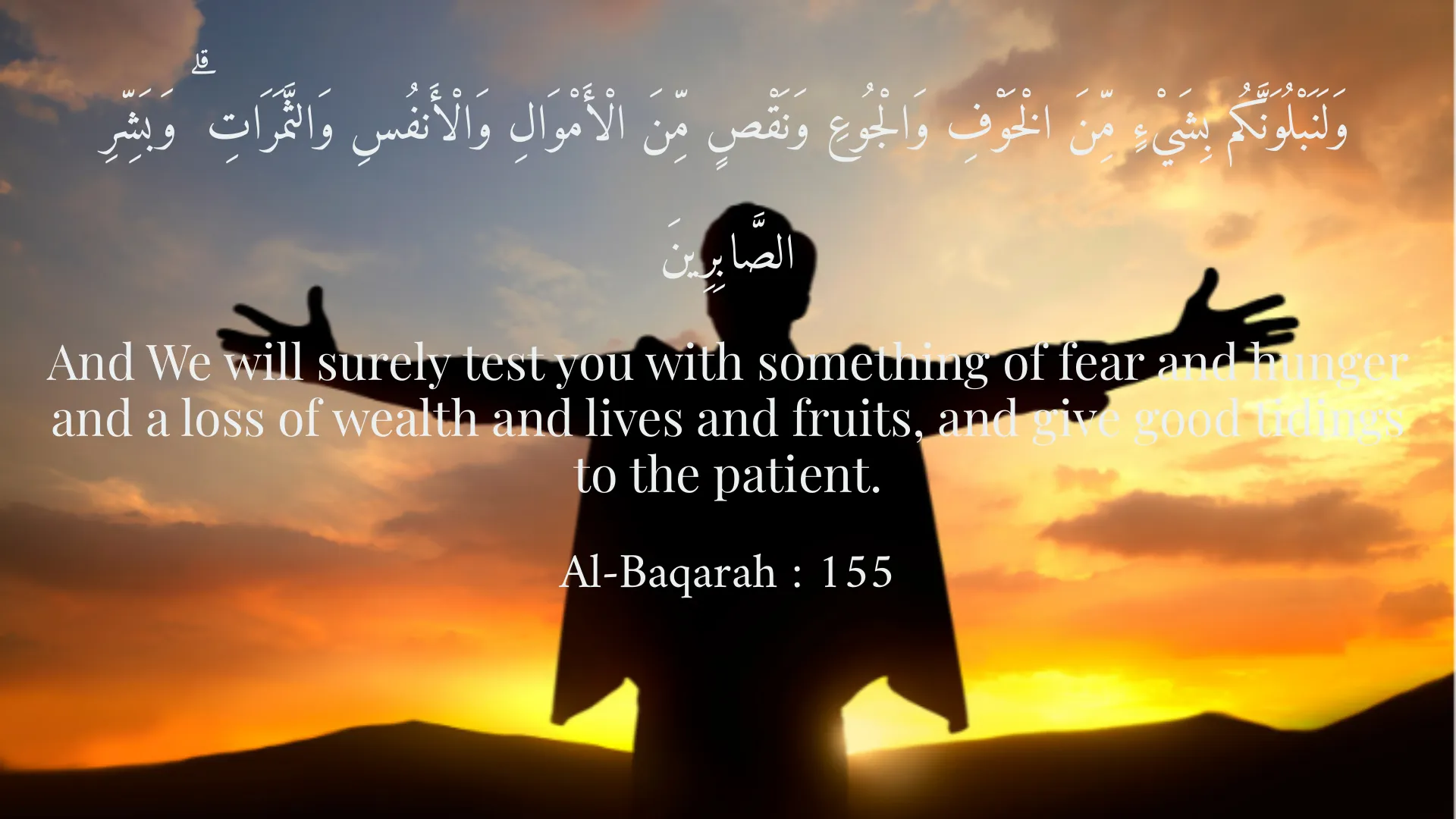
The Holy Quran, regarded as the divine scripture of Islam, serves not only as a guide for spiritual faith but also as a profound text that reflects on the trials and tribulations faced by humanity. In essence, it emphasizes that calamities and hardships, often perceived as misfortunes, from Allah possess profound wisdom and lessons that can lead to personal and spiritual growth. This perspective is fundamentally articulated in Surah Al-Baqarah, verse 155, where Allah states: "And We will surely test you with something of fear and hunger and a loss of wealth and lives and fruits, and give good tidings to the patient." This verse is a vivid reminder that trials, tests, and challenges are an integral part of human existence, designed not merely to confront us, but to examine our faith and patience. It stipulates that the believer’s response to the calamities is paramount and that enduring these hardships with patience yields merit, both in this life and the hereafter. The Quran denotes that such trials are universal and inevitable; they are shared experiences of human life, as noted in Surah Al-Imran, verse 186, which states: "Indeed, We will test you with something of fear and hunger and a loss of wealth and lives." This repetition of themes underscores that life will not be devoid of trials. Moreover, it suggests that these tests are tailored to the individual, incorporating elements that challenge their faith journey personally. Testing of faith through calamities can take various forms, including physical suffering, financial instability, personal loss, and emotional upheaval. The Quran subtly encourages believers to view these experiences not merely as unfortunate events, but rather as divine interventions meant to provoke reflection, growth, and spiritual renewal. The act of enduring such trials with a sense of patience and resilience is considered a monumental show of faith. This perspective aligns with the fundamental Islamic teaching that adversity can bring out the best in individuals, inspiring traits such as patience (Sabr), gratitude (Shukr), and reliance on Allah (Tawakkul), thereby enriching one's spiritual journey. In society today, many individuals face formidable challenges that can lead to despair and hopelessness. Yet, the Quran provides a counter-narrative that cultivates a mindset incorporated through patience and faith. Calamities, while undoubtedly painful, have the potential to unlock avenues for personal exploration and improvement. They are not merely obstacles on the path of life, but rather invitations for self-discovery, which promotes the cultivation of virtues and personal resilience. During painful experiences, individuals may find themselves compelled to reflect on their beliefs and values, leading them to seek deeper spiritual connections. Moreover, the Quran teaches that tests are often accompanied by supportive messages of hope. The phrase "and give good tidings to the patient" serves as a reassurance that every moment of suffering is recognized and that Allah is aware of an individual's condition. This duality of hardship and reward is deeply engrained in Islamic faith, suggesting that tests are not random but are specific opportunities designed to draw believers closer to Allah. The significance of these lessons extends further beyond personal growth, affecting how individuals relate within their communities. Faced with their challenges, individuals often find empathy and solidarity with others who have endured similar trials. Such communal bonds foster an environment where shared experiences of pain can catalyze collective healing and support. This interconnectedness can strengthen humanitarian values and promote compassion, enhancing social cohesion and understanding among diverse groups. The attitudes towards calamities presented in the Quran profoundly impact a believer's outlook on life. Each challenge can potentially unlock spiritual growth and maturity. The philosophy of endurance posited by the Quran encourages believers to stand firm and persevere despite adversities. The act of holding onto faith during testing times can offer a source of comfort and strength, reinforcing the belief that there is wisdom behind every hardship witnessed in life. Furthermore, it is essential to recognize the importance of personal agency in the face of challenges. While the narrative of suffering is prevalent, the Quran does not endorse passivity or acceptance of suffering without reflection or action. Instead, believers are urged to actively seek solutions, support others in similar circumstances, and reflect deeply on the lessons to be learned during times of strife. This proactive approach nurtures a spiritually fulfilled individual prepared to serve their community and contribute positively to the world around them. Individuals who understand hardships as divine tests may find that their resolve to overcome obstacles fuels their growth, propelling them toward achieving their goals and aspirations. Through relentless pursuit, coupled with divine remembrance, they may optimize their potential, ultimately realizing a greater purpose infused with spiritual richness in their lives. In conclusion, the Holy Quran illuminates a profound path through the calamities individuals face in life. The verses discussed portray a broader understanding of adversity, encompassing both spiritual insights and practical applications. They convey that every trial is inherently an opportunity for growth, reflection, and connection with the divine. Therefore, it is appropriate to regard every calamity as a reflection of Allah’s wisdom and love, and standing firmly in faith during these times transforms challenges into stepping stones toward spiritual elevation. Let each hardship be perceived not merely as an obstacle but instead as an invitation to embrace patience, cultivate empathy, and ultimately draw closer to Allah—a notion that resonates deeply in the heart of every believer.
Related Verses
وَلَنَبْلُوَنَّكُم بِشَيْءٍ مِّنَ الْخَوْفِ وَالْجُوعِ وَنَقْصٍ مِّنَ الْأَمْوَالِ وَالْأَنفُسِ وَالثَّمَرَاتِ ۗ وَبَشِّرِ الصَّابِرِينَ
And We will surely test you with something of fear and hunger and a loss of wealth and lives and fruits, and give good tidings to the patient.
Al-Baqarah : 155
إِنَّا لَنُبْلُوكُم بِشَيْءٍ مِّنَ الْخَوْفِ وَالْجُوعِ وَنَقْصٍ مِّنَ الْأَمْوَالِ وَالْأَنفُسِ
Indeed, We will test you with something of fear and hunger and a loss of wealth and lives.
Al-Imran : 186
Short Story
Once upon a time, a man named Ali faced numerous problems. He became very hopeless due to illness and financial troubles. One day, while reading the Quran, he came across a verse about patience in the face of hardships. Ali decided that instead of despair, he would be patient and show gratitude to God. Over time, his problems were resolved, and he learned valuable lessons from that experience.