Quranic Answer
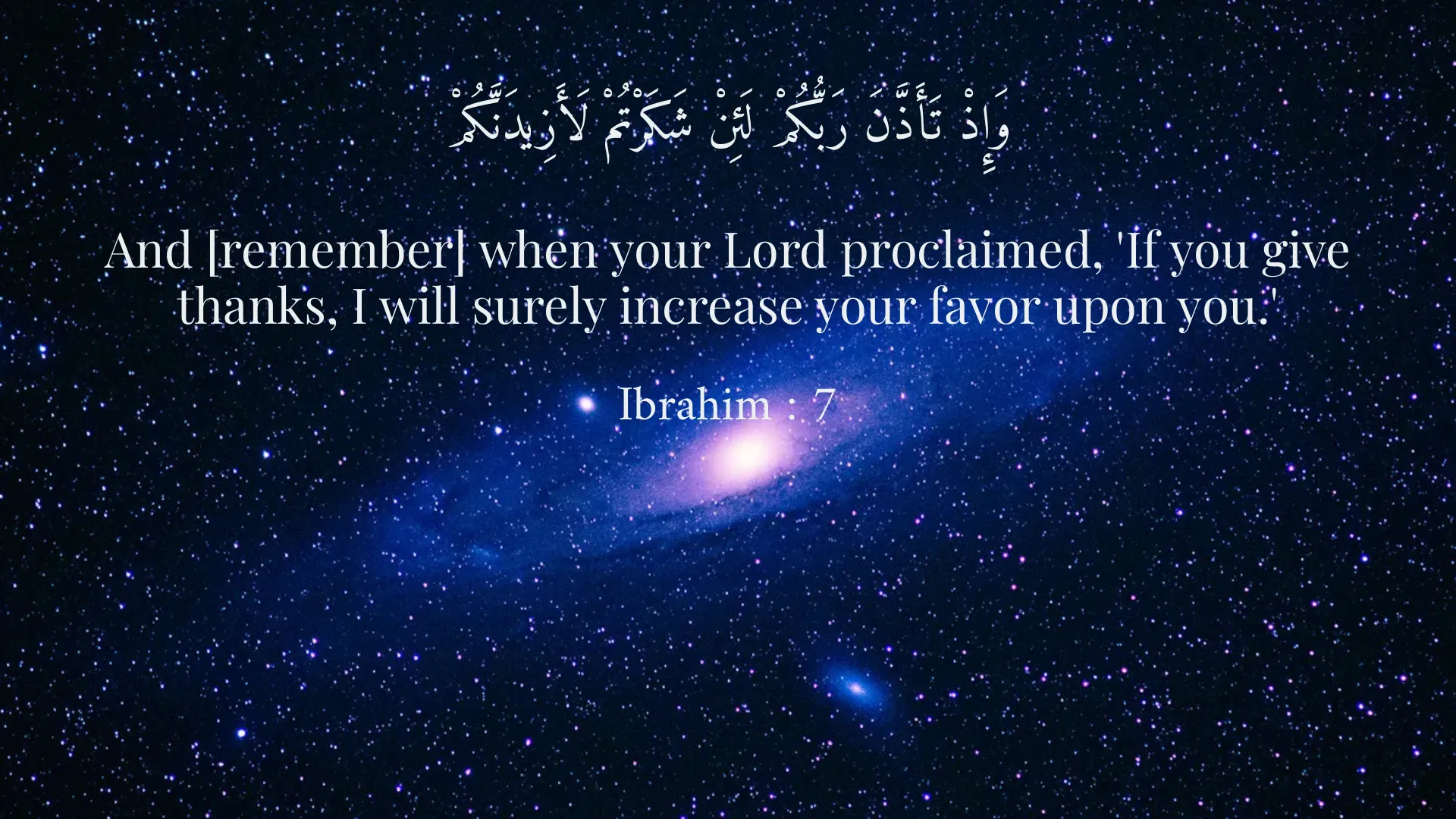
Gratitude is a powerful sentiment that serves as a foundational principle in the lives of believers, echoing throughout various religious teachings and spiritual practices. In particular, the Holy Quran emphasizes the significance of gratitude, advocating that it goes beyond mere verbal expressions of thanks; it must be coupled with meaningful actions and behaviors that demonstrate our appreciation for the blessings we receive. This article aims to explore the multifaceted nature of gratitude in the context of the Quran, its implications on our daily lives, and how it enriches our relationships with ourselves, others, and God. The act of expressing gratitude is intrinsic to many religious traditions, but the Quran presents a profound perspective on the matter. In Surah Ibrahim, verse 7, Allah states, "And [remember] when your Lord proclaimed, 'If you give thanks, I will surely increase your favor upon you.'" This remarkable verse delineates a reciprocal relationship between gratitude and blessings. It implies that genuine expressions of thanks are not only rewarded by an increase in divine favor but also promote a mindset of abundance among believers. This mindset is crucial because it encourages individuals to recognize and appreciate the blessings they already possess rather than focusing solely on what they lack. True gratitude, as conveyed in Islamic teachings, comprises two critical components: acknowledgment of divine blessings and the correct utilization of those blessings. Believers are encouraged to reflect on their lives and recognize the myriad of gifts bestowed upon them by Allah—be it health, family, wealth, or opportunities for personal growth. By consciously acknowledging these blessings, individuals cultivate a mindset rooted in appreciation and positivity. However, the Quran further emphasizes that gratitude cannot simply be a passive acknowledgment of blessings; it must be manifested as active practice. When we are grateful, we must consider how we can leverage our blessings for the benefit of ourselves and others. This notion is beautifully captured in Surah Ar-Ra'd, verse 28, which states, "Unquestionably, by the remembrance of Allah hearts are assured." Such remembrance reassures the heart and strengthens faith, leading to a deeper understanding of the interconnectedness of humanity and the responsibilities that arise from our blessings. As believers, expressing gratitude necessitates adhering to God’s commandments and exhibiting respect for the rights and dignity of others. In our fast-paced lives, it is easy to overlook these responsibilities amidst the chaos of daily routines. However, when we remind ourselves of the importance of gratitude, we find the motivation to engage in actions that reflect our appreciation. Simple gestures such as helping a neighbor in need, volunteering our time towards community service, or simply offering a warm smile can serve as practical manifestations of our gratitude. Gratitude also extends to the relationships we cultivate with family, friends, and members of our community. By actively nurturing these relationships, believers not only express their gratitude for the people in their lives but also reinforce communal bonds that contribute to a thriving society. Acts of kindness, support during difficult times, and celebrating each other's successes exemplify how gratitude can be integrated into relational dynamics. When family members and friends recognize their interdependence and togetherness, they contribute to a healthier emotional environment that allows everyone to flourish. Moreover, gratitude possesses the remarkable ability to transform our perspectives on challenges and adversities. Life invariably presents difficulties, and while it is easy to feel disheartened in those moments, a practice of gratitude encourages believers to recognize lessons within those trials. This perspective aligns with the Islamic notion of patience (Sabr), wherein gratitude allows individuals to endure hardships with a sense of hope and resilience. By embracing a gratitude mindset, believers can shift focus from what they lack or the difficulties they face to the potential growth and learning that might stem from challenging experiences. In our modern world, where distractions abound and negativity often dominates discussions, cultivating an attitude of gratitude is more critical than ever. Taking time each day to reflect on the blessings in our lives can lead to enhanced emotional well-being, improved mental health, and stronger relationships. Daily practices such as journaling about things we are thankful for, engaging in mindful meditation centered on gratitude, or expressing thanks to those we appreciate can sow the seeds of positivity in our lives. It is also important to remember that the practice of gratitude is not just beneficial to the individual but can create a ripple effect that enhances the well-being of the community. When we express appreciation and gratitude, we inspire those around us to adopt similar attitudes, thereby creating a culture of kindness and respect. In this way, gratitude does not just enhance interpersonal relationships but fosters a sense of solidarity and collective responsibility for one another's well-being. As believers navigate the complexities of life, they must remain mindful of Allah's myriad blessings and consistently embody gratitude in their actions, behaviors, and interactions with others. This approach ensures not only spiritual growth and fulfillment but also fosters a sense of belonging and community in a world that can often feel fragmented. In conclusion, gratitude for blessings is a vital principle for believers, intricately woven into the fabric of everyday life. Drawing from Quranic teachings, true gratitude encompasses both verbal acknowledgment and active participation in utilizing our blessings wisely. It fosters healthy relationships, enhances emotional resilience, and cultivates a culture of kindness and respect. Through these reflections, believers can embrace gratitude as a transformative practice that enriches their lives and those around them, ultimately drawing them closer to God and fostering a harmonious society.
Related Verses
وَإِذْ تَأَذَّنَ رَبُّكُمْ لَئِنْ شَكَرْتُمْ لَأَزِيدَنَّكُمْ
And [remember] when your Lord proclaimed, 'If you give thanks, I will surely increase your favor upon you.'
Ibrahim : 7
أَلَا بِذِكْرِ اللَّهِ تَطْمَئِنُّ الْقُلُوبُ
Unquestionably, by the remembrance of Allah hearts are assured.
Ar-Ra'd : 28
Short Story
Once upon a time, there was a young man named Ali who realized that true gratitude goes beyond words. He decided to show his thanks to God by helping others and making good use of his blessings. One day, he met an elderly man in need and, in giving him shelter, brought joy to his heart, and in return, felt immense happiness and peace in his own heart.