Quranic Answer
From the perspective of the Holy Quran, the concept of 'failure' as commonly understood – merely the inability to achieve worldly goals or facing difficulties – does not always carry a negative and harmful connotation. The Quran offers a deeper and more comprehensive view of challenges and setbacks, considering them as part of divine decree, a means for testing, growth, and ultimately, reaching perfection. Indeed, much of what appears to be a failure on the surface can, in reality, contain immense wisdom and blessings that a person may not comprehend at the moment of occurrence. The Quran teaches us that this world is a place of trials and tribulations, and no one is immune to challenges and hardships. In Surah Al-Baqarah, verse 155, Allah says: "And We will surely test you with something of fear and hunger and a loss of wealth and lives and fruits, but give good tidings to the patient." This verse explicitly states that fear, hunger, loss of wealth, lives, and produce are all means by which human beings are tested. In such trials, what matters is one's reaction and patience. A setback in a worldly test, if accompanied by patience and reliance on God, can lead to greater successes in the Hereafter. The Quran emphasizes that one must show perseverance in the face of these trials and learn from them. This patience is a sign of faith and trust in Allah, and whoever succeeds in these trials will receive a great reward from Allah. In the Quran, 'khusran' or true loss is not the loss of worldly possessions or status, but rather a loss in one's transaction with Allah, and the forfeiture of the opportunity for guidance and ultimate salvation in the afterlife. Surah Al-Asr, verses 1-3, states: "By time, Indeed, mankind is in [grave] loss, Except for those who have believed and done righteous deeds and advised each other to truth and advised each other to patience." These verses indicate that only those who have believed, performed righteous deeds, and enjoined one another to truth and patience are truly safeguarded from ultimate loss. Therefore, a worldly setback that does not harm one's faith and righteous deeds cannot be considered true loss; rather, it might even be a means to strengthen faith and good deeds. Furthermore, the Quran teaches us that divine wisdom transcends limited human comprehension. In Surah Al-Baqarah, verse 216, it is stated: "...But perhaps you hate a thing and it is good for you; and perhaps you love a thing and it is bad for you. And Allah knows, while you know not." This verse reveals a key principle: our perception of good and bad may be incomplete and limited. What we perceive as a bitter and unfortunate failure might, in divine decree, be a prelude to a greater good. This 'failure' can serve as a wake-up call, prompting a reassessment of goals and methods, or even a redirection of life towards a path that is far better for our worldly and eternal well-being. For instance, losing a job might lead to starting a new business that brings far greater success. Or a failure in a relationship could be an opportunity for self-improvement and ultimately finding a healthier and deeper connection. From a Quranic perspective, challenges and setbacks can be opportunities for self-building and growth. They compel individuals to reflect, review, and rectify. Prophets of Allah also faced apparent challenges and setbacks, yet these very hardships strengthened their faith and guided them towards ultimate success. The story of Prophet Yusuf (Joseph) is a prime example; falling into a well, slavery, and imprisonment were seemingly immense failures, yet all these were stepping stones to reaching the position of 'Aziz' (Minister) of Egypt and fulfilling divine promise. Therefore, failure, from the Quranic viewpoint, is not a final destination, but can be a necessary stage on the path to perfection and achieving greater objectives. This concept instills hope in people and prevents despair. Ultimately, what matters is one's reaction to setbacks: Does one learn from them? Does one trust in Allah? Does one strive to compensate and move forward? If so, failure is not only not bad but can be the best teacher and the greatest opportunity for growth and progress. In this perspective, worldly failures transform into spiritual and otherworldly victories, whose value is infinitely greater than any worldly success. This outlook imparts patience, hope, and steadfastness to face life's adversities with greater resilience and insight. This is why the Quran repeatedly emphasizes patience and steadfastness in the face of difficulties and challenges, knowing that these problems are not inherently bad, but rather an integral part of the path to human perfection and felicity.
Related Verses
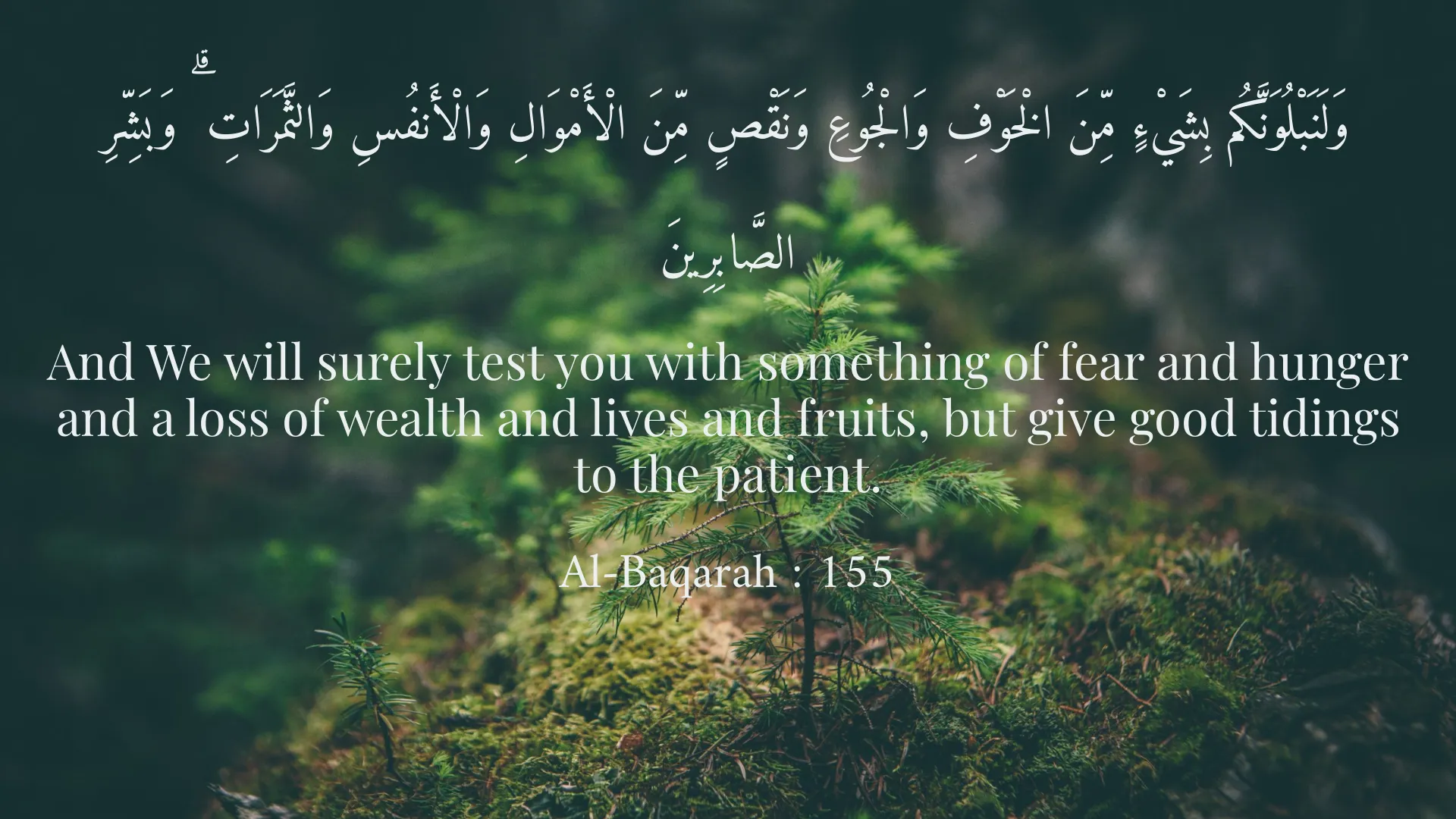
وَلَنَبْلُوَنَّكُم بِشَيْءٍ مِّنَ الْخَوْفِ وَالْجُوعِ وَنَقْصٍ مِّنَ الْأَمْوَالِ وَالْأَنفُسِ وَالثَّمَرَاتِ ۗ وَبَشِّرِ الصَّابِرِينَ
And We will surely test you with something of fear and hunger and a loss of wealth and lives and fruits, but give good tidings to the patient.
Al-Baqarah : 155
كُتِبَ عَلَيْكُمُ الْقِتَالُ وَهُوَ كُرْهٌ لَّكُمْ ۖ وَعَسَىٰ أَن تَكْرَهُوا شَيْئًا وَهُوَ خَيْرٌ لَّكُمْ ۖ وَعَسَىٰ أَن تُحِبُّوا شَيْئًا وَهُوَ شَرٌّ لَّكُمْ ۗ وَاللَّهُ يَعْلَمُ وَأَنتُمْ لَا تَعْلَمُونَ
Fighting has been enjoined upon you while it is hateful to you. But perhaps you hate a thing and it is good for you; and perhaps you love a thing and it is bad for you. And Allah knows, while you know not.
Al-Baqarah : 216
إِلَّا الَّذِينَ آمَنُوا وَعَمِلُوا الصَّالِحَاتِ وَتَوَاصَوْا بِالْحَقِّ وَتَوَاصَوْا بِالصَّبْرِ
Except for those who have believed and done righteous deeds and advised each other to truth and advised each other to patience.
Al-Asr : 3
Short Story
They say that in a distant past, there was a renowned merchant who possessed vast wealth, and his ships traded across the seas. One day, news arrived that one of his largest ships had sunk in a severe storm, and all his goods were lost. The merchant was initially deeply saddened, considering this event an irreparable failure. Friends and acquaintances came to console him, and everyone thought he would never recover. But the merchant, with a broken heart yet strong will, instead of despairing, began to contemplate how he could compensate for this loss. He decided to change his trade path and, instead of expensive goods, focused on producing and selling essential and durable items that people always needed. With great diligence and perseverance, he started his work anew. Years passed, and the merchant not only recovered his losses but his new business flourished so much that he acquired several times his previous wealth. One day, an old friend asked him, "How did you turn that great failure into such remarkable success?" The merchant smiled and replied, "What I considered a failure was, in truth, the greatest divine blessing. That storm not only sank my ship but also washed away my pride and set me on a path that was far more fruitful and sustainable for me. God knew what was best for me, and that failure was a lesson for achieving this lasting success."