Quranic Answer
To answer the question of whether fatigue from worship is natural, it must be stated that from the perspective of the Holy Quran, humans are beings created with physical and spiritual capacities and limitations. Therefore, feeling fatigue, whether from worldly activities or from worship and devotion, is part of human nature. The Holy Quran introduces Islam as a religion of ease and facilitation (yusr) and never places an unbearable burden on its servants. This is one of the fundamental principles of Islamic law, referred to in numerous verses. Allah Almighty explicitly states in Surah Al-Baqarah, verse 286: “Allah does not burden a soul beyond its capacity.” This verse clearly indicates that the burden of obligation never exceeds a person’s capability. If excessive and overwhelming fatigue arises from worship, it may stem from an inappropriate approach, extremism in devotion, or a misunderstanding of the true spirit of servitude. This fatigue can serve as a signal to review one's method of worship and adjust it to align with one’s spiritual and physical capacities. The Quran also states in Surah Al-Hajj, verse 78: “And He has not placed upon you in the religion any difficulty.” This verse further confirms the principle of ease and the absence of hardship in religion. Worship is not meant to cause unbearable pain and difficulty; rather, its purpose is to achieve proximity to Allah, spiritual tranquility, and moral growth. If worship, instead of providing peace, leads to excessive fatigue and exhaustion, one should re-evaluate its quality and quantity. This does not mean diminishing the importance of worship but finding a sustainable and joyful way to perform it. Sometimes, fatigue from worship is not only natural but can also be a prompt to address other aspects of life such as sufficient rest, proper nutrition, and even renewing one's intention and sincerity in devotion. Islam emphasizes balance in all dimensions of life, and neglecting any aspect can lead to disruption in others. The Quran’s emphasis on patience and prayer as primary means of seeking help is also highly significant. In Surah Al-Baqarah, verse 153, we read: “O you who have believed, seek help through patience and prayer. Indeed, Allah is with the patient.” This verse indicates that in the path of worship and life, difficulties and fatigue may arise, but the solution to dealing with them is to seek refuge in patience and prayer. Prayer itself is a source of energy and tranquility, and patience grants one the ability to endure and persevere in the path of truth. This implies that even if fatigue occurs, it should not lead to abandoning worship; rather, one should manage this fatigue by seeking assistance from spiritual tools and continue. Worship should transform into a good and sustainable habit, not a sporadic and overwhelming act that prevents one from continuing the path. Consistency and perseverance in worship, however small, are more beloved than performing heavy and irregular acts of worship that lead to fatigue and discouragement. This point is also clearly seen in the Sunnah of Prophet Muhammad (peace be upon him), who always emphasized moderation in worship. Ultimately, fatigue from worship is not inherently a fault or a sin; it is a natural feeling that can arise due to various factors such as physical weakness, mental stress, a misunderstanding of the purpose of worship, or even a lack of spiritual enthusiasm. The crucial aspect is how we respond to this fatigue. The Quran encourages us to be grateful, repent, and return to Allah. Remembering the rewards of the afterlife and divine blessings can also strengthen motivation and vigor for continuing worship. Each time we feel fatigue from worship, we should consider it an opportunity for reflection, renewing intention, and seeking help from Allah Almighty. Allah is the Most Gracious, the Most Merciful, and He does not expect from His servants more than they can bear. He desires us to turn to Him with a present heart and enduring love, not with reluctance and exhaustion. Therefore, let us accept the naturalness of fatigue, but strive to transform it into a factor for growth and steadfastness in the path of devotion by gaining a deeper understanding of the spirit of worship and seeking divine grace. Let us remember that Allah desires nothing but good and mercy for His servants, and He has not made the path of devotion an endless hardship, but rather a way to attain eternal peace and felicity.
Related Verses
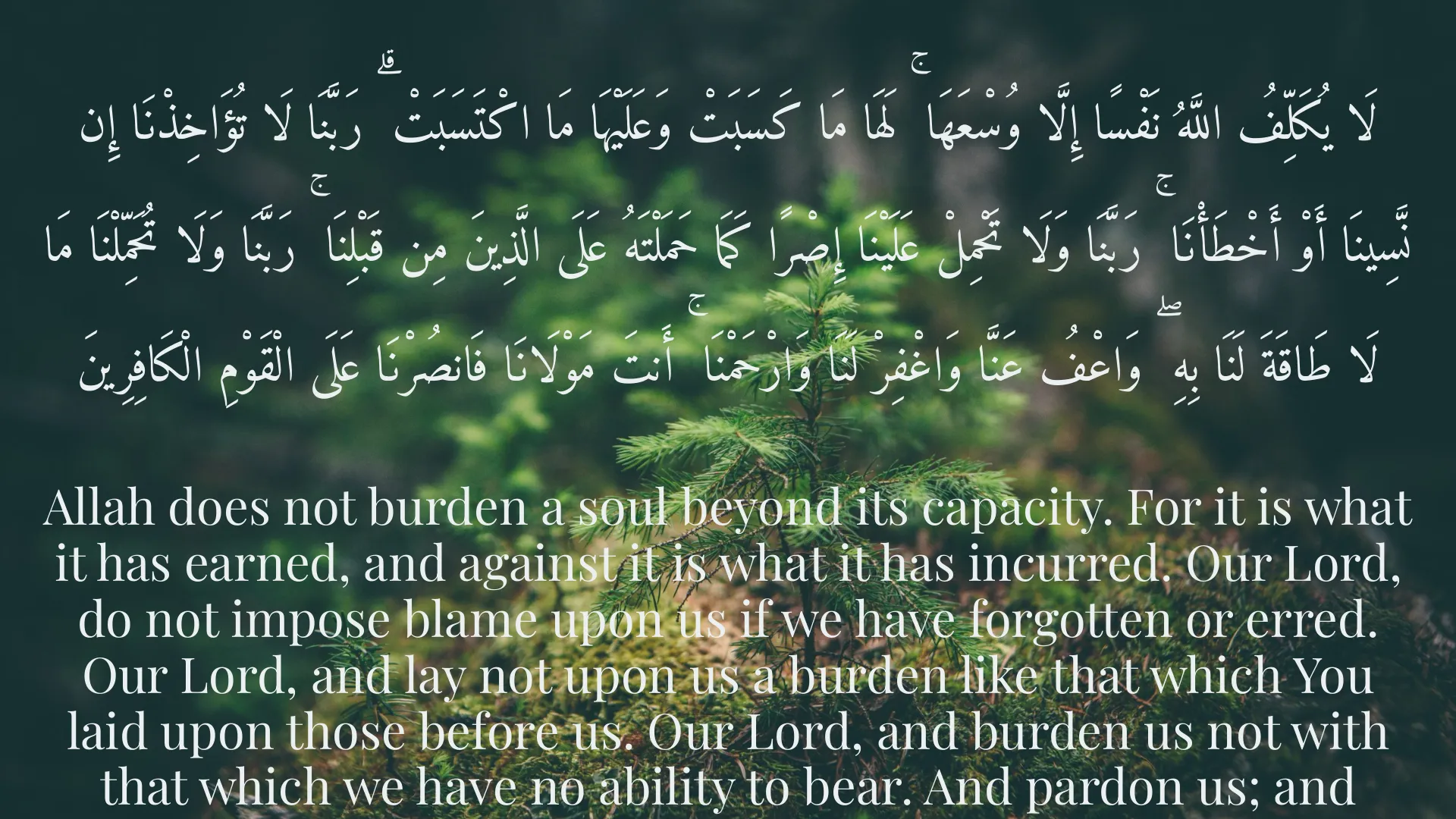
لَا يُكَلِّفُ اللَّهُ نَفْسًا إِلَّا وُسْعَهَا ۚ لَهَا مَا كَسَبَتْ وَعَلَيْهَا مَا اكْتَسَبَتْ ۗ رَبَّنَا لَا تُؤَاخِذْنَا إِن نَّسِينَا أَوْ أَخْطَأْنَا ۚ رَبَّنَا وَلَا تَحْمِلْ عَلَيْنَا إِصْرًا كَمَا حَمَلْتَهُ عَلَى الَّذِينَ مِن قَبْلِنَا ۚ رَبَّنَا وَلَا تُحَمِّلْنَا مَا لَا طَاقَةَ لَنَا بِهِ ۖ وَاعْفُ عَنَّا وَاغْفِرْ لَنَا وَارْحَمْنَا ۚ أَنتَ مَوْلَانَا فَانصُرْنَا عَلَى الْقَوْمِ الْكَافِرِينَ
Allah does not burden a soul beyond its capacity. For it is what it has earned, and against it is what it has incurred. Our Lord, do not impose blame upon us if we have forgotten or erred. Our Lord, and lay not upon us a burden like that which You laid upon those before us. Our Lord, and burden us not with that which we have no ability to bear. And pardon us; and forgive us; and have mercy upon us. You are our protector, so give us victory over the disbelieving people.
Al-Baqarah : 286
وَجَاهِدُوا فِي اللَّهِ حَقَّ جِهَادِهِ ۚ هُوَ اجْتَبَاكُمْ وَمَا جَعَلَ عَلَيْكُمْ فِي الدِّينِ مِنْ حَرَجٍ ۚ مِّلَّةَ أَبِيكُمْ إِبْرَاهِيمَ ۚ هُوَ سَمَّاكُمُ الْمُسْلِمِينَ مِن قَبْلُ وَفِي هَٰذَا لِيَكُونَ الرَّسُولُ شَهِيدًا عَلَيْكُمْ وَتَكُونُوا شُهَدَاءَ عَلَى النَّاسِ ۚ فَأَقِيمُوا الصَّلَاةَ وَآتُوا الزَّكَاةَ وَاعْتَصِمُوا بِاللَّهِ هُوَ مَوْلَاكُمْ ۖ فَنِعْمَ الْمَوْلَىٰ وَنِعْمَ النَّصِيرُ
And strive for Allah with the striving due to Him. He has chosen you and has not placed upon you in the religion any difficulty. [It is] the religion of your father, Abraham. He named you Muslims before [in former scriptures] and in this [Quran] that the Messenger may be a witness over you and you may be witnesses over the people. So establish prayer and give zakat and hold fast to Allah. He is your protector; and what a beautiful protector and what a beautiful helper.
Al-Hajj : 78
يَا أَيُّهَا الَّذِينَ آمَنُوا اسْتَعِينُوا بِالصَّبْرِ وَالصَّلَاةِ ۚ إِنَّ اللَّهَ مَعَ الصَّابِرِينَ
O you who have believed, seek help through patience and prayer. Indeed, Allah is with the patient.
Al-Baqarah : 153
Short Story
It is narrated that in ancient times, there was an ascetic who spent his days and nights in worship, eating little and sleeping little. He immersed himself so deeply in austerities that he grew weaker day by day and lost his vitality. One of the wise elders saw his condition and told him: 'O noble youth, the path you are treading is perilous. Worship should be joyful, not agonizing. God does not expect you to destroy yourself. Is not your body a trust from God? Live in such a way that you can always be engaged in servitude, not by excess, exhaust yourself and be unable to continue the path. A little rest, a little food, and a little social interaction will prepare you for more sustainable worship.' The ascetic heeded the wise elder's advice and adopted moderation. From then on, he engaged in worship with greater vigor and strength, and both his body remained healthy and his spirit vibrant.