Quranic Answer
Fear of the future is a complex and multifaceted phenomenon, deeply rooted in human nature and influenced by environmental factors. At first glance, it might seem that any worry or apprehension about the future indicates a weakness in faith and reliance on God, given that a true believer should have complete trust in divine promises and understand that all matters are in His hands. However, to provide a comprehensive and Quranic answer, it is essential to differentiate between various types of fear and degrees of faith. The Holy Quran repeatedly calls upon humanity to rely on Allah, to avoid despair and hopelessness, and to be confident in divine sustenance and providence. These verses clearly indicate that crippling and perpetual anxiety about the future, which leads to despair, inaction, and disregard for divine planning, contradicts the spirit of faith and submission to Allah. True faith brings with it a tranquility and assurance that enables an individual to remain patient, resilient, and hopeful in the face of uncertainties and adversities of the future. On the other hand, it must be acknowledged that a certain degree of concern for the future is a natural part of the human condition. This concern can manifest as planning for life, striving to secure legitimate needs, contemplating the consequences of actions, and endeavoring to prevent harm. This type of 'constructive fear,' which motivates an individual towards foresight, effort, seeking knowledge, and preparedness, is not only commendable but often endorsed by Islam. Islam teaches us that while we rely on God, we must not abandon effort and planning, because true reliance (Tawakkul) does not mean neglecting means, but rather utilizing appropriate means and entrusting the outcome to Allah. The Prophet Muhammad (peace be upon him) famously said: 'Tie your camel and then rely on Allah,' illustrating the perfect balance between effort and trust. The Quran promises believers that if they are mindful of Allah (have Taqwa) and place their trust in Him, He will provide a way out of difficulties and sustain them from where they do not expect (Surah At-Talaq, verses 2-3). Furthermore, in many verses, believers are warned against sorrow and grief arising from future fears, and they are assured that Allah is with them and will assist them. For instance, in Surah Fussilat, verse 30, it states: "Indeed, those who say, 'Our Lord is Allah,' and then remain on a straight course - the angels will descend upon them, [saying], 'Do not fear and do not grieve but receive good tidings of Paradise, which you were promised!'" This verse clearly indicates that steadfastness on the path of truth and faith in Allah results in the elimination of fear and sorrow, and the glad tidings of goodness and success. Therefore, crippling, despair-inducing fear that hinders action and effort, stemming from a lack of trust in divine providence, can be considered a sign of weak faith. This type of fear destabilizes an individual's faith in Allah's infinite power, wisdom, knowledge, and mercy, plunging them into a whirlpool of hopelessness and anxiety. Conversely, natural and responsible concern that leads to planning, precaution, and intelligent effort, while simultaneously entrusting the outcome to Allah Almighty, is not a weakness of faith. Rather, it is an integral part of a believing person's rationality and wisdom. A true believer, understanding that the future is entirely in Allah's hands, exerts all their effort and then, with a calm and confident heart, commits their affairs to their Lord. This reliance (Tawakkul) frees them from unnecessary worries and enables them to live with greater peace and assurance, overcoming challenges. The ultimate goal of faith is to achieve inner peace and tranquility, which stems from certainty in Allah's power and mercy and dispels irrational fears. It is this tranquility that makes a believer resilient against the turmoil of the world and guides them towards a bright and hopeful future, with the conviction that whatever comes from Allah is ultimately good for them.
Related Verses
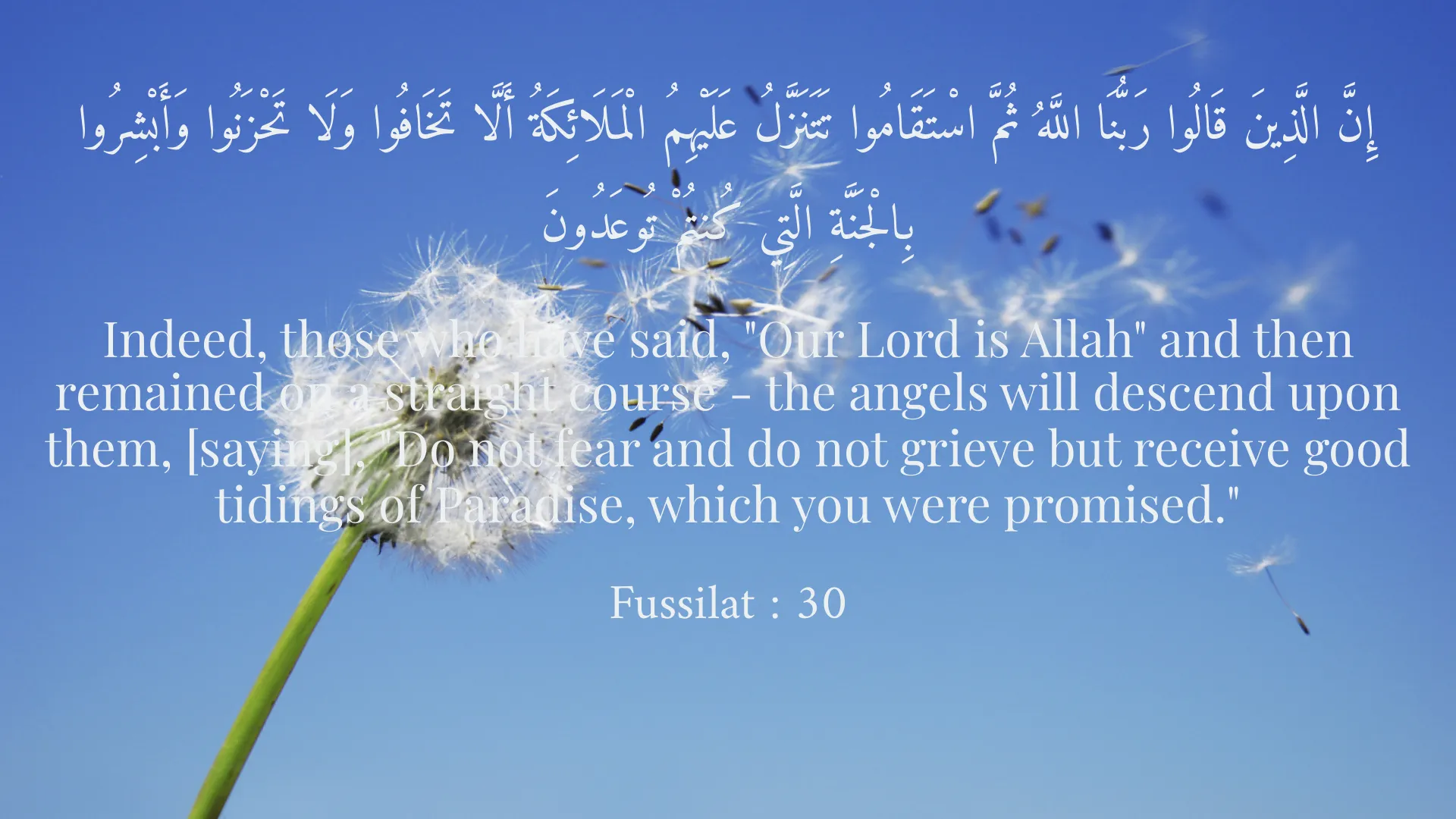
إِنَّ الَّذِينَ قَالُوا رَبُّنَا اللَّهُ ثُمَّ اسْتَقَامُوا تَتَنَزَّلُ عَلَيْهِمُ الْمَلَائِكَةُ أَلَّا تَخَافُوا وَلَا تَحْزَنُوا وَأَبْشِرُوا بِالْجَنَّةِ الَّتِي كُنتُمْ تُوعَدُونَ
Indeed, those who have said, "Our Lord is Allah" and then remained on a straight course - the angels will descend upon them, [saying], "Do not fear and do not grieve but receive good tidings of Paradise, which you were promised."
Fussilat : 30
إِلَّا تَنصُرُوهُ فَقَدْ نَصَرَهُ اللَّهُ إِذْ أَخْرَجَهُ الَّذِينَ كَفَرُوا ثَانِيَ اثْنَيْنِ إِذْ هُمَا فِي الْغَارِ إِذْ يَقُولُ لِصَاحِبِهِ لَا تَحْزَنْ إِنَّ اللَّهَ مَعَنَا ۖ فَأَنزَلَ اللَّهُ سَكِينَتَهُ عَلَيْهِ وَأَيَّدَهُ بِجُنُودٍ لَّمْ تَرَوْهَا وَجَعَلَ كَلِمَةَ الَّذِينَ كَفَرُوا السُّفْلَىٰ ۗ وَكَلِمَةُ اللَّهِ هِيَ الْعُلْيَا ۗ وَاللَّهُ عَزِيزٌ حَكِيمٌ
If you do not aid him - Allah has already aided him when those who disbelieved expelled him, he being the second of two; when they were in the cave and he said to his companion, "Do not grieve; indeed Allah is with us." Then Allah sent down His tranquility upon him and supported him with soldiers [angels] you did not see and made the word of those who disbelieved the lowest, while the word of Allah - that is the highest. And Allah is Exalted in Might and Wise.
At-Tawbah : 40
وَمَا مِن دَابَّةٍ فِي الْأَرْضِ إِلَّا عَلَى اللَّهِ رِزْقُهَا وَيَعْلَمُ مُسْتَقَرَّهَا وَمُسْتَوْدَعَهَا ۚ كُلٌّ فِي كِتَابٍ مُّبِينٍ
And there is no creature on earth but that upon Allah is its provision, and He knows its place of dwelling and place of storage. All is in a clear register.
Hud : 6
Short Story
It is related in Saadi's Gulistan that a dervish, though he possessed nothing, had a heart free from the worries of tomorrow and was always joyful and cheerful. A wise man saw him and asked: "How can you be so carefree with empty hands?" The dervish replied: "I trust in the Provider who gives without expectation, and I know that He provided for me yesterday and provides for me today, so why should I worry about tomorrow? I know that each day brings its own sustenance." The wise man was delighted by these words and understood that true peace lies not in possessions, but in genuine reliance on the One God. This story teaches us that certainty in God's provision frees the heart from any unnecessary worry and fear about the future, provided we also put forth our own effort.