Quranic Answer
The concept of forgiveness is one of the central tenets found within the pages of the Holy Quran, acting as an important principle that underscores the relationship between Allah (God) and His servants. Unlike mere social protocols that may dictate the act of forgiving, the Quran delves deeper into the emotional and spiritual dimensions of this essential virtue. In essence, the act of forgiveness transcends beyond just a momentary decision; it requires genuine willingness and an open heart. In Surah An-Nur (Chapter of Light), verse 22, Allah beautifully illustrates the intricacies of forgiveness. He encourages believers to forgive others wholeheartedly, emphasizing that true forgiveness should emanate from one's heart rather than being executed as a mere act of compliance or social obligation. This verse acknowledges the inherent struggles that come with forgiveness, hinting at the emotional labor involved in releasing resentment and anger towards those who may have wronged us. The importance of a warm-hearted disposition resonates in this verse, thus setting the foundational ethos of true forgiveness, which encompasses empathy, love, and compassion. The guiding principle that forgiveness should come from a place of sincerity is further consolidated in Surah Al-‘Imran, verse 134, where the essence of patience intertwines with forgiveness. In recommending the believers to "be patient in trials and support those who are patient and steadfast," Allah provides essential insight into the environment that fosters true forgiveness. Patience, when coupled with mutual support, creates a nurturing atmosphere that readily allows individuals to extend forgiveness. It acknowledges that contention and conflicts are part of human existence, and in those challenging moments, the need for understanding and patience is paramount. By encouraging believers to cultivate qualities such as steadfastness and compassion, Allah places importance on developing a robust spiritual environment that is conducive to forgiving and healing past wounds. Additionally, the Quran challenges its followers to actively engage in goodness in the pursuit of forgiveness. In Surah Al-Mu'minun (Chapter of the Believers), verse 96 states, "Replace the evil deeds with good ones." This directive reinforces the transformative power of forgiveness. It invites believers to transcend their grievances and opt for a positive response to challenges that come their way, thereby not only seeking to forgive those who have wronged them but also engaging in actions that better themselves and their communities. Such a commitment to goodness reaffirms the principle that forgiveness should lead to constructive behaviors, facilitating personal growth and psychological healing. As Muslims navigate through their lives, they sometimes encounter instances where the notion of forgiveness feels daunting. The act of forgiving requires an individual to set aside their grievances, a process that can be challenging when emotions run high. However, the Quranic message is clear; genuine forgiveness is achievable and indeed a responsibility for believers. It requires a stable heart that seeks to embrace love and goodwill, even amid conflicts and disagreements. The multifaceted nature of forgiveness is, therefore, not limited only to the one who is forgiven but extends to the forgiver who liberates themselves from the burden of resentment. Forgiveness acts as a cathartic balm, providing relief from the emotional distress associated with holding onto grudges and past grievances. When one chooses to forgive, they free themselves from the shackles of bitterness and open the door to inner peace. This spiritual liberation allows for a more profound connection with both the Divine and the community around them. The implications of forgiveness within the Quran imply that it is integral for believers not just in fostering interpersonal relationships but also in cultivating a relationship with Allah. The mercy that Allah has extended to His servants precedes the calls for forgiveness among humans; it echoes the necessity for followers to emulate divine attributes in their interactions with others. The Quran teaches that Allah is oft-Forgiving, and thus believers ought to mirror this essence in their own conduct. By practicing forgiveness, they partake in an essential aspect of their faith and spiritual discipline. This noble pursuit of forgiveness is multifaceted. It not only aids in individual healing but fosters community cohesion as well. Enabling individuals to reconcile differences and mend broken relationships enhances social bonds, allowing for forgiveness to serve as a bridge that connects hearts and spirits. The ability to forgive reflects strength of character, empathy, and a profound understanding of the shared human experience, wherein everyone is susceptible to faults and imperfections. Nevertheless, it is also essential to appreciate that forgiveness is a journey, often requiring time and reflection. Those who have been deeply hurt may find it challenging to offer forgiveness immediately, and this understanding is essential in the context of real-life applications of these divine principles. It is essential to embrace the process, allowing oneself the grace to feel and heal, and recognize that through this personal journey, one can arrive at a place of genuine forgiveness enriched by understanding and compassion. In conclusion, the teachings regarding forgiveness in the Holy Quran offer profound insights into human interactions, emphasizing its importance as a key moral virtue. Quranic verses not only encourage believers to forgive but also highlight the underlying values that enrich the act—sincerity, patience, and goodwill. The emotional detoxification that comes from forgiving others frees the individual from burdens while facilitating emotional and spiritual growth. Ultimately, forgiveness is not merely a resolution to grudges; it is a sacred act that elevates both the individual and their community, reflecting the mercy and compassion central to Islam, and bringing about a state of peace within the heart.
Related Verses
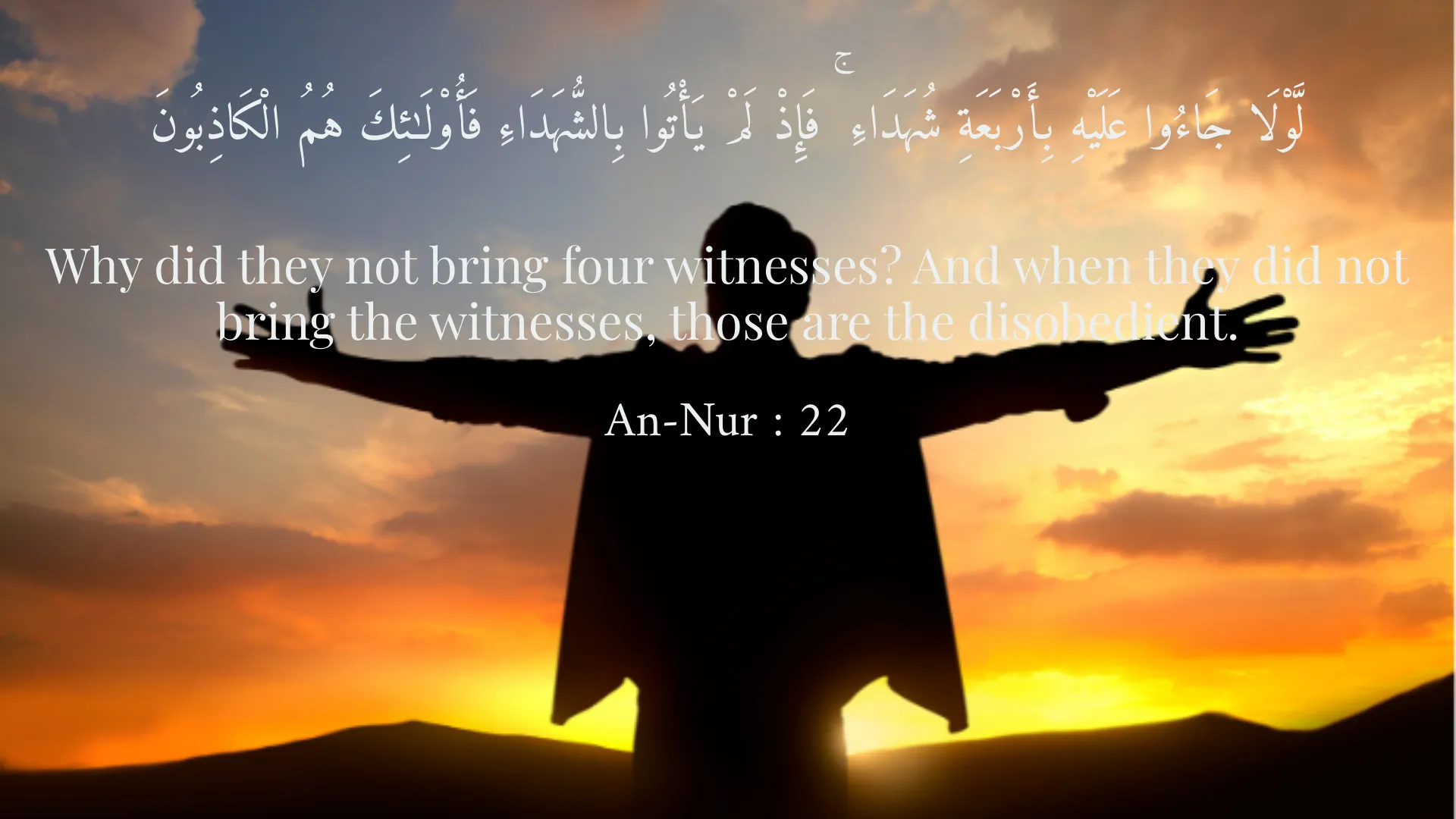
لَّوْلَا جَاءُوا عَلَيْهِ بِأَرْبَعَةِ شُهَدَاءِ ۚ فَإِذْ لَمْ يَأْتُوا بِالشُّهَدَاءِ فَأُوْلَـٰئِكَ هُمُ الْكَاذِبُونَ
Why did they not bring four witnesses? And when they did not bring the witnesses, those are the disobedient.
An-Nur : 22
الَّذِينَ يُنفِقُونَ فِي السَّرَّاءِ وَالضَّرَّاءِ وَالْكَاظِمِينَ الْغَيْظَ وَالْعَافِينَ عَنِ النَّاسِ ۗ وَاللَّهُ يُحِبُّ الْمُحْسِنِينَ
Who spend in the cause of Allah during ease and hardship and who restrain anger and who pardon the people. And Allah loves the doers of good.
Al-‘Imran : 134
فَاسْتَعِذْ بِاللَّهِ مِن شَرِّهِمْ وَهَاجِمْهُمْ بِالَّتِي هِيَ أَحْسَنُ.
So seek refuge with Allah from their evil and confront them in a way that is best.
Al-Mu'minun : 96
Short Story
On a beautiful day, a man named Ali was pondering how he could reconcile with his brother, with whom he had been at odds for years. He decided to overcome his pride and sincerely apologize to his brother. After this action, his brother also apologized, and the two brothers, who had been immersed in animosity, reconciled and started a new life together.