Quranic Answer
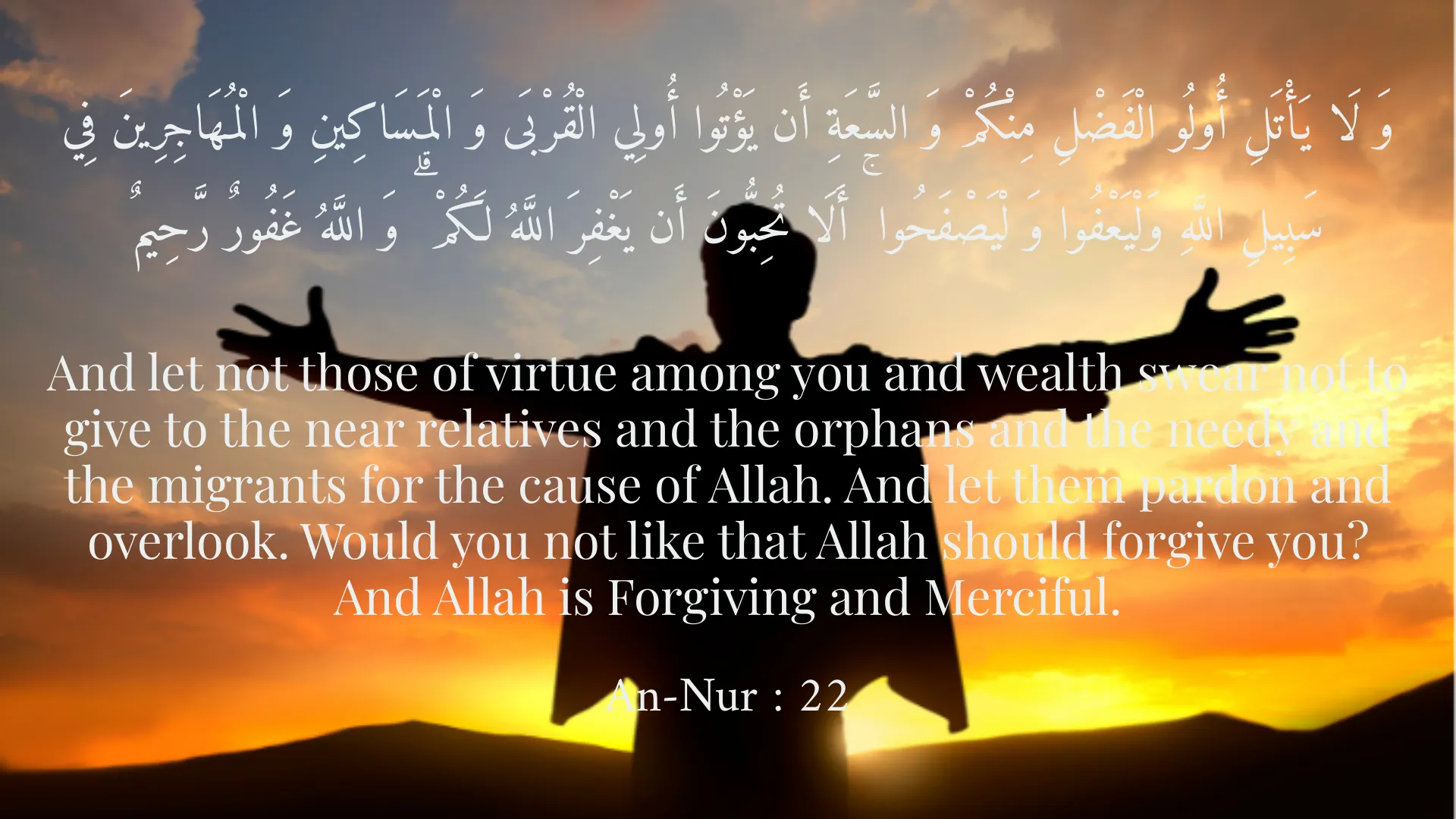
In the Holy Quran, the theme of forgiveness and mercy is emphasized quite clearly, illustrating the compassion and understanding that Allah holds for humankind. This divine approach serves not only as a religious obligation but also as a pathway to emotional healing and mental well-being. The verses within the Quran that speak to the principles of forgiveness possess profound depth and offer fundamental lessons that are applicable to day-to-day life as well as one's spiritual journey. One such powerful verse can be found in Surah An-Nur (Chapter 24), verse 22, which states: 'And let not those of virtue among you and wealth swear not to give to the near relatives and the orphans and the needy and the migrants for the cause of Allah. And let them pardon and overlook. Would you not like that Allah should forgive you? And Allah is Forgiving and Merciful.' This verse poignantly highlights the values of empathy and altruism, reminding us of the significance of giving back to those who may not have the means to support themselves. Moreover, the directive to 'pardon and overlook' places an emphasis on forgiving others’ shortcomings. But equally important, it subtly hints at a more profound principle of forgiving oneself. It suggests that our ability to forgive others begins with our capacity to forgive ourselves. Through this lens, self-forgiveness becomes an essential aspect of life, allowing individuals the opportunity to let go of the guilt and regrets that may weigh heavily upon their hearts. This aligns with broader psychological principles where forgiving oneself is often associated with emotional release and psychological healing. The lesson here is significant: Allah's merciful nature symbolizes the boundless chances for personal redemption that one has. Life can often bring difficulties that can lead to feelings of inadequacy or guilt, whether due to personal failures, moral missteps, or circumstances beyond our control. The Quran reassures us that these feelings need not define who we are. 'Would you not like that Allah should forgive you?' serves as a reminder that Allah's mercy is infinite, and we too should embody that spirit of compassion towards ourselves. Additionally, the emphasis on self-forgiveness is particularly salient within the context of modern psychology. Many practitioners argue that forgiving oneself can be the initial stride towards personal growth and recovery. The process of letting go of past deeds or mistakes can catalyze healing, allowing individuals to reclaim their lives and move forward without the encumbrance of guilt. The Quran’s teachings on mercy align splendidly with this understanding, prompting believers to embark on a journey of self-love or self-acceptance, spurred by divine compassion. Moreover, further evidence of God's mercy is explicitly articulated in Surah Az-Zumar (Chapter 39), verse 53, which commands believers to: 'Say, O My servants who have believed, fear your Lord. For those who do good in this world is good, and the earth of Allah is spacious. Indeed, the patient will be given their reward without account.' Here, believers are encouraged to act with kindness and patience, as the rewards of good deeds are far-reaching and vast. However, the key messages of this verse espouse forgiveness and mercy; notably, that despite our shortcomings, we are granted grace as we endeavor towards righteousness. Furthermore, the emphasis on patience synonymous with self-compassion is critical within the scope of spiritual growth. In a world often characterized by instant gratification, the message from Surah Az-Zumar resonates with the importance of understanding that personal change takes time and effort. Forgiveness—whether directed towards ourselves or others—often requires patience, and the Quran reminds us that the journey itself is as essential as the destination. In the greater context of spiritual development, the teachings of the Quran highlight how forgiveness serves as a cornerstone for a fulfilling life. The act of forgiving oneself is not simply a personal choice; it is an essential step in recognizing one’s humanity. Such recognition fosters a compassionate outlook that enhances one’s spirituality and enriches interpersonal relationships. Through practicing forgiveness, individuals can forge deeper connections with others, nurture their relationships, and create a community where empathy and love reign supreme. Moreover, the act of forgiving others mirrors the divine compassion of Allah, as mentioned throughout the Quran. The practice of making space in one’s heart for forgiveness cultivates an atmosphere in which mercy flourishes. This ethos of letting go is not just a personal endeavor; it’s a communal act that promotes unity, understanding, and peace within society. Ultimately, these profound teachings emphasize that the principle of mercy and forgiveness is interwoven deeply into the fabric of life itself. The empowering message of the Quran resonates with those seeking emotional healing, spiritual growth, and social harmony. As believers, it is essential to embody these attributes, nurturing both ourselves and our communities while seeking the forgiveness of Allah. In conclusion, the messages found within the Holy Quran regarding forgiveness and mercy are timeless and hold immense significance in our journey through life. They call us to embrace a spirit of compassion, firstly towards ourselves and subsequently towards others. By understanding, practicing, and internalizing these teachings, we can become vessels of healing—both for ourselves and for those around us—enriching our lives with love, empathy, and spiritual growth. The concept of mercy extends beyond mere words; it is a fundamental aspect of human existence that allows us to transcend our collective struggles as we strive towards being better individuals and contributors to society.
Related Verses
وَ لَا يَأْتَلِ أُولُو الْفَضْلِ مِنْكُمْ وَ السَّعَةِ أَن يَؤْتُوا أُولِي الْقُرْبَى وَ الْمَسَاكِينِ وَ الْمُهَاجِرِينَ فِي سَبِيلِ اللَّهِ وَلْيَعْفُوا وَ لْيَصْفَحُوا ۚ أَلَا تُحِبُّونَ أَن يَغْفِرَ اللَّهُ لَكُمْ ۗ وَ اللَّهُ غَفُورٌ رَّحِيمٌ
And let not those of virtue among you and wealth swear not to give to the near relatives and the orphans and the needy and the migrants for the cause of Allah. And let them pardon and overlook. Would you not like that Allah should forgive you? And Allah is Forgiving and Merciful.
An-Nur : 22
قُلْ يَاعِبَادِيَ الَّذِينَ آمَنُوا اتَّقُوا رَبَّكُمْ ۖ لِلَّذِينَ أَحْسَنُوا فِي هَذِهِ الدُّنْيَا حَسَنَةٌ وَ أَرْضُ اللَّهِ وَاسِعَةٌ ۖ إِنَّمَا يُوَفَّى الصَّابِرُونَ أَجْرَهُمْ بِغَيْرِ حِسَابٍ
Say, O My servants who have believed, fear your Lord. For those who do good in this world is good, and the earth of Allah is spacious. Indeed, the patient will be given their reward without account.
Az-Zumar : 53
Short Story
One day, Maryam remembered the verses of the Quran and decided to let go of her past and forgive herself. She found a greater sense of comfort and tranquility within, realizing that this act was leading her toward a new life. Over time, Maryam understood that forgiving not only others but oneself is equally essential.