Quranic Answer
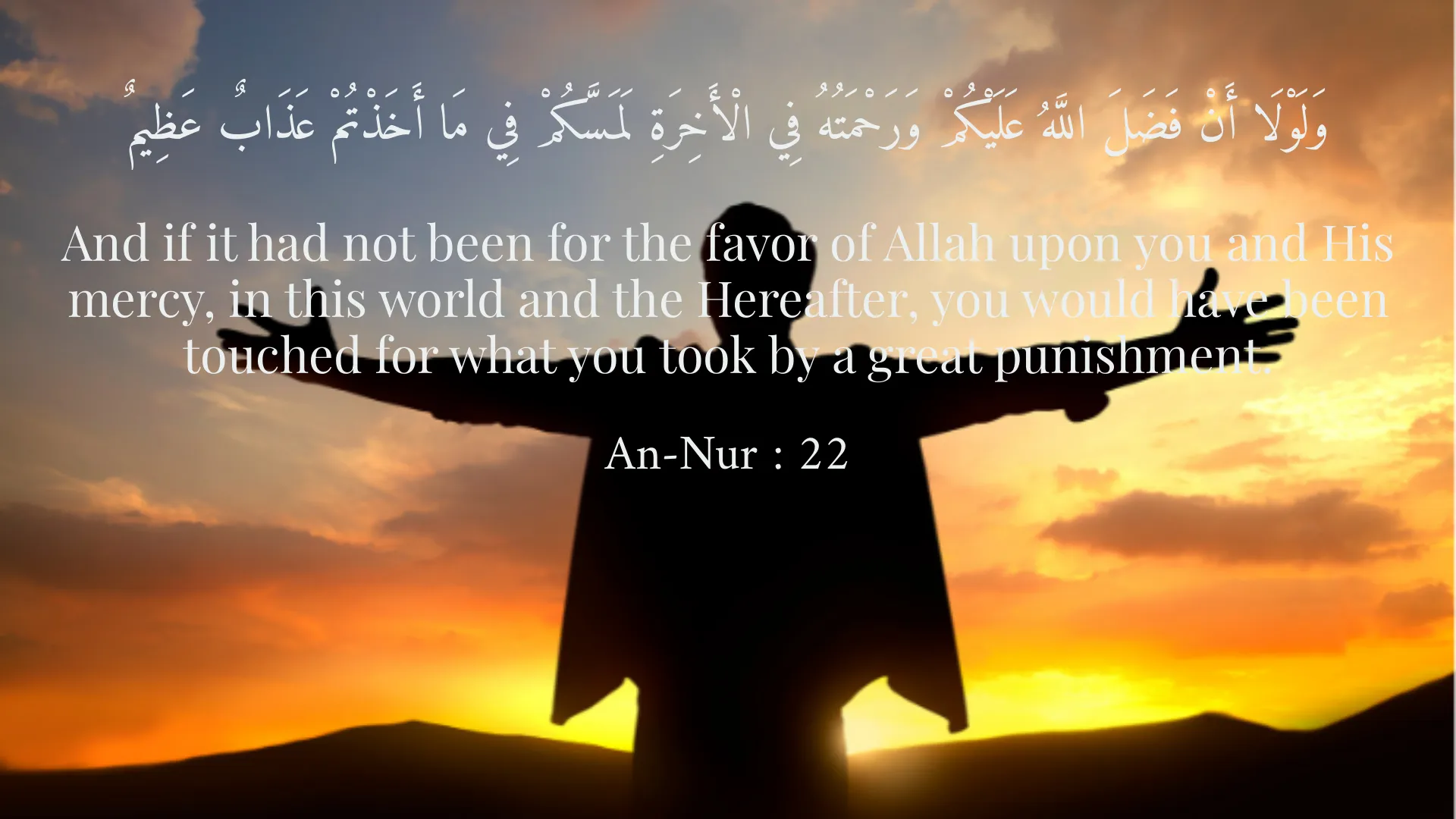
Forgiveness is an essential aspect of human interaction and personal development. In various cultures, it is viewed as a strength rather than a weakness. In the Holy Quran, the notion of forgiveness and the act of pardoning others for their mistakes is not just encouraged; it is explicitly mentioned multiple times, demonstrating its critical importance in Islamic teachings. Forgiveness is a central theme in many religious texts, but the Quran provides a unique perspective that supports societal harmony and personal growth. One of the most profound verses discussing forgiveness is found in Surah An-Nur, verse 22. Allah states: "And if it had not been for the favor of Allah upon you and His mercy, in this world and the Hereafter, you would have been touched for what you took by a great punishment." This verse serves as a reminder that no human being is faultless. Everyone makes mistakes, and hence when a brother or sister falters, it is our duty to respond with patience and forgiveness rather than outrage or condemnation. Such compassion not only fosters a supportive environment but also encourages individuals to seek growth and improvement rather than deflection and defensiveness. Furthermore, this verse highlights Allah's mercy towards humanity. It emphasizes the concept that forgiveness is an intrinsic part of divine mercy, and by extending forgiveness to others, we align ourselves with Allah's attributes. Emulating divine qualities is central to personal development in Islamic teachings, and forgiveness is one of the most significant traits one can adopt. This verse further illustrates the importance of maintaining a perspective of humility and understanding, recognizing our own imperfections while addressing the shortcomings of others. Another relevant verse is found in Surah Aal-e-Imran, verse 134, where Allah mentions: "And those who spend in the cause of Allah during times of ease and hardship, and who are restraining anger and who pardon the people— and Allah loves the doers of good." This verse conveys a powerful message about the behavior that earns Allah's love. It highlights three significant attributes: the spirit of giving, controlling one’s anger, and the act of forgiveness. This combination encapsulates the essence of strong character. When one spends generously in the way of Allah, even during tough times, it demonstrates selflessness and compassion towards others. The act of controlling anger is equally important; allowing anger to dictate responses can lead to negative outcomes, while restraint fosters peace. Forgiveness is represented as an act of goodness, and in this regard, Allah explicitly mentions that love is bestowed upon those who forgive. When individuals dissolve grudges and cultivate appreciation for others’ humanity, they do not only uphold social harmony but also pave their spiritual path towards greatness. Such virtues are not easy to practice, particularly in a world filled with hostility and aggression. However, the Quran encourages believers to strive for these ideals as they are intrinsically rewarding both in the sight of Allah and in personal fulfillment. In addition to these verses, the Quran emphasizes the ultimate reward for those who practice forgiveness and adopt a positive outlook towards others. Surah Maryam, verse 96 reveals: "Indeed, those who have believed and done righteous deeds will have the Most Merciful appointed for them affection." This verse serves as a beacon of hope and encouragement. It reassures believers that their efforts in doing good and practicing forgiveness will not go unnoticed by Allah. The promise of divine affection is profound and serves as a motivator for individuals to embody virtuous behavior. Practicing forgiveness also carries psychological benefits. Holding onto anger and resentment can be detrimental to one's mental and emotional health. Studies in psychology show that forgiving others can lead to reduced stress, lower blood pressure, and an overall enhancement of emotional well-being. In essence, forgiveness not only aligns one with divine principles, as highlighted by the Quran, but also contributes to a healthier and more fulfilling life. Moreover, a culture of forgiveness fosters stronger relationships, whether in familial, social, or community contexts. When individuals are willing to forgive, it establishes an atmosphere of trust and understanding that encourages open communication and conflict resolution. In families, a forgiving attitude helps to mend rifts and strengthens bonds, while in broader social circles, it cultivates an inclusive and compassionate community. In conclusion, the concept of forgiveness in the Holy Quran emphasizes its importance as a cornerstone of societal interaction and personal conduct. The verses cited—originating from Surah An-Nur, Surah Aal-e-Imran, and Surah Maryam—provide clear guidance on the necessity of forgiveness and the eligibility for divine love and rewards that come with it. As believers, practicing forgiveness is not only a moral obligation but a pathway to achieving spiritual fulfillment, emotional stability, and harmonious relationships. Embracing the principle of forgiveness can transform individuals, as well as communities, promoting peace and mutual respect, which is fundamentally aligned with the teachings of Islam.
Related Verses
وَلَوْلَا أَنْ فَضَلَ اللَّهُ عَلَيْكُمْ وَرَحْمَتُهُ فِي الْأَخِرَةِ لَمَسَّكُمْ فِي مَا أَخَذْتُمْ عَذَابٌ عَظِيمٌ
And if it had not been for the favor of Allah upon you and His mercy, in this world and the Hereafter, you would have been touched for what you took by a great punishment.
An-Nur : 22
وَالَّذِينَ يُنفِقُونَ فِي السَّرَّاء وَالضَّرَّاء وَالْكَاظِمِينَ الْغَيْظَ وَالْعَافِينَ عَنِ النَّاسِ ۗ وَاللَّهُ يُحِبُّ الْمُحْسِنِينَ
And those who spend in the cause of Allah during times of ease and hardship and who are restraining anger and who pardon the people— and Allah loves the doers of good.
Aal-e-Imran : 134
إِنَّ الَّذِينَ آمَنُوا وَعَمِلُوا الصَّالِحَاتِ سَيَجْعَلُ لَهُمُ الرَّحْمَـٰنُ وُدًّا
Indeed, those who have believed and done righteous deeds will have the Most Merciful appointed for them affection.
Maryam : 96
Short Story
One day, Musa went to the market with one of his friends. There, his friend suddenly insulted him. Musa thought to himself that he should forgive. He not only did not hold a grudge but calmed himself through the love of Allah and forgave his friend. A few days later, his friend called him and apologized for his actions. This showed how impactful his forgiveness was on others.