Quranic Answer
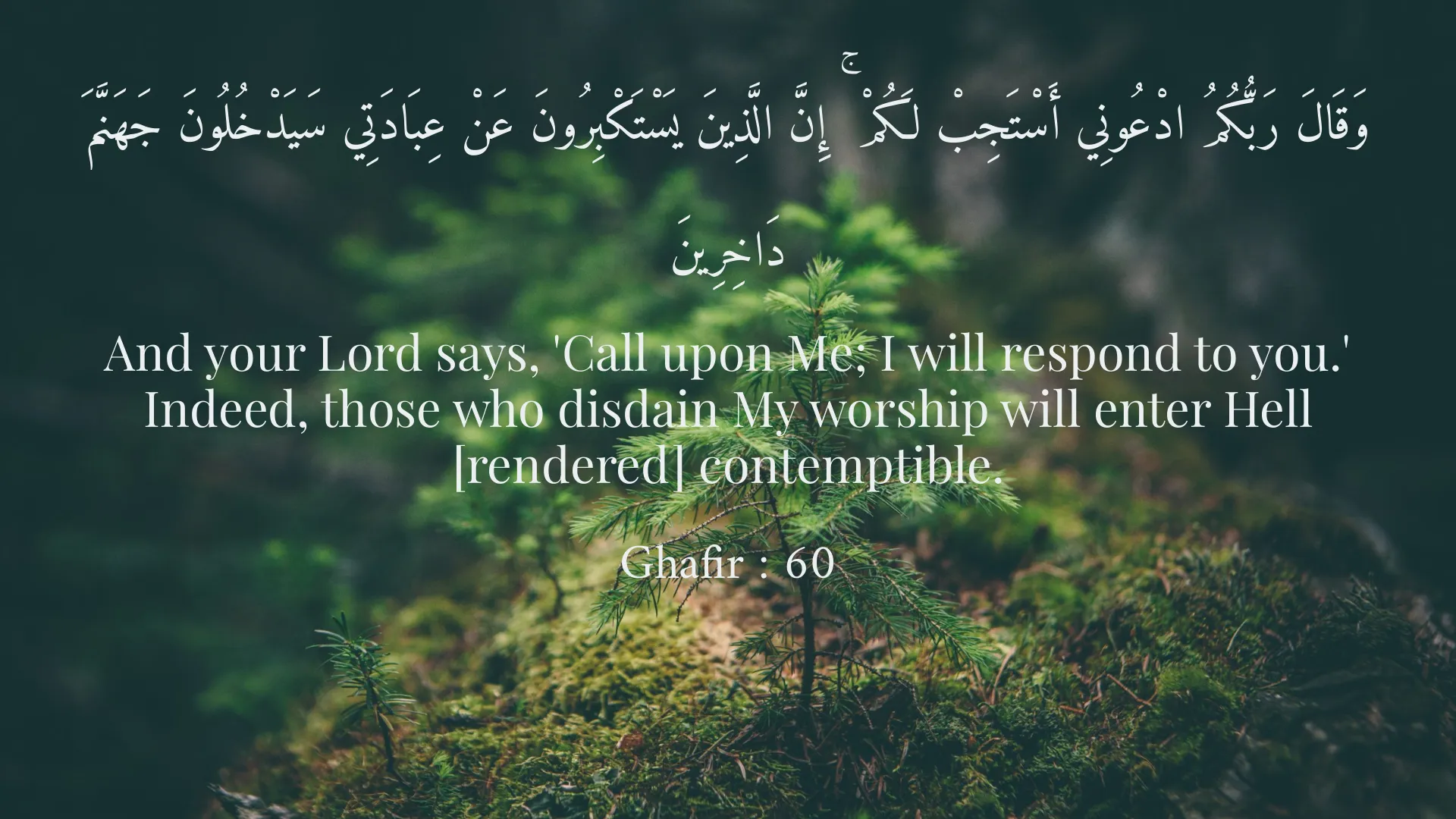
From the perspective of the Holy Quran and Islamic teachings, frequent prayer is not a sign of impatience; rather, it is precisely the opposite: a profound indication of strong faith, deep reliance on God, and patience in pursuing one's desires and aspirations. Prayer (dua) is considered the pillar of faith and the essence of worship, serving as a direct and unmediated means of communication with the Almighty. When an individual prays frequently, they are, in fact, demonstrating their complete hope and reliance on Allah's infinite power, seeking help from no one but Him. This act represents the pinnacle of servitude and humility before the Creator of the universe, signifying that the supplicant considers themselves insignificant and utterly dependent on God's will and wisdom. The Holy Quran explicitly encourages believers to supplicate and promises a response. In Surah Ghafir, verse 60, Allah states: "And your Lord says, 'Call upon Me; I will respond to you.' Indeed, those who disdain My worship will enter Hell [rendered] contemptible." This verse not only commands prayer but also categorizes it as a form of worship, emphasizing its profound significance. Therefore, frequent prayer is an act of servitude and can never be a sign of impatience. An impatient person would quickly give up on praying and fall into despair. Conversely, one who prays frequently never loses hope in God and, with each prayer, strengthens their connection with the Source of existence. The fundamental difference between persistence in prayer and impatience lies in their origins: persistence in prayer stems from hope and reliance. It means the individual knows that Allah is All-Hearing and All-Seeing and will respond at the best time and in the best manner, even if the apparent answer is delayed or manifests differently. This persistence is a sign of steadfastness and constancy in seeking from God. In Surah Al-Baqarah, verse 153, Allah says: "O you who have believed, seek help through patience and prayer. Indeed, Allah is with the patient." This verse illustrates that patience and prayer (of which dua is a part) are complementary, serving as tools for seeking Allah's help. A patient person does not abandon prayer during difficulties; instead, they take refuge in them. Impatience, on the other hand, is when an individual becomes disheartened by the lack of immediate response, abandons prayer, and doubts God's power. Prophets and divine saints have been prime examples of persistence in prayer and steadfastness in it. Prophet Zakariyya (peace be upon him) prayed for a child for many years until Allah granted him Yahya in his old age. Prophet Ayyub (peace be upon him), at the peak of his illness and hardship, never ceased to pray and continuously supplicated to God until he received his healing. These stories demonstrate that persistence in prayer arises from a deep understanding of divine power and mercy, not from impatience. Instead, it is a sign of the depth of faith that, despite delays in response, one continues to implore God, knowing that no good comes except from Him. Furthermore, frequent prayer offers numerous spiritual and psychological benefits. Prayer is a source of tranquility, dispels anxiety, and strengthens one's sense of closeness to Allah. The more one prays, the more one feels connected to the source of peace and power, which in turn strengthens one's patience and steadfastness in facing life's challenges. Prayer helps one avoid despair, as they know there is always an open door to converse with the Lord. Even if a prayer does not appear to be answered immediately, its spiritual reward is preserved, and divine wisdom is inherent in the delay. Indeed, this continuity in prayer is a form of active patience, where the servant, despite waiting, does not give up effort and hope, and this very act aids them in their spiritual growth. In conclusion, frequent prayer is not a sign of impatience; rather, it is the pinnacle of faith, reliance, steadfastness, and hope in divine grace. This act demonstrates that an individual believes in Allah's promises and knows that He responds to every request at the appropriate time and in the best possible way. This persistence is a sign of deep attachment to the Creator and an understanding that all good and ill are in His hands, and He alone can resolve difficulties. Therefore, let us pray to Him with hearts full of hope and tranquility, and seek His assistance more than ever.
Related Verses
وَقَالَ رَبُّكُمُ ادْعُونِي أَسْتَجِبْ لَكُمْ ۚ إِنَّ الَّذِينَ يَسْتَكْبِرُونَ عَنْ عِبَادَتِي سَيَدْخُلُونَ جَهَنَّمَ دَاخِرِينَ
And your Lord says, 'Call upon Me; I will respond to you.' Indeed, those who disdain My worship will enter Hell [rendered] contemptible.
Ghafir : 60
يَاأَيُّهَا الَّذِينَ آمَنُوا اسْتَعِينُوا بِالصَّبْرِ وَالصَّلَاةِ ۚ إِنَّ اللَّهَ مَعَ الصَّابِرِينَ
O you who have believed, seek help through patience and prayer. Indeed, Allah is with the patient.
Al-Baqarah : 153
وَإِذَا سَأَلَكَ عِبَادِي عَنِّي فَإِنِّي قَرِيبٌ ۖ أُجِيبُ دَعْوَةَ الدَّاعِ إِذَا دَعَانِ ۖ فَلْيَسْتَجِيبُوا لِي وَلْيُؤْمِنُوا بِي لَعَلَّهُمْ يَرْشُدُونَ
And when My servants ask you, [O Muhammad], concerning Me - indeed I am near. I respond to the invocation of the supplicant when he calls upon Me. So let them respond to Me [by obedience] and believe in Me that they may be guided.
Al-Baqarah : 186
Short Story
In Saadi's Gulistan, it is narrated that a just king had a wise vizier. One day, the vizier fell ill, and despite all the skilled physicians brought to him, his illness prolonged, and no improvement was seen. The king, who dearly loved his vizier, visited him daily, praying to God for his recovery. The vizier, despite his great pain and suffering, never ceased praying and supplicating to his Lord, saying: "O Lord, if it is Your wisdom that my illness continues, I submit to Your will, but I will not despair of Your mercy nor abandon Your threshold." Those around him, witnessing this persistence in prayer and patience, were astonished and thought it might be due to extreme despair or impatience. But the vizier told them: "My friends, abundant prayer is not a sign of despair; rather, it is the essence of hope. An impatient person quickly becomes disheartened and finds no solution but to complain and protest. But one who is hopeful knows that every closed door can be opened with the key of prayer and patience. If it doesn't open once, they knock a hundred times, for they know that the Master of the house is Generous and will never abandon a hopeful servant." After a long time, by the grace of God and the blessing of those prayers and boundless patience, the vizier recovered and returned to the king's service. The king and the people were all grateful for this miracle and understood that persistence in prayer is not impatience, but the zenith of reliance and hope.