Quranic Answer
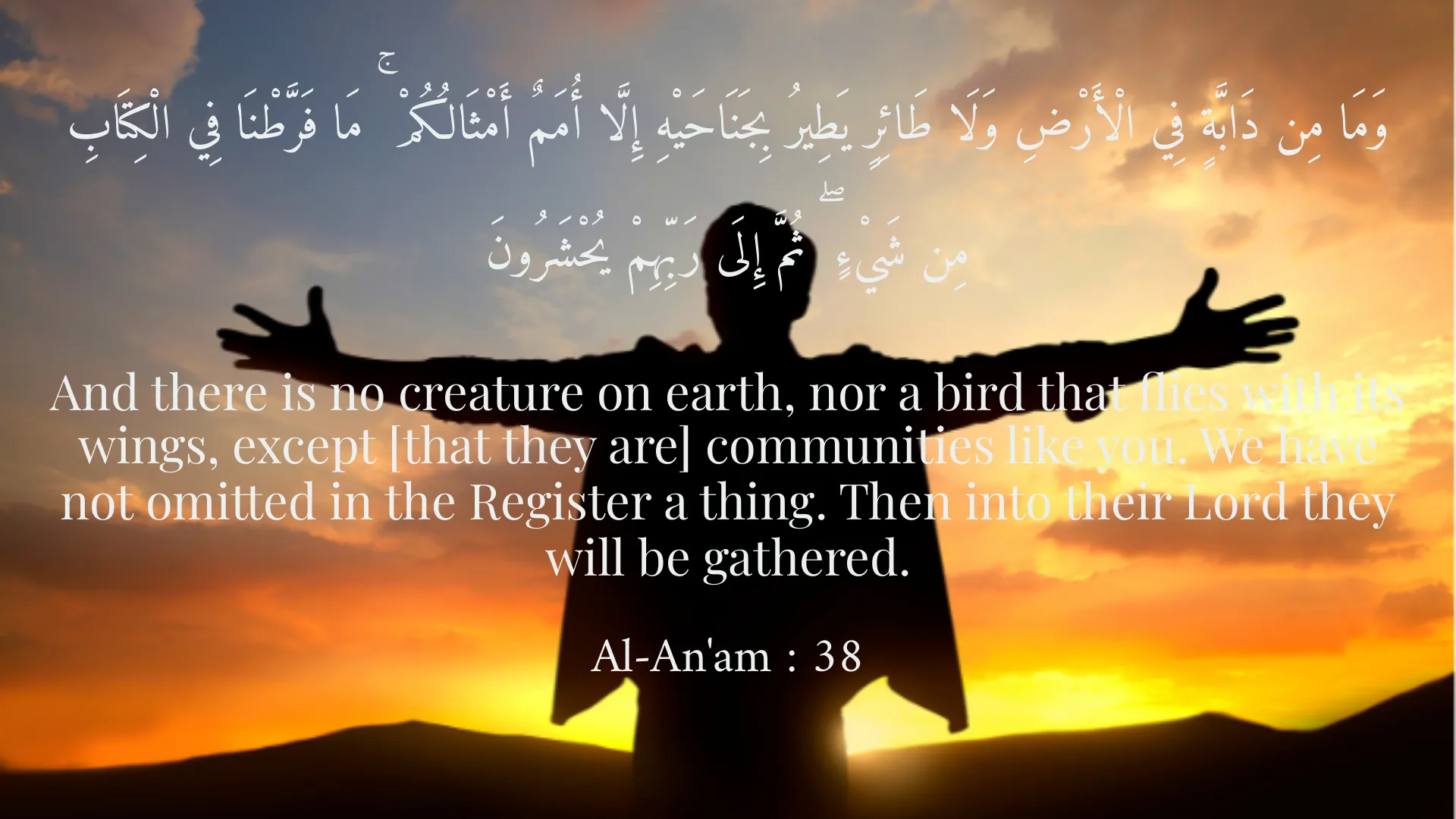
The Holy Quran is a profound text that serves as the foundation of Islamic values and principles, addressing a multitude of ethical and human issues. Among these subject matters, the attention to animals holds a special place. The Islamic perspective on the treatment of animals is both spiritual and moral, emphasizing a compassionate and just approach towards all living beings. This reverence arises from the belief that animals, like humans, are creations of Allah, and they deserve care and respect. In Surah Al-An'am, verse 38, Allah states, "And there is no creature on [or in] the earth, nor a bird that flies with its wings, but they are communities like you. We have not neglected in the Register a thing. Then unto their Lord they will be gathered" (Quran 6:38). This verse signifies that everything created by Allah has its own purpose and place in the grand scheme of life. By highlighting that there is nothing created in vain, the Quran communicates a powerful message: every creature has intrinsic value. Humans, being the most advanced of creations, have the moral duty to embrace compassion towards all living beings in their stewardship of the earth. Surah An-Nahl also emphasizes the worth of animals, where Allah has provided them for human use, stating, "And [He created] the horses, mules, and donkeys for you to ride and [as] adornment. And He creates that which you do not know" (Quran 16:8). In this verse, Allah outlines practical ways in which animals benefit humanity. However, the permission to use animals for riding and food is accompanied by an implicit call for responsibility in how we treat them. The greatness of God’s creations entails a duty to ensure that all creatures are treated with dignity and respect. Therefore, taking advantage of animals does not give carte blanche to treat them poorly. Instead, it places an even greater emphasis on humane treatment and the moral obligations of those in positions of power over them. The Quranic views on animals align with the hadiths of the Prophet Muhammad (peace be upon him), who is known for his compassionate and kind nature. His teachings provide a more detailed understanding of ethical responsibilities towards animals. According to a hadith narrated by Abu Hurairah, the Prophet (pbuh) said, "Whoever kills a sparrow or anything that is bigger than that without a just cause, Allah will ask him about it on the Day of Resurrection" (Sunan Ibn Majah, Hadith 3545). This statement underscores the seriousness of harming any creature without justification, reinforcing the idea that Allah watches over all His creations and holds humans accountable for their actions. Moreover, several incidents from the life of the Prophet (pbuh) illustrate his compassion towards animals. For example, he once witnessed a camel in distress and remarked, "Fear Allah in these beasts who cannot speak" (Sunan Abi Dawood, Hadith 2549). This quote not only encapsulates the value of treating animals kindly but also serves as a reminder of the moral obligation humans have to alleviate the suffering of all creatures. This compassion extends beyond domestic animals to wildlife as well. The Prophet's example sets a standard for Muslims to emulate in their treatment of animals. The importance of animal welfare is a frequently overlooked aspect of Islamic ethics, yet it is crucial in maintaining balance and harmony in the world. In Islam, every living being is a manifestation of Allah’s mercy, and by being merciful towards animals, Muslims embody the attributes of Allah themselves. Thus, the idea that helping animals is not merely an act of charity but a reflection of one's faith becomes increasingly apparent. In fact, numerous verses and teachings emphasize the need for kindness towards animals, with many scholars highlighting that it is a significant aspect of fulfilling one’s faith. Consequently, as society evolves, Muslims are encouraged to reassess their role in advocating for animal welfare. With ongoing environmental challenges and discussions about ethical farming, it is essential to integrate Islamic principles regarding animal rights into modern practices. Raising awareness about the treatment of animals, advocating for humane practices, and educating others about the compassion taught in Islam can significantly contribute to the well-being of all living beings. Moreover, community initiatives such as animal shelters, rescue organizations, and even animal therapy programs exemplify the Islamic call to compassion. By participating in or supporting these initiatives, Muslims not only comply with their religious obligations but also contribute positively to society. It aligns with the broader teachings of Islam, which advocate for social justice, mercy, and the responsible stewardship of Allah’s creations. In conclusion, the Holy Quran, along with the teachings of Prophet Muhammad (peace be upon him), places a considerable emphasis on the treatment of animals, marking it as a pivotal aspect of faith and ethics in Islam. The verses from the Quran remind Muslims of their responsibility to uphold the rights of all living creatures, providing them with kindness, care, and respect. Given this foundational ethos, it is imperative that Muslims pay more attention to animal welfare, ensuring they act in accordance with the divine principles of compassion and justice. As custodians of the earth, the treatment of animals serves as a reflection of one’s moral and ethical standing in fulfilling their role as stewards of Allah's creation.
Related Verses
وَمَا مِن دَابَّةٍ فِي الْأَرْضِ وَلَا طَائِرٍ يَطِيرُ بِجَنَاحَيْهِ إِلَّا أُمَمٌ أَمْثَالُكُمْ ۚ مَا فَرَّطْنَا فِي الْكِتَابِ مِن شَيْءٍ ۖ ثُمَّ إِلَى رَبِّهِمْ يُحْشَرُونَ
And there is no creature on earth, nor a bird that flies with its wings, except [that they are] communities like you. We have not omitted in the Register a thing. Then into their Lord they will be gathered.
Al-An'am : 38
وَالْخَيْلَ وَالْبِغَالَ وَالْحَمِيرَ لِتَرْكَبُوهَا وَزِينَةً ۖ وَيَخْلُقُ مَا لَا تَعْلَمُونَ
And [He created] horses, mules and donkeys for you to ride and as adornment; and He creates that which you do not know.
An-Nahl : 8
Short Story
One day, a wise man decides to go into the forest to witness the beauty of nature closely. He encounters an injured cat there and remembers the Quranic verses emphasizing kindness and aid to creatures. He takes the cat home and cares for it until it recovers. This experience not only helped the cat but also brought him feelings of satisfaction and peace.