Quranic Answer
The significance of helping orphans is a fundamental principle emphasized in the Holy Quran, which serves as a guide for millions of Muslims worldwide. Allah has consistently highlighted the responsibilities we bear towards orphans throughout various verses, indicating that caring for these vulnerable individuals is not just a moral obligation but also a spiritual one. This article aims to discuss the importance of helping orphans as portrayed in the Quran, providing insights on why this action is revered in Islam and how it can shape society positively. Firstly, understanding the historical context in which these revelations were made is crucial. At the time of the Prophet Muhammad (peace be upon him), orphanhood was quite common due to wars and tribal conflicts. The society often marginalized orphans, leaving them without resources and support. Recognizing this dire need, God sent down messages to emphasize the importance of caring for these young souls who have lost parental protection. In Surah Al-Baqarah (2:220), Allah instructs believers about their duties toward orphans: 'And in this world and the Hereafter, treat orphans well.' This verse underscores that our responsibilities towards orphans are both temporal and eternal. It suggests that our actions in this world have repercussions in the Hereafter, serving as a reminder that neglecting or treating orphans unjustly can potentially jeopardize one's standing with God. In another significant verse, Surah Al-An'am (6:152) states, 'And do not give your property, which Allah has made a means of support for you, to the orphans.' Here, Allah highlights the importance of proper stewardship of wealth. It serves as a reminder that while generosity to orphans is crucial, it must be balanced with responsible management of one's own resources. The term 'your property' reflects a personal connection; it is not just about giving, but how one manages their assets responsibly while supporting those in need. The Quran presents a multifaceted approach to the concept of orphanhood and charity. In Surah Ar-Rahman, particularly verses 60-61, Allah poses a thought-provoking question: 'Is the reward for good anything but good?' This verse indicates an irrefutable law in the universe; good deeds lead to good outcomes. Thus, every action taken to assist or uplift orphans will ultimately derive rewards—both in this life and the next. This concept not only promotes charitable behavior but also nurtures a compassionate society where the well-being of all, especially the vulnerable, is prioritized. The obligations outlined in the Quran extend beyond merely providing financial aid. Helping orphans encompasses a broader scope, including emotional support, mentorship, and moral guidance. This holistic approach highlights that simply addressing material needs is insufficient; the psychological and emotional welfare of orphans must also be prioritized. This implies setting up programs that harness the community's collective efforts—creating mentorship platforms, educational opportunities, and emotional support groups dedicated to nurturing orphans as they navigate through life without parental guidance. In many verses, Allah demonstrates His compassion for orphans, creating a blueprint for believers to follow. For instance, the Prophet Muhammad (peace be upon him) himself was an orphan, which further accentuates the importance of this topic in Islamic teachings. His life and actions serve as exemplary illustrations of how one should treat orphans. He passionately advocated for orphans and was known to prioritize their needs, making it a central theme in his mission. The Prophet's exhortations regarding kindness and involvement with orphans have thus been immortalized in Islamic tradition. His statement: 'The one who cares for an orphan and myself will be together in Paradise like these two fingers,' emphasizes the closeness of the one who supports orphans with the Prophet himself in the afterlife. Such statements resonate deeply within the Muslim community, motivating them to engage actively in orphans' welfare. The Societal Impact of Caring for Orphans The act of caring for orphans transcends religious obligations; it has profound social implications as well. By supporting orphans, we contribute to creating a compassionate and empathetic community. This sense of collective responsibility promotes social cohesion, where members of society recognize their interdependence. Such connections can alleviate broader societal issues, such as crime and poverty, as orphans who receive adequate support can grow up to be productive and contributing members of society. Moreover, when the community actively engages in the welfare of orphans, it cultivates a culture of giving across generations. Children raised in an environment that nurtures the value of helping others are more likely to continue this practice into adulthood, thereby perpetuating a cycle of kindness and support. Furthermore, as prospective future leaders, children who receive guidance and care while growing up are equipped not only with the skills to succeed but also with moral compasses that promote equity and justice in society. Teaching young people about their roles and responsibilities towards those less fortunate, including orphans, can shape a future generation characterized by altruism and community involvement. Conclusion The Quran's emphasis on caring for orphans highlights a divine mandate that blends personal morality with communal responsibility. It invites believers to act with compassion while securing their spiritual well-being. By helping orphans, Muslims are not only fulfilling a duty prescribed by Allah but are also contributing to a more just and equitable world. The principles outlined in the Quran around orphan care shed light on individual and collective duties that form the essence of a better society. The focus is not solely on the act of giving but also on shaping a nurturing environment where orphans can grow, thrive, and contribute positively to society. Consequently, engaging with and supporting orphans is indispensable—not just as an act of charity, but as a societal obligation that mirrors the fundamental values of compassion and justice in Islam.
Related Verses
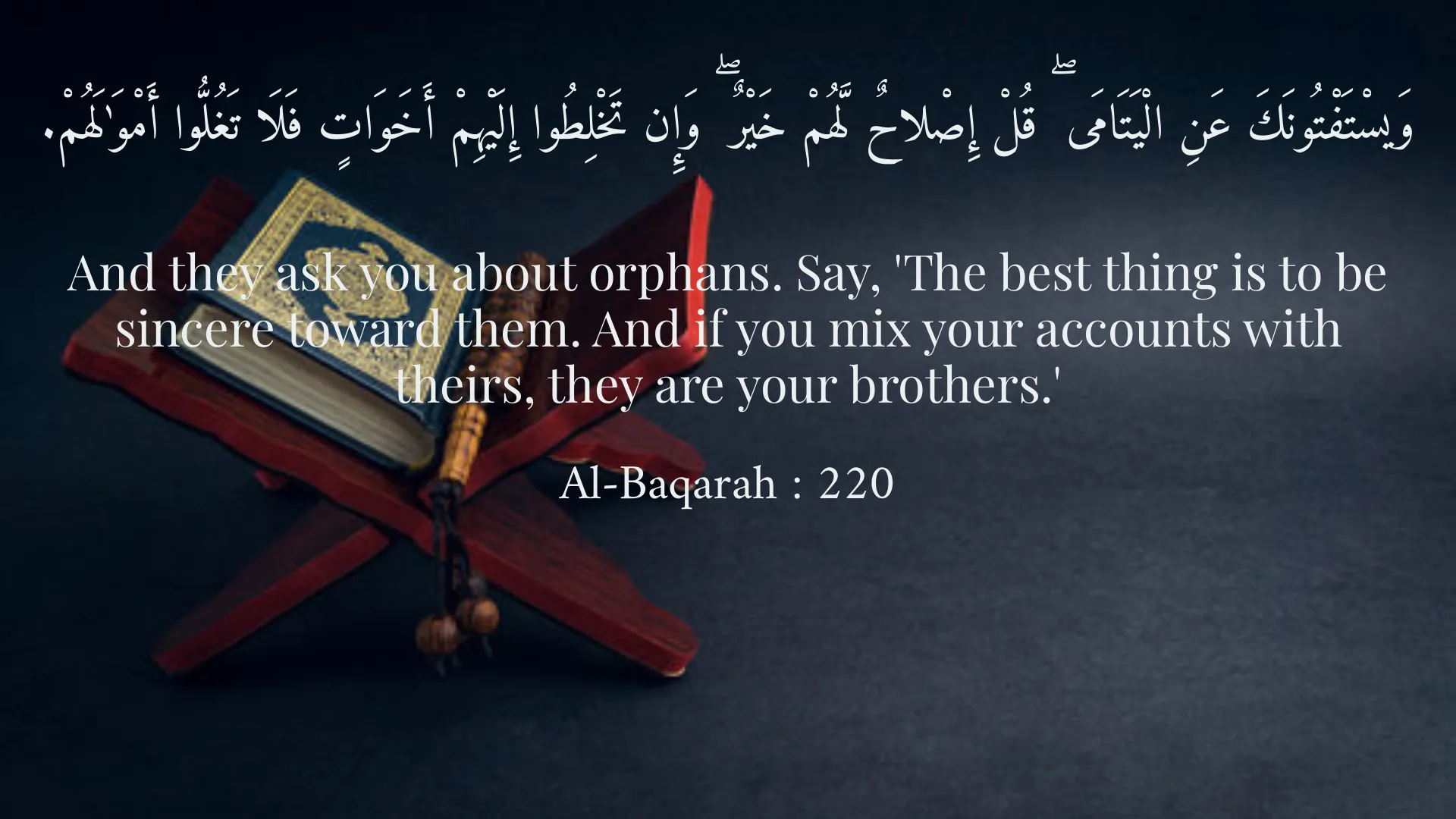
وَيسْتَفْتُونَكَ عَنِ الْيَتَامَى ۖ قُلْ إِصْلاحٌ لَّهُمْ خَيْرٌ ۖ وَإِن تَخْلِطُوا إِلَيْهِمْ أَخَوَاتٍ فَلَا تَغُلُّوا أَمْوَٰلَهُمْ.
And they ask you about orphans. Say, 'The best thing is to be sincere toward them. And if you mix your accounts with theirs, they are your brothers.'
Al-Baqarah : 220
وَلا تَقْرَبُوا مَالَ الْيَتِيمِ إِلَّا بِأَحْسَنِ مَا كَانَتْ تَارِيَةً إِلَى الْكَامِلِينَ.
And do not approach the property of orphans except in the best way until they reach maturity.
Al-An'am : 152
أَمْ جَزَآءُ الْإِحْسَانِ إِلَّا الْإِحْسَانُ.
Is the reward for good anything but good?
Ar-Rahman : 60
Short Story
One day, a man named Hassan was very sad and dissatisfied with his life. He was reflecting on good deeds and helping others. One day he remembered the verses of the Quran that said, 'And do good to orphans.' An idea struck him that he could help the orphans in his neighborhood. From that day on, Hassan dedicated his time to caring for and aiding orphans, and his life became filled with joy and contentment.