Quranic Answer
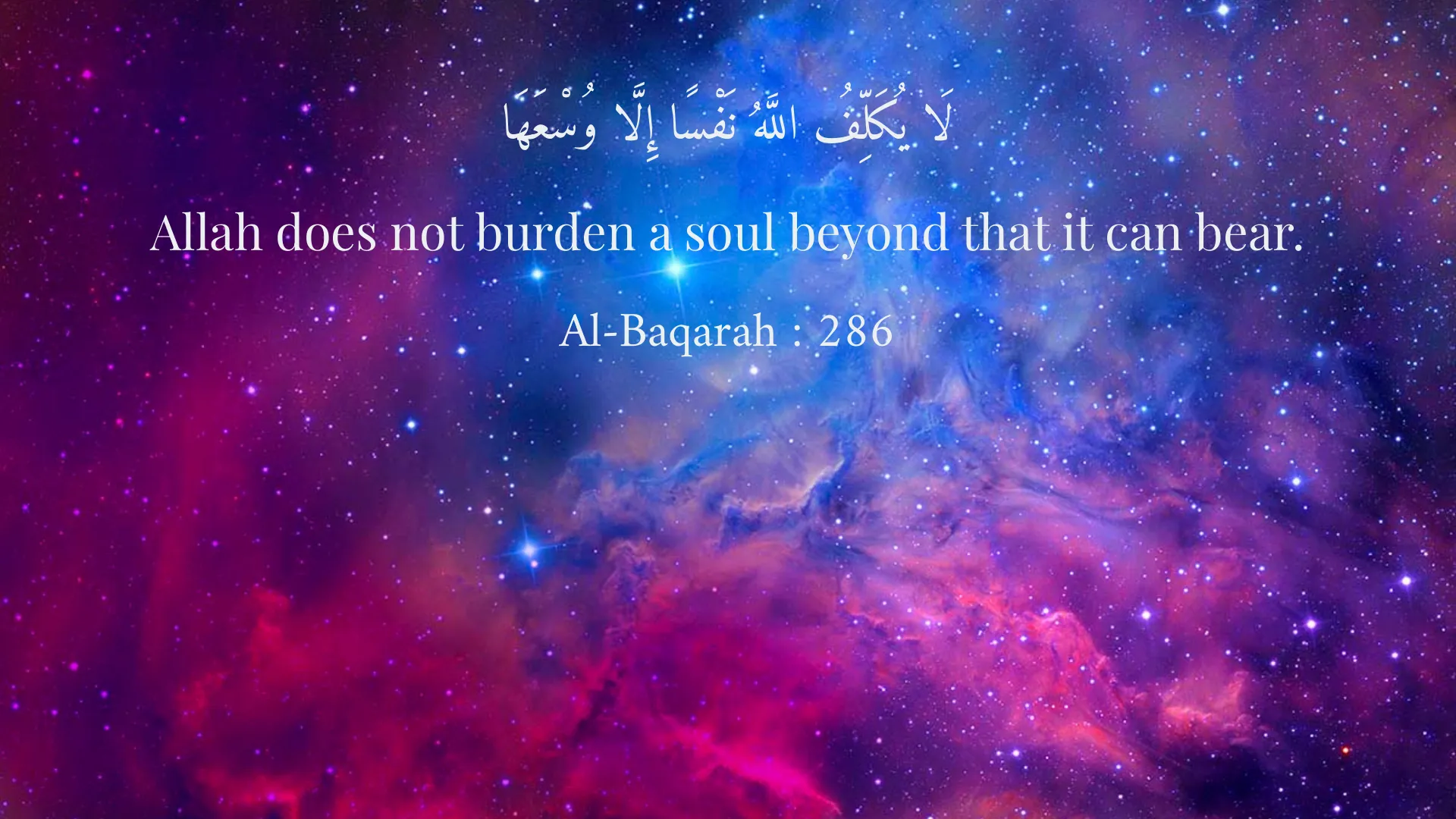
Title: The Role of Hope in God as a Source of Strength in Difficult Times Introduction In the tumultuous journey of life, individuals often encounter periods of despair and hardship. During such times, the Holy Quran emerges as a beacon of hope, reminding believers that God’s presence can serve as a source of strength and peace amid adversity. The message of hope permeates various verses, encouraging individuals to rely on Allah’s mercy and power. This article delves into the significant theme of hope in God, elucidating how it instills resilience, patience, and a profound sense of purpose in our lives. Hope as Strength and Peace One of the most compelling verses in the Quran is found in Surah Al-Baqarah, verse 286, which states: 'Allah does not burden a soul beyond that it can bear.' This profound declaration serves as a cornerstone for believers facing overwhelming challenges. It reassures them that every trial they endure has been deliberately calibrated by Allah—an encouraging reminder that they possess the intrinsic strength to overcome adversities. When difficulties arise, many individuals may feel isolated and weakened, but the Quran reassures them that God seeks not to impose unrealistic demands. Instead, every hardship comes paired with the capacity to bear it. This understanding fosters a sense of peace, as believers realize that they are not suffering in vain; their tribulations have purpose and are ultimately a part of a divine plan. The Connection Between Hope, Patience, and Endurance In Surah Al-Infitar, verse 3, Allah emphasizes that hope during challenging times can nurture patience and endurance. The act of hoping for better days can transform one’s outlook and demeanor. Rather than wallowing in despair, individuals are inspired to remain steadfast and patient, trusting in Allah’s plan. Patience, or 'Sabr,' becomes an innate response to life’s trials when one holds on to hope. This connection between hope and patience is pivotal; it empowers individuals to navigate through life’s challenges with a sense of resilience. It teaches that while we may not be able to control our circumstances, we can control our responses to them. The Encouragement Against Despair Another striking emphasis on hope can be found in Surah Az-Zumar, verse 53, where Allah proclaims: 'O My servants who have believed, do not despair of the mercy of Allah.' This verse serves to uplift believers who may feel overwhelmed by their shortcomings or the weight of their struggles. It provides reassurance that Allah’s mercy is vast and accessible, no matter how dire the situation may seem. Despair is often described as one of the most significant obstacles to spiritual and emotional well-being. By encouraging believers to remain hopeful, the Quran empowers individuals to rise above their trials, maintain their faith, and continuously seek forgiveness and guidance. This message is crucial in nurturing a community that fosters compassion, understanding, and mutual support. Hope as a Guiding Light Holding on to hope, even in the direst of circumstances, provides a guiding light that leads individuals toward healthier choices and positive changes. The concept of hope is not just passive waiting; it actively propels one toward action. When believers find themselves entrenched in dark times, the hope in Allah’s mercy is what leads them to turn their lives around. It inspires them to pursue forgiveness, seek reconciliation with others, and strive for personal growth. Moreover, hope in Allah nurtures a sense of community. When individuals face challenges collectively, the shared belief in divine mercy and hope fosters stronger bonds. Communities often rally around those who are struggling, providing support, encouragement, and assuredness that they are not alone in their hardships. The power of community, built on a foundation of hope, can transform lives and produce remarkable stories of resilience. Turning Challenges into Opportunities Notably, the difficulties one experiences can be catalytic forces for positive change. With the hope instilled by the Quranic teachings, individuals can learn to view their challenges as opportunities for growth and self-discovery. When burdens lead to reflection and personal development, they can emerge stronger and more grounded in their faith. Each trial navigated with hope becomes not only a testimony of one’s faith but also an opportunity to inspire others. Additionally, embracing hope can cultivate a positive mindset. Positive thinking enhances one’s ability to cope with stress and navigate obstacles effectively. As challenges serve as lessons in growth, the power of hope reinforces the understanding that tough times do not last; instead, they awaken the realization of one’s strengths and capacities. Conclusion In conclusion, the Holy Quran presents the theme of hope as fundamental to the believer’s experience, particularly in times of hardship. Verses such as those found in Surah Al-Baqarah, Surah Al-Infitar, and Surah Az-Zumar remind us that reliance on Allah is not merely a theoretical concept but a practical approach to life’s challenges. It encourages patience, nurtures resilience, instills a sense of community, and ultimately leads to personal growth. By keeping this hope alive in our hearts, we allow ourselves to navigate through life’s trials with unwavering faith and courage. In moments of darkness, let us not forget to hold on to our hope in Allah, for it is through this hope that we can transform challenges into stepping stones towards a brighter future.
Related Verses
لَا يُكَلِّفُ اللَّهُ نَفْسًا إِلَّا وُسْعَهَا
Allah does not burden a soul beyond that it can bear.
Al-Baqarah : 286
وَمَا أَدْرَاكَ مَا يَوْمُ الْانْفِطَارِ
And what can make you know what is the Day of Resurrection?
Al-Infitar : 3
يَا عِبَادِيَ الَّذِينَ آمَنتُمُ لا تَقْنَطُوا مِن رَّحْمَةِ اللَّهِ
O My servants who have believed, do not despair of the mercy of Allah.
Az-Zumar : 53
Short Story
One day, Sajjad, a young man living in a village, felt a deep sense of despair in the midst of life's darkness. However, he decided to take a look at the Quran and its divine verses. After reading some verses, he realized that having hope in the heart of darkness gave him twice the strength. With hope in God's mercy, Sajjad was able to overcome his troubles and start a new life.