Quranic Answer
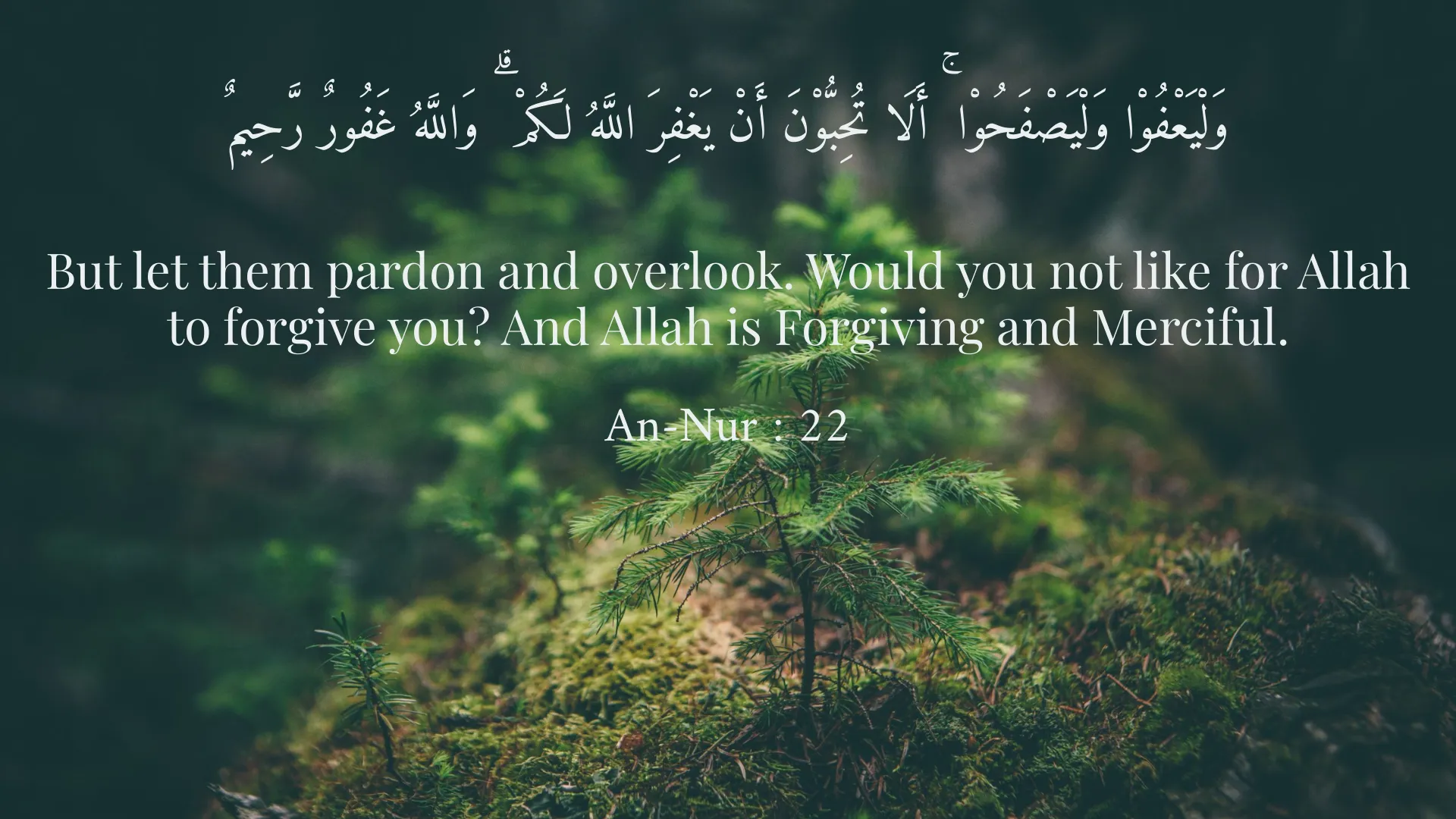
Forgiveness is a powerful concept that resonates deeply within the foundations of many religious teachings and ethical principles. In the Holy Quran, God's forgiveness is emphasized as a crucial attribute intrinsic to His divine nature. This attribute not only embodies His mercy but also serves as a guiding principle for His servants, encouraging them to embrace forgiveness in their lives. The theme of forgiveness is echoed throughout the Quran, where Allah, the Most Merciful, repeatedly highlights His compassion and mercy, urging His creation to engage in acts of forgiveness toward each other. One pivotal verse that illustrates this concept is found in Surah An-Nur, verse 22: 'But let them pardon and overlook. Would you not like for Allah to forgive you? And Allah is Forgiving and Merciful.' This profound statement underscores one of the fundamental aspects of the divine-human relationship; it suggests that There is a reciprocal nature to forgiveness. In other words, just as God's essence is forgiveness, so too should humans emulate this quality by forgiving one another. This verse serves as a reminder that God's forgiveness is not merely a passive attribute; it is an active force that encourages His servants to reflect this divine quality in their worldly interactions. The above-mentioned verse opens the door to understanding the blessings that come with God's forgiveness. It offers a pathway to achieving a tranquil and peaceful life through the act of forgiving others. When individuals choose to forgive, they often find themselves released from the burdens of resentment and anger, enabling them to pursue a more fulfilling existence. In stark contrast, human forgiveness can sometimes become mired in social contexts, influenced by emotions, past grievances, and interpersonal conflicts. Human beings are complex creatures shaped by their feelings and experiences, making it challenging, at times, to forgive those who have wronged them. Emotions such as fear, anger, and disappointment can hinder the ability to extend forgiveness, leading to a vicious cycle of conflict and strife. However, God's forgiveness transcends these human limitations and barriers. Unlike human reactions that may stem from emotional responses, God's readiness to forgive His servants is rooted in divine compassion. He does not hold grudges or engage in punitive measures; rather, He invites His servants to return to Him in repentance, highlighting His infinite capacity to forgive. Further elaborating this theme, Surah Al-Imran, verse 135, states: 'And those who, when they are reminded of the verses of their Lord, do not fall into despair but rather remain hopeful for God's mercy.' This verse encapsulates the idea that human beings, despite their failures and shortcomings, can always seek forgiveness from God. It emphasizes the necessity of pardon and repentance among individuals. Through this, Allah guides His servants on how to strengthen their capacity for forgiveness. It is essential to note that human forgiveness and divine forgiveness stand in stark contrast. The former can be influenced by a variety of factors, including but not limited to emotional responses, societal expectations, and personal experiences. Consequently, human forgiveness may encounter numerous challenges that create barriers to meaningful reconciliation. In situations where emotions run high, individuals may struggle to forgive, resulting in prolonged conflicts and grievances that can have damaging repercussions both personally and socially. On the other hand, God's forgiveness remains unwavering and accessible, characterized by His readiness to forgive and His infinite mercy. This divine forgiveness is not contingent upon human actions but is offered freely to all who sincerely repent for their wrongdoings. It embodies a profound act of compassion that shows no limits or boundaries. While human beings may face difficulty in forgiving, particularly when betrayal or deep-seated grudges are involved, God's readiness to forgive indicates that divine mercy extends far beyond the transgressions committed by humanity. Divine forgiveness, therefore, becomes an embodiment of compassion and love that stands as a beacon of hope for all who seek it. It offers solace to the broken-hearted and strength to those burdened by guilt. Recognizing God's unwavering forgiveness can serve as a vital element in the journey towards healing and peace. In moments when individuals feel trapped in cycles of resentment and hostility, remembering that God is always willing to forgive can encourage them to emulate this divine quality in their lives. In conclusion, the concept of forgiveness as emphasized in the Quran reveals significant differences between human and divine forgiveness. While human forgiveness is often affected by emotions and conflicts, leading to complicated relationships, God's forgiveness is pure, unconditional, and serves as a model for believers to aspire to. Recognizing this divine attribute allows believers to navigate their interpersonal relationships with greater compassion and benevolence. Ultimately, embracing forgiveness, as taught in the Quran, is not merely about absolving others but also liberating oneself from the shackles of negativity and strife. In doing so, individuals can foster a more peaceful and harmonious existence, reflecting their alignment with divine mercy in their everyday lives.
Related Verses
وَلْيَعْفُوْا وَلْيَصْفَحُوْا ۚ أَلَا تُحِبُّوْنَ أَنْ يَغْفِرَ اللَّهُ لَكُمْ ۗ وَاللَّهُ غَفُورٌ رَّحِيمٌ
But let them pardon and overlook. Would you not like for Allah to forgive you? And Allah is Forgiving and Merciful.
An-Nur : 22
وَالَّذِينَ إِذَا فَعَلُوا فَاحِشَةً أَوْ ظَلَمُوا أَنفُسَهُمْ ذَكَرُوا اللَّهَ فَاسْتَغْفَرُوا لِذُنُوبِهِمْ ۖ وَمَن يَغْفِرُ الذُّنُوبَ إِلَّا اللَّهُ ۖ وَلَمْ يُصِرُّوا عَلَى مَا فَعَلُوا وَهُمْ يَعْلَمُونَ
And those who, when they commit an immorality or wrong themselves, remember Allah and seek forgiveness for their sins. And who can forgive sins except Allah? And they do not persist in what they have done while they know.
Al-Imran : 135
Short Story
One day, a man named Mahdi was strolling down a street when suddenly he recalled the greatest mistake of his life made against an old friend. He decided to sincerely apologize to him. Allah forgave him for his honesty and pure intention, and their friendship was rekindled. From that day on, Mahdi always made an effort to forgive whenever needed.