Quranic Answer
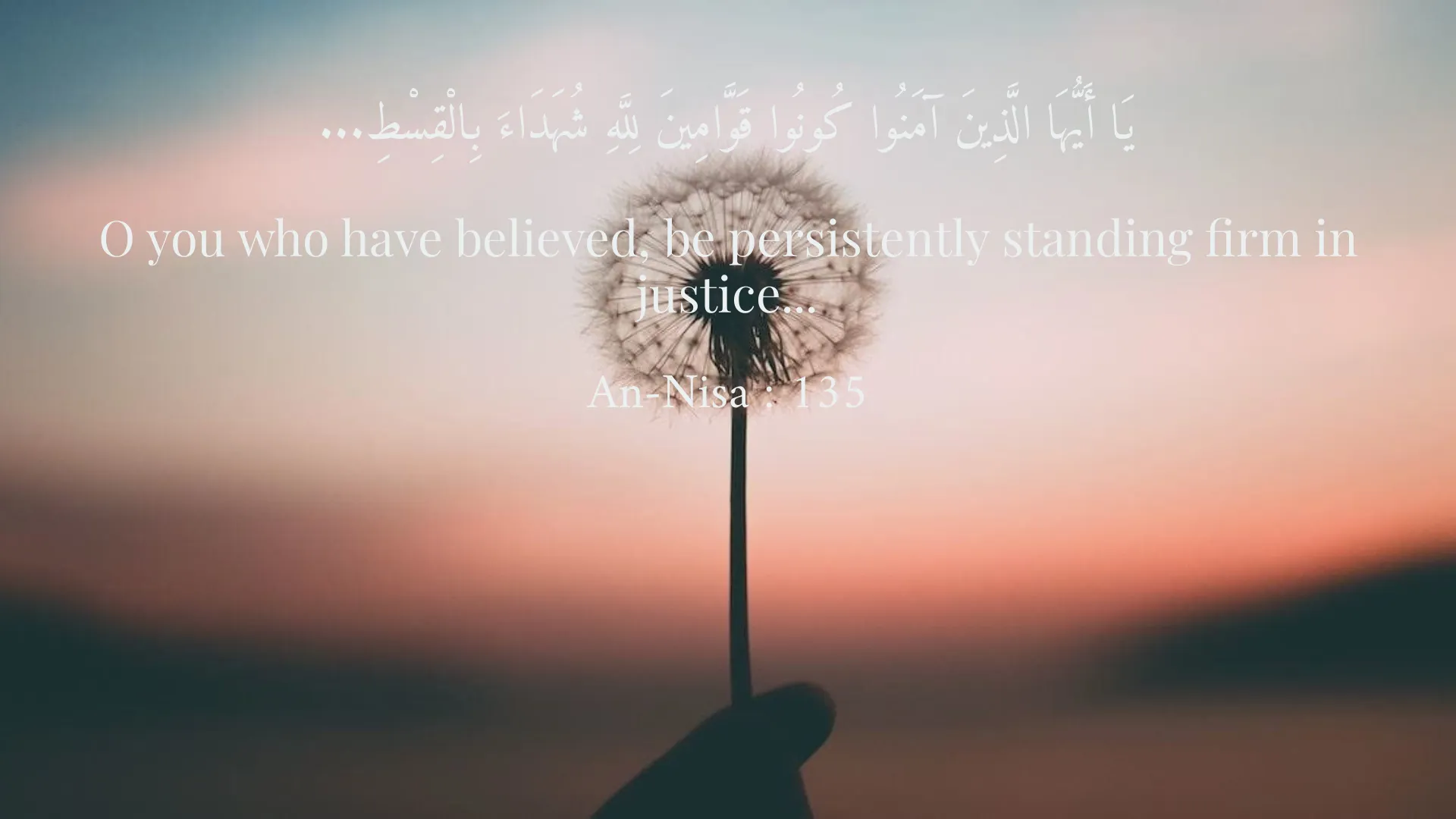
In the Holy Quran, the condemnation of oppression and indifference towards it is a substantial theme, woven deeply into the fabric of Islamic teachings. The call for justice is not merely a suggestion but stands as a command from Allah, emphasizing the moral obligation of every believer. The scriptures illustrate that oppression is not only a reprehensible act but also represents a significant sin, rooted in the actions and decisions of individuals. The essence of justice in Islam is encapsulated in various verses, with particular emphasis found in Surah An-Nisa, verse 135, which states: "O you who have believed, be persistently standing firm in justice, witnesses in justice..." This verse commands believers to maintain their commitment to justice, irrespective of their personal feelings toward any individuals or groups. This moral imperative suggests that any form of bias that leads to injustice is fundamentally opposed to the core tenets of Islamic faith. The call for justice extends beyond personal conduct; it reflects a collective responsibility that every Muslim shares. An essential aspect of this teachings is noted in the latter part of the same verse, where it cautions against allowing animosity toward a people to divert one away from being just. This principle emphasizes the idea that justice is not simply an abstract concept but a practical and active duty towards fellow human beings, regardless of their background or actions. The Quranic directive to uphold justice also implies that indifference to oppression, or ignoring the suffering of others, is unequivocally unacceptable. Moreover, in Surah Al-Mu'minun, verse 47, it is emphasized that individuals must not remain passive witnesses to injustice. Such verses reinforce the view that when one witnesses oppression, the response must be proactive. The responsibility of a Muslim goes beyond mere acknowledgment; it necessitates action and advocacy against injustice. This understanding fosters a sense of accountability among believers, leading to a broader engagement with social issues and commitments to ensuring equity. The significance of standing against oppression in Islam is profoundly underscored by the historical examples set by the Prophet Muhammad (peace be upon him) and the Ahlul Bayt. Throughout Islamic history, these pivotal figures relentlessly opposed oppression in all its forms. Their commitment serves as a vital model for contemporary Muslims who navigate a world rife with social injustices. The life of the Prophet is a testament to the active resistance against not just personal grievances but systemic injustices. He often stood for the marginalized, underlining the belief that silence in front of oppression constitutes complicity. Understanding the importance of this principle requires a broader contextual framework that examines the social dynamics within Islamic society. The Quran repeatedly underscores the themes of social justice, community responsibility, and the moral obligations that come with faith. Indifference to oppression, therefore, not only undermines the social fabric of justice but ultimately distances an individual from the principles of Islam, leading one away from the essence of faith itself. The teachings of Islam encourage an active engagement with societal issues, urging believers to rise against tyranny, exploitation, and inequality. In this vein, one can draw parallels between various historical and contemporary forms of oppression, recognizing that the use of power to suppress any individual or group is a violation of fundamental human rights, as outlined by Islamic teachings. This perspective aligns with the global movement for human rights, where the voices of oppression resonate across boundaries, necessitating a unified stand against such injustices. Every believer is called to cultivate a sense of vigilance and sensitivity towards the plight of others. When Muslims witness injustice, the response is not merely to express sympathy; rather, they are compelled by their faith to act, advocate, and strive towards rectifying those wrongs. This may involve a plethora of manifestations, from raising awareness and educating others to mobilizing for action against systems of oppression. Both the Quran and Hadith emphasize the profound responsibility that every Muslim carries. The distinction between passive observation and active engagement highlights the contrast between apathy and empathy. This demand for action compels believers to educate themselves about the struggles faced by others, rendering a familiar message: justice is paramount, and silence in the face of oppression is a betrayal of one's faith. The call to justice serves not only the oppressed but strengthens the foundations of the community as a whole. In conclusion, the clear condemnation of indifference to oppression in the Holy Quran is a rallying cry for all Muslims to participate actively in the pursuit of justice. By taking inspiration from the Prophet Muhammad (peace be upon him) and the Ahlul Bayt, believers are encouraged to model their lives on the principles of justice and equity. Remaining indifferent to oppression is not compatible with the ideals of Islam; it transgresses the teachings and commandments laid out in the Quran. Ultimately, engaging with the struggles of the oppressed not only fulfills a religious duty but also cultivates a more just, equitable, and compassionate society. As Muslims, we are reminded that to turn a blind eye to injustice averts the essence of our faith, urging us to rise in solidarity against oppression in every form.
Related Verses
يَا أَيُّهَا الَّذِينَ آمَنُوا كُونُوا قَوَّامِينَ لِلَّهِ شُهَدَاءَ بِالْقِسْطِ...
O you who have believed, be persistently standing firm in justice...
An-Nisa : 135
وَإِنْ كَانَ فِي ذَلِكَ مَسَاسٌ لِلْمُسْتَشْعِرِينَ...
And if it is good and noble, they should not remain indifferent.
Al-Mu'minun : 47
Short Story
One day, Adel was discussing community problems with his friends. He said, "Why does no one act against the oppression we see?" His friend replied, "The problem is we think ignoring it is better." Adel sadly responded, "But we shouldn’t be indifferent. The sooner we raise our voices, the better." From that day, Adel decided to be the voice of the oppressed.