Quranic Answer
Title: The Emphasis on Respect and Kindness in Islamic Teachings Introduction In the rich tapestry of Islamic teachings, the principles of respect, kindness, and empathy stand as fundamental tenets that guide the interactions between individuals. With a profound emphasis on the value of human dignity, the Holy Quran and the teachings of Prophet Muhammad (PBUH) resonate with calls for mutual respect and the avoidance of harm to others. In today's fast-paced world, revisiting these principles is essential, as they foster a harmonious society and create an environment conducive to love and understanding. The Quranic Foundations of Respect The Quran serves as the ultimate guide for Muslims, and its verses elucidate the moral compass that governs human behavior. One of the most striking examples of this guidance can be found in Surah Al-Hujurat, verse 11, where Allah advises believers: 'O you who have believed, let not a people ridicule [another] people.' This verse encapsulates the essence of respect and dignity by highlighting the importance of refraining from mockery, derision, or any form of belittlement towards others. Respecting others is not merely a suggestion in Islam; it is a divine injunction that shapes a person's character and their place in the community. The value of this teaching extends beyond verbal interactions, penetrating the very core of interpersonal relationships. The Quran calls for believers to uplift one another and to be mindful of their words and actions, fostering an atmosphere where kindness prevails. Kindness as a Defining Trait In Surah Al-Baqarah, verse 177, the Quran delineates the qualities of true believers, emphasizing traits such as kindness and honesty in dealings with others. This verse underscores the collective responsibility of individuals to offer support and compassion, creating a supportive community. Kindness is portrayed not simply as an act of goodwill, but as a fundamental aspect of faith, illustrating that true belief is reflected in one’s treatment of others. The Heart's Fragility and the Consequences of Harm The heart, both in a metaphorical and spiritual sense, holds a significant place in human experience. The act of breaking someone's heart can manifest in various forms, including betrayal, insult, or disregard for their feelings. In Islamic ethics, the ramifications of such actions are profound. To inflict emotional pain upon another, resulting in a broken heart, is viewed as an egregious transgression against the moral fabric of society. A believer is called to exercise restraint and to act with compassion, recognizing that each individual is a servant of Allah and worthy of love and respect. The Healing Power of Divine Mercy The beauty of Islamic teachings transcends the call for respect and kindness; it also provides a pathway for healing. Whenever someone’s heart is broken, they are often reminded of God’s mercy and compassion. In Islam, turning to God during moments of distress rekindles hope and facilitates emotional healing. The Quran avows that Allah is the Most Merciful, and seeking solace in Him can mend the wounds inflicted by human interactions. This divine connection enables individuals to find peace and strength, even in their darkest moments. The Importance of Empathy Empathy, a critical component of kindness, is also deeply rooted in Islamic teachings. Understanding and sharing the feelings of others encourages forgiveness and healing within the community. By fostering empathy, believers are taught to comprehend the challenges faced by their fellow humans, reinforcing the need to listen and respond to the cries of those around them. This mutual support forms the bedrock of a compassionate society where individuals are encouraged to care for one another. Examples from the Life of Prophet Muhammad (PBUH) The life of Prophet Muhammad (PBUH) serves as a quintessential model of kindness and respect toward others. His actions and conduct illustrate the importance of treating individuals, irrespective of their background, with dignity and love. Historical accounts detail numerous instances where the Prophet extended compassion even to those who wronged him, demonstrating the profound impact of empathy and forgiveness. The Prophet’s teachings encourage Muslims to engage with others in a manner that reflects their commitment to faith. Phrases such as 'None of you truly believes until he loves for his brother what he loves for himself' (Sahih Bukhari) emphasize that the well-being of others should parallel one's own desires, reinforcing the relentless pursuit of kindness. Modern Relevance of Islamic Values In an era characterized by rapid changes and increased social fragmentation, the relevance of Islamic values centered around respect and kindness is more crucial than ever. Conflicts and misunderstandings often arise due to a lack of empathy and acknowledgment of others' humanity. By embracing the teachings of the Quran and following the exemplary model of the Prophet Muhammad (PBUH), individuals can work toward creating a society that prioritizes harmony, compassion, and understanding. Conclusion In conclusion, the Islamic teachings urging respect for others and the avoidance of harm are timeless and essential. They not only shape individual behavior but also have the potential to transform communities. Each believer is called to embody these principles, fostering love and understanding within society. By prioritizing kindness, promoting empathy, and seeking forgiveness and healing through divine mercy, a more compassionate world can be achieved. The act of respecting one another is not just a moral obligation; it is the essence of a life lived in accordance with divine guidance and a path toward spiritual fulfillment.
Related Verses
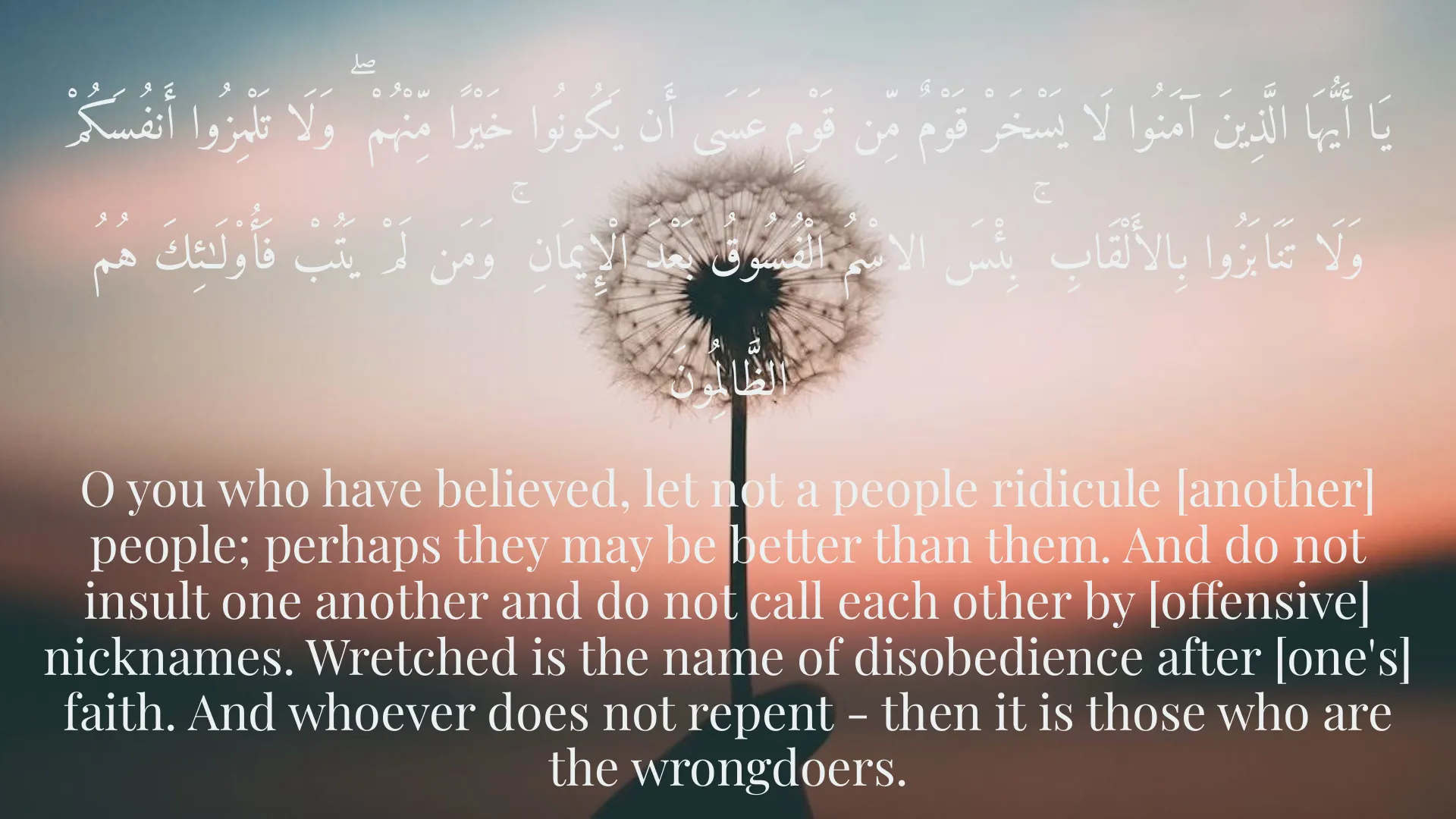
يَا أَيُّهَا الَّذِينَ آمَنُوا لَا يَسْخَرْ قَوْمٌ مِّن قَوْمٍ عَسَى أَن يَكُونُوا خَيْرًا مِّنْهُمْ ۖ وَلَا تَلْمِزُوا أَنفُسَكُمْ وَلَا تَنَابَزُوا بِالأَلْقَابِ ۚ بِئْسَ الاسْمُ الْفُسُوقُ بَعْدَ الْإِيمَانِ ۚ وَمَن لَمْ يَتُبْ فَأُو۟لَـٰئِكَ هُمُ الظَّالِمُونَ
O you who have believed, let not a people ridicule [another] people; perhaps they may be better than them. And do not insult one another and do not call each other by [offensive] nicknames. Wretched is the name of disobedience after [one's] faith. And whoever does not repent - then it is those who are the wrongdoers.
Al-Hujurat : 11
لَّيْسَ الْبِرَّ أَن تُوَلُّوا وُجُوهَكُمْ قِبَلَ الْمَشْرِقِ وَالْمَغْرِبِ وَلَكِنَّ الْبِرَّ مَن آمَنَ بِاللَّهِ الْيَوْمِ الْآخِرِ وَالْمَلَائِكَةِ وَالْكِتَـٰبِ وَالنَّبِيِّينَ وَآتَى الْمَالَ عَلَى حُبِّهِ ذَوِي الْقُرْبَى وَالْيَتَامَى وَالْمَسَاكِينِ وَابْنَ السَّبِيلِ وَالْسَّائِلِينَ وَفِي الرِّقَابِ وَأَقَامَ الصَّلَاةَ وَآتَى الزَّكَوَةَ وَالْمُوفُونَ بِعَهْدِهِمْ إِذَا عَاهَدُوا وَالصَّابِرِينَ فِي الْبَأْسَاءَ وَالضَّرَّاءَ وَحِينَ الْبَأْسِ ۚ أُو۟لَـٰئِكَ الَّذِينَ صَدَقُوا ۖ وَأُو۟لَـٰئِكَ هُمُ الْمُتَّقُونَ
Righteousness is not that you turn your faces toward the east or the west, but [true] righteousness is in one who believes in Allah, the Last Day, the Angels, the Book, and the Prophets and gives his wealth, in spite of his love for it, to relatives, orphans, the needy, the traveler, those who ask [for help], and for freeing slaves; and [those who] establish prayer and give zakah and [those who] fulfill their promise when they promise; and [those who] are patient in poverty and hardship and at the time of battle. It is those who have been true, and it is those who are the righteous.
Al-Baqarah : 177
Short Story
Once upon a time, two friends named Amir and Saman were sitting together and discussing friendship and love. Amir told Saman, 'Friendship means preserving each other's hearts, not breaking them.' Saman thoughtfully replied, 'Exactly, wherever we go, we must always be mindful of other people's feelings. After all, each of us are servants of God in some way, and we should promote love.' This conversation led them to decide to always keep kindness in their lives and to avoid breaking each other's hearts.