Quranic Answer
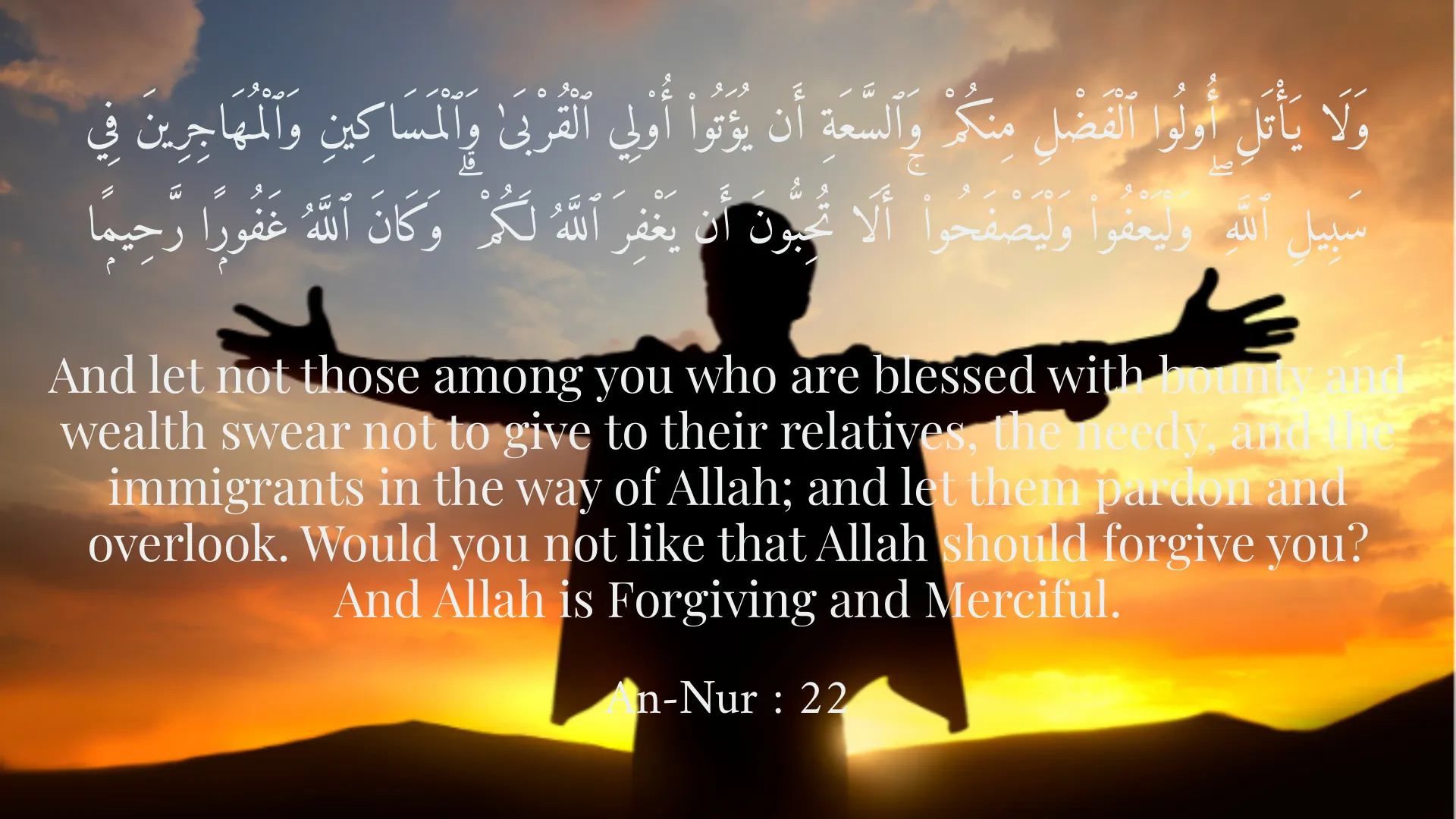
Forgiveness is a fundamental concept in many religions, but in Islam, it holds a particularly esteemed place within the hearts of believers. The Holy Quran emphasizes the significance of forgiveness repeatedly, portraying it as a virtue that not only brings peace to one’s heart but also fortifies the connection with Allah. Within its verses, it encourages believers to rise above personal grievances and practice compassion and understanding toward others. In this article, we will explore the various facets of forgiveness as highlighted in the Quran, its profound impact on human relations, and how it serves as a pathway to peace and spiritual fulfillment. ### The Concept of Forgiveness in the Quran The Quran interacts with the notion of forgiveness extensively. One of the most striking affirmations of this is found in Surah An-Nur, verse 22, which states: "And let not those among you who are blessed with bounty and wealth swear not to give to their relatives, the needy, and the immigrants in the way of Allah; and let them pardon and overlook. Would you not like that Allah should forgive you?" This verse encapsulates the essence of forgiveness in Islam by linking it to charity and supporting others, especially those less fortunate. By reminding believers that financial blessings should not lead to arrogance or a failure to support those in need, the verse emphasizes the importance of humility and forgiveness. It encourages believers to pardon and overlook the shortcomings of others. The rhetorical question at the end, "Would you not like that Allah should forgive you?", serves as a poignant reminder that forgiveness is a two-way street. By forgiving others, we open the door for our own forgiveness from Allah. This divine reciprocity is a powerful motivator for believers to adopt a forgiving attitude in their hearts. ### Embracing Forgiveness with Compassion Similarly, in Surah Al-Imran, verse 134, it is stated: "And those who spend in the way of Allah during ease and hardship and who restrain anger and who pardon the people – and Allah loves the doers of good." This verse outlines the qualities that are dear to Allah, which highlight the importance of spending selflessly, managing one’s temper, and choosing to forgive. The act of restraining anger, particularly in challenging times, is deemed an act of strength and character, showcasing the beauty of self-control. Forgiveness, as endorsed in this verse, is not merely an act of kindness; it manifests as a noble trait that enhances the believer’s relationship with God and society. The inherent challenge lies in differentiating between a reactive response of anger and a deliberate choice to forgive. The Quran encourages individuals to cultivate patience and compassion, resulting in a purer heart and a healthier sphere of interaction with their community. ### The Detrimental Effects of Resentment Negative feelings like resentment and anger can cast a long shadow over relationships and may ripple through other aspects of life. When individuals hold onto grudges, they not only beset their peace of mind but can also find relationships deteriorating and strains emerging among friends and family. Whenever someone inflicts hurt or wrongdoing upon us, it can be incredibly natural to respond with anger or resentment, persuading ourselves that we have valid reasons to feel this way. Yet, complicating emotions can cloud judgment and create deeper rifts. The Quran addresses these feelings and advises believers to rise above them. By reminding ourselves that every human makes mistakes, we can shift our perspectives toward compassion. This does not mean we condone wrongful acts, but instead, we recognize that forgiveness provides an avenue for healing and reconciliation. The cultivation of forgiveness can help dismantle barriers born of hurt and misunderstandings, nurturing an environment where love, empathy, and understanding can thrive. ### Practicing Forgiveness in Daily Life To translate the Quranic messages about forgiveness into our daily lives, we must actively strive to embody these values. Practicing forgiveness is not merely an act of benevolence but a necessity for inner peace. One practical strategy includes reflecting on situations where we felt wronged. By assessing these instances against our understanding of human imperfection, we equip ourselves with the capability to forgive. It can be helpful to enter these reflections with an open heart, allowing compassion to flow naturally. Moreover, developing empathy towards others can enhance our ability to forgive. By putting ourselves in the shoes of the offender and recognizing their potential struggles or limitations, we find common ground. This transition from hurt to understanding is essential for healing relationships. It may also be beneficial to engage in self-reflection, allowing oneself to understand personal emotions and triggers associated with the situation. Additionally, communicating with those we hold grievances against can also foster an environment conducive to forgiveness. Honest conversations can sometimes reveal underlying issues, leading to stronger bonds among individuals. Demonstrating vulnerability by admitting that we are hurt creates an opportunity for others to acknowledge their mistakes and engage in reciprocal healing. ### Conclusion In conclusion, forgiveness is a multifaceted concept deeply embedded in the teachings of the Quran, holding great significance for believers. The repeated emphasis on forgiveness encourages believers to adopt compassion and understanding as essential traits in their interactions with others. Recognizing the detrimental effects of resentment and prioritizing the act of forgiving provides a pathway to healing and fulfillment. By practicing forgiveness, believers enhance not only their own peace of mind but also nurture their relationship with God and those around them. The journey of forgiveness begins within, evolving into a broader impact that can enrich the entire community. As we aspire to embody the principles articulated in the Holy Quran, let us remember that through forgiveness, we can pave the way for a more compassionate and harmonious world.
Related Verses
وَلَا يَأْتَلِ أُولُوا ٱلْفَضْلِ مِنكُمْ وَٱلسَّعَةِ أَن يُؤَتُوا۟ أُو۟لِي ٱلْقُرْبَىٰ وَٱلْمَسَاكِينِ وَٱلْمُهَاجِرِينَ فِي سَبِيلِ ٱللَّهِ ۖ وَلْيَعْفُوا۟ وَلْيَصْفَحُوا۟ ۚ أَلَا تُحِبُّونَ أَن يَغْفِرَ ٱللَّهُ لَكُمْ ۗ وَكَانَ ٱللَّهُ غَفُورًۭا رَّحِيمًۭا
And let not those among you who are blessed with bounty and wealth swear not to give to their relatives, the needy, and the immigrants in the way of Allah; and let them pardon and overlook. Would you not like that Allah should forgive you? And Allah is Forgiving and Merciful.
An-Nur : 22
وَٱلَّذِينَ يُنفِقُونَ فِي ٱلسَّرَّاء وَٱلضَّرَّاء ۖ وَٱلْكَاظِمِينَ ٱلْغَيْظَ وَٱلْعَافِينَ عَنْ ٱلنَّاسِ ۗ وَأَللَّهُ يُحِبُّ ٱلْمُحْسِنِينَ
And those who spend in the way of Allah during ease and hardship and who restrain anger and who pardon the people – and Allah loves the doers of good.
Al-Imran : 134
Short Story
One day in a village, a man named Hassan was sitting with his friend Ali. Hassan was always angry at a person who had hurt him. Ali said to Hassan, 'Why are you angry? You know that nothing except Allah is infinitely perfect?' Hassan lowered his head and thought. He realized that he needed to open his heart and let go. Thus, Hassan decided not only to forgive that person but also to talk to him and build a better relationship. This decision not only calmed his spirit but also brought a new friendship into his life.