Quranic Answer
Is it good to ignore past mistakes or not? This is a profound question that not only has psychological and social dimensions but also holds significant importance from the perspective of divine teachings, particularly in the Holy Quran. From the Quranic viewpoint, simply ignoring past mistakes, meaning denying them or not accepting responsibility for them, is not a correct or constructive approach. Instead, the path to human spiritual and moral growth lies in acknowledging errors, sincere repentance, seeking forgiveness, and then learning from them. The Quran teaches us that mistakes are a part of human nature, but persisting in them or being indifferent to their consequences can lead to ruin and deviation from the path of truth. The Quran, with great emphasis on the concepts of "Tawbah" (repentance or turning back to God) and "Istighfar" (seeking forgiveness), offers a path for rectification and purification of the soul. In numerous verses, Allah invites His servants to repentance and promises forgiveness, even for major sins. This indicates that Allah does not want His servants to drown in the quagmire of past mistakes and despair of His mercy. Rather, He desires them to realistically examine their actions, accept responsibility for them, and take steps towards correction and amends. Ignoring mistakes deprives a person of this vital process of repentance and self-purification. Someone who ignores their mistake not only loses the opportunity for repentance and cleansing but often repeats that mistake or even falls into deeper misguidance. The Holy Quran clearly states that Allah is At-Tawwab (The Acceptor of Repentance) and Al-Ghafur (The Oft-Forgiving), but this forgiveness and acceptance of repentance are conditional upon human will and action to return and reform. Furthermore, ignoring past mistakes is a significant barrier to personal learning and growth. Every mistake carries a hidden lesson that can contribute to human insight and maturity. If someone commits an error and, instead of analyzing and understanding its causes, merely ignores it, they will never be able to learn from their experiences. The Quran repeatedly refers to the stories of past nations and individuals as "lessons" (I'tibar). These lessons precisely stem from examining the errors and deviations of those who came before, so that subsequent generations may avoid repeating them. Ignoring personal mistakes, in this context, eliminates the opportunity for personal learning. A person should view their mistakes like a mirror that reflects their weaknesses, enabling them to strive for correction. This process of self-knowledge and self-improvement is impossible without an honest confrontation with the past. Moreover, in human relationships, ignoring mistakes can lead to the destruction of trust and the deterioration of connections. If an individual wrongs another or violates someone's rights and then ignores it, they will never have the opportunity to make amends or seek forgiveness. The Holy Quran strongly emphasizes upholding the rights of others (Huquq al-Nas) and rectifying injustices. True repentance not only involves regret before God but also, if there are rights owed to others, necessitates seeking their satisfaction. Ignoring mistakes in this dimension prevents one from fulfilling their social and ethical responsibilities and can destabilize their relationships with others and even with themselves. However, an important point is that not ignoring mistakes does not mean being consumed by guilt, endless regret, and despair. After sincere repentance and taking necessary steps for amends and correction, a person should not allow past mistakes to hinder their progress in life. The Quran depicts the vast mercy of Allah and forbids believers from despairing of His mercy. Allah Almighty says in Surah Az-Zumar, verse 53: "Say, 'O My servants who have transgressed against themselves [by sinning], do not despair of the mercy of Allah. Indeed, Allah forgives all sins. Indeed, it is He who is the Forgiving, the Merciful.'" This verse indicates that after acknowledgment and repentance, the focus should be on the future and righteous deeds, not on dwelling in the past. Thus, the Quranic approach to past mistakes is a balanced and constructive one: 1. Acknowledgment and Responsibility: The first step is accepting the mistake, not ignoring it. This acceptance forms the foundation for repentance and reform. 2. Genuine Regret: Feeling remorse for the past action, sincerely and deeply. 3. Repentance and Istighfar: Seeking forgiveness from Allah and resolving not to repeat the error. If it involves the rights of others, making amends and seeking their forgiveness. 4. Learning and Taking Lessons: Viewing the mistake as an opportunity for growth and improvement. Utilizing past experiences to build a better future. 5. Moving Forward with Hope: After completing the above steps, with reliance on Allah and hope in His mercy, one should learn from the past and step towards righteous deeds and a better life, without getting caught in the trap of despair and constant self-reproach. In conclusion, ignoring past mistakes, in the sense of denying or not addressing them, is by no means desirable. Instead, what is desirable is an honest confrontation, accompanied by regret and a firm resolve to reform, in such a way that a person uses those experiences for growth and closer proximity to Allah and humanity, stepping forward on the path of servitude and excellence. This approach not only leads to spiritual purification but also brings individual and social peace and flourishing.
Related Verses
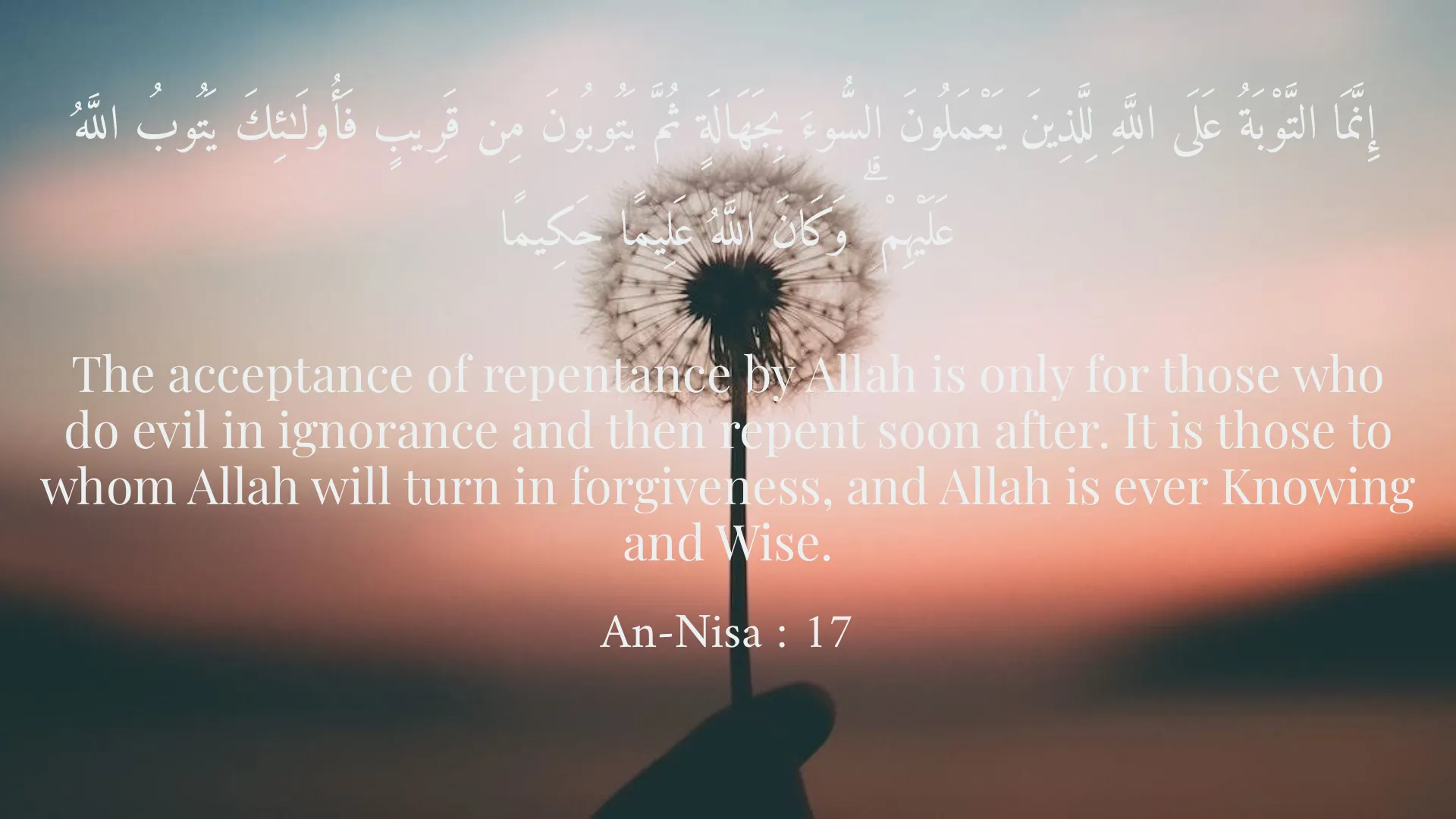
إِنَّمَا التَّوْبَةُ عَلَى اللَّهِ لِلَّذِينَ يَعْمَلُونَ السُّوءَ بِجَهَالَةٍ ثُمَّ يَتُوبُونَ مِن قَرِيبٍ فَأُولَٰئِكَ يَتُوبُ اللَّهُ عَلَيْهِمْ ۗ وَكَانَ اللَّهُ عَلِيمًا حَكِيمًا
The acceptance of repentance by Allah is only for those who do evil in ignorance and then repent soon after. It is those to whom Allah will turn in forgiveness, and Allah is ever Knowing and Wise.
An-Nisa : 17
قُلْ يَا عِبَادِيَ الَّذِينَ أَسْرَفُوا عَلَىٰ أَنفُسِهِمْ لَا تَقْنَطُوا مِن رَّحْمَةِ اللَّهِ ۚ إِنَّ اللَّهَ يَغْفِرُ الذُّنُوبَ جَمِيعًا ۚ إِنَّهُ هُوَ الْغَفُورُ الرَّحِيمُ
Say, 'O My servants who have transgressed against themselves [by sinning], do not despair of the mercy of Allah. Indeed, Allah forgives all sins. Indeed, it is He who is the Forgiving, the Merciful.'
Az-Zumar : 53
وَالَّذِينَ إِذَا فَعَلُوا فَاحِشَةً أَوْ ظَلَمُوا أَنفُسَهُمْ ذَكَرُوا اللَّهَ فَاسْتَغْفَرُوا لِذُنُوبِهِمْ وَمَن يَغْفِرُ الذُّنُوبَ إِلَّا اللَّهُ وَلَمْ يُصِرُّوا عَلَىٰ مَا فَعَلُوا وَهُمْ يَعْلَمُونَ
And those who, when they commit an immorality or wrong themselves [by sinning], remember Allah and seek forgiveness for their sins - and who can forgive sins except Allah? - and do not persist in what they have done while they know.
Al-Imran : 135
Short Story
In Saadi's Bustan, it is narrated that a disciple approached a wise Sheikh, confessing with shame a mistake he had committed in his youth, and suffering from its consequences in his heart. The Sheikh kindly replied: "O young man! Your remorse is itself a form of repentance. The mistake that occurred is like water that has passed through a river. But should one spend an entire life lamenting that water, or should one learn from it and prepare the land for better cultivation? Know that sincere regret and a resolve for good deeds wash away the ugliness of sin and turn the past into a bridge for a brighter future. A sin that turns you back to God is better than an act of worship that leads you to arrogance. So learn from it, rather than imprisoning yourself within it and despairing of the Lord's mercy." The disciple found peace in these words and, with renewed determination, engaged in self-correction and good deeds, ultimately achieving a blessed end.