Quranic Answer
Faith is a profound concept that lies at the core of human existence. It shapes our values, guides our actions, and influences our interactions with the world and those around us. The Holy Quran, which serves as a fundamental guide for Muslims, addresses various aspects of human experience, yet it does not explicitly deal with the complex nature of doubt and uncertainty in faith. However, the human experience inherently includes challenges that may provoke doubt, leading individuals to question their beliefs and values due to life's unpredictable circumstances. Understanding the interaction between doubt and faith, particularly through the lens of Islamic teachings, can provide valuable insights into how one can navigate their spiritual journey. The Quran acknowledges that faith is not a static entity; rather, it is an ongoing process that evolves through various life experiences. People may encounter doubts that challenge their beliefs due to personal losses, societal pressures, or existential dilemmas. In Surah Al-Baqarah, verse 286, it is stated: "Allah does not burden a soul beyond that it can bear." This profound statement serves as a reminder that every individual has a unique capacity to handle life's trials and tribulations. The verse encourages believers to recognize that the challenges they face are not arbitrary; they are tailored to their specific abilities and circumstances. The implication here is that trials, including those that induce doubt, are part of Allah’s divine plan to help individuals grow stronger in their faith. Furthermore, Surah Al-Imran, verse 137, provides additional insight into how believers can approach their doubts and hardships. It reads, "Indeed, there has already been for you a sign in the two armies that met [in battle]. One was fighting in the cause of Allah, and the other was disbelieving. And they saw them with their own eyes twice their [own] number. But Allah supports with His victory whom He wills. Indeed, in that is a lesson for those of insight." This verse encourages believers to reflect on past challenges and recognize that hardships claim a dual role: they serve as tests of faith but also as valuable lessons that can lead to a deeper understanding and connection with God. The concept of doubt can often be viewed negatively; it is a feeling associated with weakness or insecurity. However, Islamic teachings encourage a more nuanced perspective on doubt. Rather than seeing it as a deficiency in one's faith, individuals can interpret doubt as a natural part of their spiritual development. Embracing doubt can lead to a more profound exploration of faith and encourage a deeper understanding of one's beliefs. It can promote critical thinking and encourage individuals to seek knowledge, thereby reinforcing their faith in a more conscious and meaningful manner. When individuals encounter moments of doubt, they can approach these experiences as opportunities for growth. Instead of retreating into despair, they can engage in reflective practices such as prayer, meditation, and seeking knowledge. These practices allow individuals to confront their doubts, understand their origins, and place them within the broader context of their spiritual journey. The act of questioning itself can lead to deeper insights about faith and a more robust spiritual connection with the Divine. Moreover, the collective experiences of believers throughout history can serve as powerful reminders that doubt has been a part of the human experience for millennia. Our predecessors faced challenges that tested their faith, yet many emerged with even stronger convictions. The stories of the prophets in the Quran, for instance, exemplify how doubt and trials were integral to their missions. They serve as powerful reminders that even the most steadfast believers experienced moments of uncertainty but remained resilient in their faith. Educational frameworks within Islamic tradition often emphasize the importance of seeking knowledge, understanding, and contextualizing one’s doubts. Engaging with scholars, reading religious texts, or participating in community discussions can empower individuals to confront their doubts head-on. Through such engagement, believers not only strengthen their own faith but also contribute to a larger discourse on faith, doubt, and the human experience. Knowledge then becomes a fortress against the doubts that might otherwise lead to despair. Additionally, it is essential to recognize that doubt can serve as a catalyst for compassion and empathy. Those who grapple with their faith often develop a profound understanding of the struggles of others. This shared experience can foster a sense of community among believers who support each other through their uncertainties. Acts of kindness, open conversations, and genuine support can help individuals navigate their doubts in a safe and nurturing environment, reinforcing the belief that they are not alone in their struggles. In conclusion, while the Holy Quran does not explicitly address doubt and uncertainty, it offers profound guidance that can help believers navigate these complexities as an integral part of their faith journey. The verses in Surah Al-Baqarah and Surah Al-Imran remind us that each individual's capacity for enduring trial and confronting doubt is recognized and supported by Allah. Doubt should not be perceived as a weakness but rather as an opportunity for spiritual growth, reflection, and connection with the Divine. Embracing moments of uncertainty can lead to a deeper understanding of one’s beliefs and ultimately serve as a powerful impetus for faith development. As believers recognize the transformative potential of their doubts, they may emerge with an enriched connection to their faith, equipped with a greater understanding of themselves and their relationship with Allah.
Related Verses
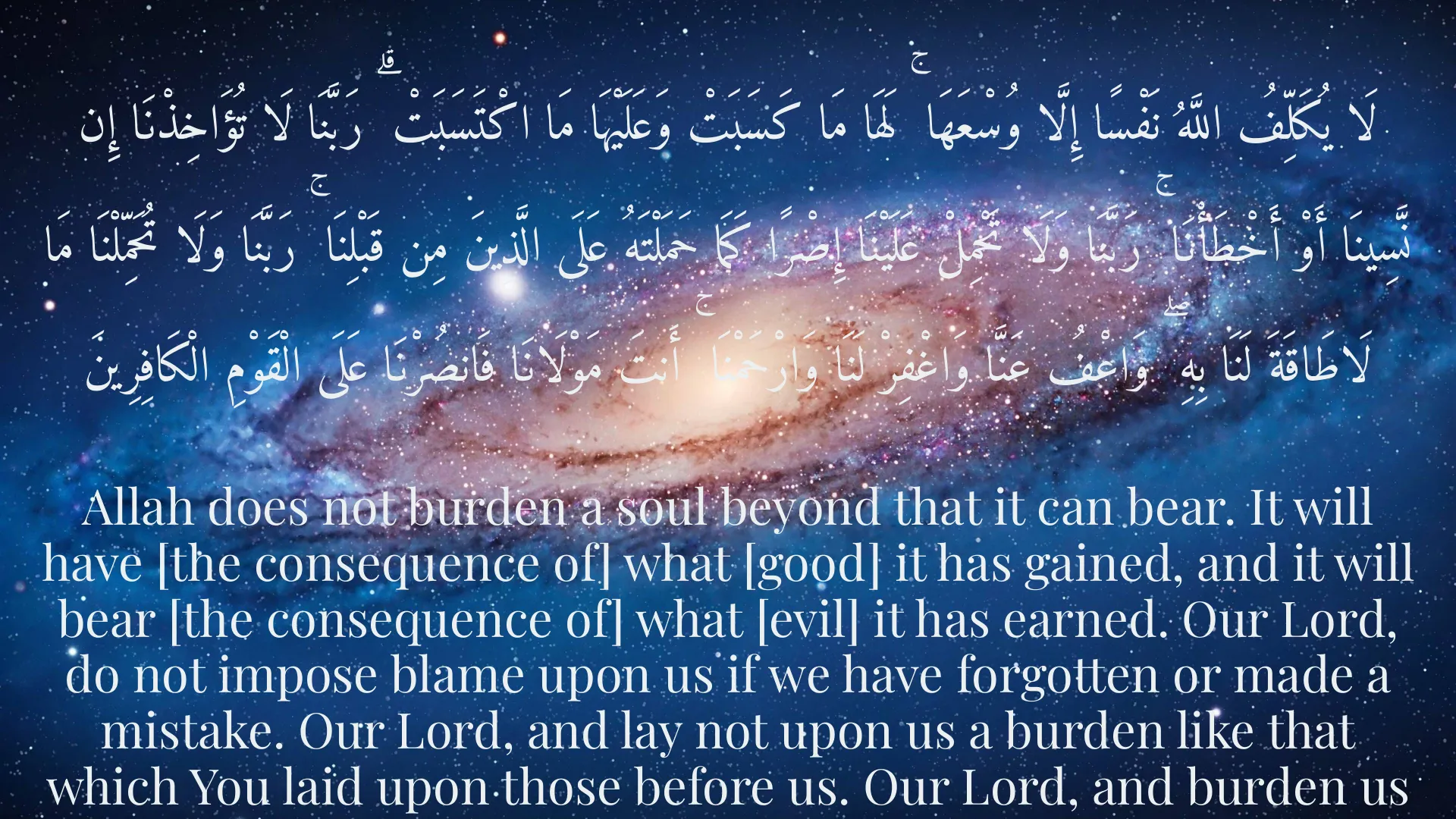
لَا يُكَلِّفُ اللَّهُ نَفْسًا إِلَّا وُسْعَهَا ۚ لَهَا مَا كَسَبَتْ وَعَلَيْهَا مَا اكْتَسَبَتْ ۗ رَبَّنَا لَا تُؤَاخِذْنَا إِن نَّسِينَا أَوْ أَخْطَأْنَا ۚ رَبَّنَا وَلَا تَحْمِلْ عَلَيْنَا إِصْرًا كَمَا حَمَلْتَهُ عَلَى الَّذِينَ مِن قَبْلِنَا ۚ رَبَّنَا وَلَا تُحَمِّلْنَا مَا لَاطَاقَةَ لَنَا بِهِ ۖ وَاعْفُ عَنَّا وَاغْفِرْ لَنَا وَارْحَمْنَا ۚ أَنتَ مَوْلَانَا فَانصُرْنَا عَلَى الْقَوْمِ الْكَافِرِينَ
Allah does not burden a soul beyond that it can bear. It will have [the consequence of] what [good] it has gained, and it will bear [the consequence of] what [evil] it has earned. Our Lord, do not impose blame upon us if we have forgotten or made a mistake. Our Lord, and lay not upon us a burden like that which You laid upon those before us. Our Lord, and burden us not with that which we have no ability to bear. And pardon us; and forgive us; and have mercy upon us. You are our protector, so give us victory over the disbelieving people.
Al-Baqarah : 286
قَدْ خَلَتْ مِن قَبْلِكُمْ سُنَنٌ ۭ فَسِيرُوا فِي الْأَرْضِ فَانظُرُوا كَيْفَ كَانَ عَاقِبَةُ الَّذِينَ كَانُوا مِن قَبْلُ ۚ كَانَ أَكْثَرُهُمْ مُشْرِكِينَ
Previous generations have passed away before you, so traverse the earth and observe how was the end of those who denied [their Lord].
Al-Imran : 137
Short Story
In a small village, there was a young man named Ali who was deeply devoted to his faith. One day, seeing the hardships people were facing, he began to doubt and questioned if God was truly with him. He sought guidance from a religious scholar and shared his concerns. The scholar advised him that doubt is natural, reminding him that faith always requires effort and inquiry. Encouraged by the advice, Ali decided to engage more in worship and reading the Quran. Gradually, he found greater peace and confidence.