Quranic Answer
Detaching from the world and not being attached to material possessions is emphasized as a virtue in Islamic culture, especially through the teachings of the Holy Quran. Within its verses, the Quran provides profound insights into the nature of worldly life and the importance of connecting with the Divine. This article delves into the concept of detachment, as guided by Islamic principles, elucidating why such a detachment is not only virtuous but also essential for spiritual fulfillment. ### Understanding the Concept of Detachment In the materialistic world we inhabit, individuals are often swept away by the allure of worldly possessions and the transient pleasures they promise. However, Islamic teachings advocate for a perspective that transcends mere material enjoyment. The Quran constantly encourages believers to remember the afterlife, suggesting that this world should be viewed merely as a bridge to the eternal realm. This notion is particularly reinforced in Surah Al-Imran, verse 185, which states: "And what is the life of this world except for the enjoyment of delusion?" This powerful verse signifies that worldly life is merely a deceptive commodity, one that individuals should approach with caution and mindfulness. ### The Impermanence of Worldly Possessions Further insight is provided in Surah An-Nahl, verse 96, where Allah reminds us: "What is with you will end, but what is with Allah will remain." This verse bears significant weight in the context of material possession, illustrating the fleeting nature of worldly goods. Everything we earn, own, and cherish in this life is temporary, and sooner or later, we must part ways with these material possessions. This realization can serve as a catalyst for a profound change in mindset, prompting individuals to reassess their values and allegiances. The Quranic perspective illustrates a critical aspect of life: the emphasis on striving for the afterlife rather than clinging to the ephemeral delights of the material world. The core message is clear: our time on earth should not be spent in relentless pursuit of possessions or status, as these pursuits are inherently unfulfilling and ultimately hollow. ### Balancing Life and Spirituality However, it is vital to recognize that detachment from the world does not imply a complete abandonment of normal life. Islamic teachings encourage believers to engage in their daily activities while maintaining a broader perspective. Life is viewed as a stage, an opportunity to serve God and others, rather than a mere pursuit of individual pleasure or gain. Engaging in good deeds, helping others, and uplifting one’s community can be deeply spiritual acts that create a bridge between the material and the divine. ### The Importance of Understanding and Willpower Achieving a state of detachment requires more than simply wishing to let go of material desires; it necessitates deep understanding and strong willpower. Recognizing the temporary nature of this world is crucial for cultivating a mindset that prioritizes spiritual over material wealth. It demands conscious effort to focus on the lasting values and virtues that uplift the soul and bring one closer to Allah. To successfully navigate through worldly distractions, Muslims are encouraged to regularly contemplate Quranic verses and remember the afterlife. This practice can strengthen one’s resolve in staying connected to the spiritual rather than becoming ensnared in material pursuits. Regular prayers, reading the Quran, and engaging in community service can reinforce this connection. ### Reflection Through Quranic Verses Moreover, reflecting on Quranic verses that speak about the afterlife can serve as a powerful reminder to remain grounded. Verses encouraging believers to invest in good deeds for the sake of Allah and to seek forgiveness for sins act as a guide for maintaining spiritual priorities in a world filled with distractions. The Quran provides a framework through which Muslims can understand their role and purpose, leading to a more profound detachment from the superficial allure of the world. Further, hadiths, which are sayings of the Prophet Muhammad (peace be upon him), also complement these teachings, emphasizing the importance of detachment. The Prophet advised against excessive attachment to worldly possessions, promoting contentment with what one has. This guidance resonates deeply, reminding individuals of the virtues of simplicity and the importance of reliance on Allah. ### The Benefits of Detachment Detaching from the material aspects of life brings about numerous benefits. Firstly, it fosters peace of mind and emotional stability. When one is no longer bound by the need to acquire and maintain possessions, there is a significant reduction in anxiety and stress, creating space for inner peace. Secondly, detachment nurtures compassion, as individuals become more focused on serving others rather than competing for material gains. Lastly, this detachment opens the door to a deeper relationship with Allah, as believers invest time in spiritual practices and connect more deeply with their faith. This relationship provides solace, guidance, and purpose, reinforcing the notion that true fulfillment comes from within and is not dictated by external factors. ### Conclusion In conclusion, the concept of detachment from the material world is a pivotal teaching within Islamic culture, deeply rooted in the Holy Quran. By embracing this virtue, believers can access spiritual fulfillment and create a life that resonates with deeper meanings and values. Detachment is not about forsaking the world but rather about altering one’s perspective. It involves viewing life as a bridge to the afterlife, filled with opportunities for service and devotion. By fostering a strong understanding of worldly imperfections and the fleeting nature of material possessions, individuals can cultivate a spiritual resilience that ultimately enriches their lives and deepens their faith. In a world captivated by consumerism, the teachings of Islam remain a powerful reminder of the importance of prioritizing the eternal over the temporal.
Related Verses
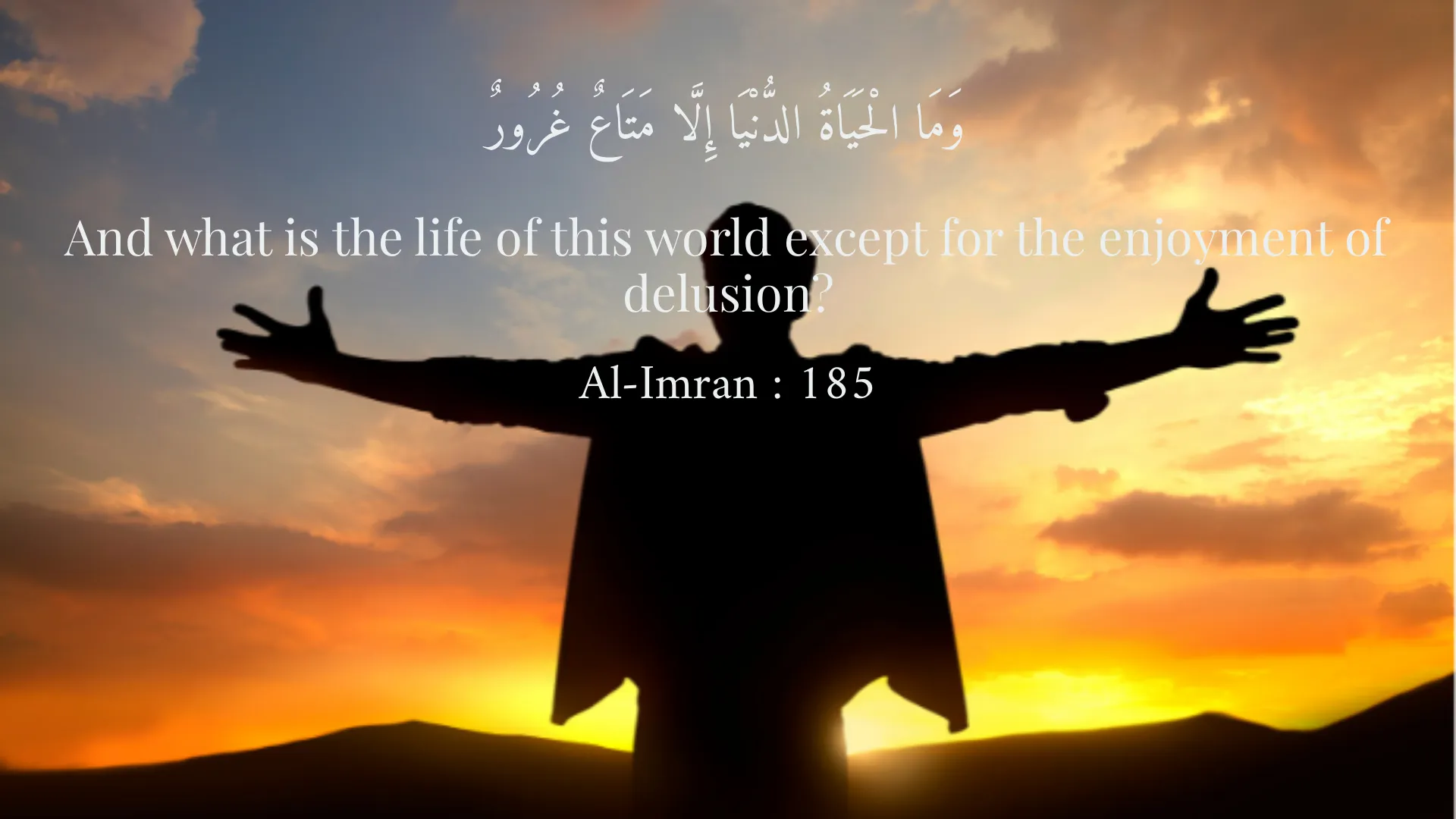
وَمَا الْحَيَاةُ الدُّنْيَا إِلَّا مَتَاعٌ غُرُورٌ
And what is the life of this world except for the enjoyment of delusion?
Al-Imran : 185
مَا عِندَكُمْ يَنفَدُ وَمَا عِندَ اللَّهِ بَاقٍ
What is with you will end, but what is with Allah will remain.
An-Nahl : 96
Short Story
One day, a man, feeling overwhelmed by the excitement of life, wondered if he could detach from the world. He began reading the Quran and discovered the truth about life. He realized that while material life holds value, it is essential to recognize its true place. He endeavored to get closer to God and found true peace and satisfaction in this journey.