Quranic Answer
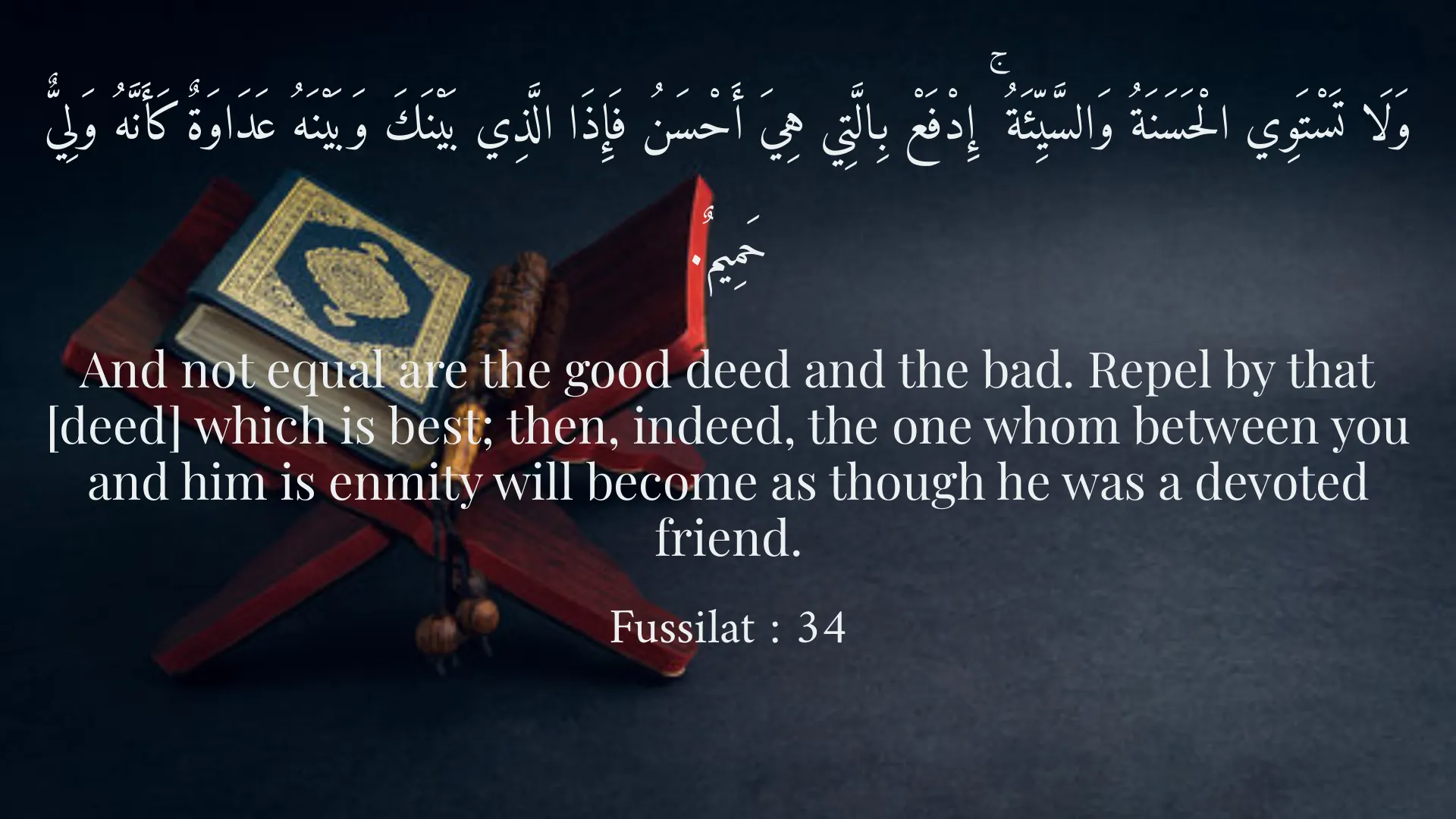
The Holy Quran, a fundamental text in Islam, addresses numerous aspects of human interactions, emphasizing the importance of morality, kindness, and compassion. A particularly profound theme found within its verses is the call to show goodness and kindness towards others, especially towards those who may be considered enemies. This moral instruction reflects a deeper ethical principle within the Islamic framework, highlighting the potential for transformation through positive actions and attitudes. One of the most significant verses regarding this principle is found in Surah Fussilat, verse 34, where Allah states: 'And not equal are the good deed and the bad. Repel by that [deed] which is best; then, indeed, the one whom between you and him is enmity will become as though he was a devoted friend.' This verse encapsulates a powerful message that good deeds and bad deeds do not hold the same weight; instead, there is an encouragement to respond to confrontation or negativity with positivity. This promotes a culture of kindness over hostility and encourages individuals to reflect on their own behavior in the context of their interactions with others, especially with those who might oppose or dislike them. The encouragement to respond with goodness rather than retaliation profoundly influences the nature of social dynamics. The premise is simple yet impactful: by treating adversaries with respect and kindness, there is a significant potential to change their hearts and minds. The notion that a kind gesture can soften an enemy’s stance is a compelling argument for those who seek peace and harmony in their communities. If a person chooses to act out of love and compassion, this proactive approach can initiate a chain reaction, leading to the reformation of relationships that might have otherwise remained contentious. Moreover, in Surah Al-Mu’minun, verse 96, Allah further emphasizes this idea by stating: 'Repel by that which is better.' This instruction is reminiscent of the previous verse, reinforcing the orientation towards superiority in moral conduct over mere reactions or retaliations. In Islam, values such as forgiveness, patience, and kindness are paramount, surpassing instinctual reactions rooted in anger or animosity. The transition from enmity to friendship underlines the profound impacts that positive behavior can have in varying interpersonal dynamics. The Quranic exhortation to do good to one’s enemies serves to foster love, understanding, and empathetic relationships, leading to a more harmonious society. By promoting kindness as a fundamental response, individuals are continually encouraged to rise above provocations and engage more meaningfully with others, creating opportunities for reconciliation and understanding instead of hostility. Islamic history provides numerous illustrations of how these principles have been enacted in practice, one of the most notable examples being the life of Prophet Muhammad (PBUH). Throughout his lifetime, the Prophet exhibited remarkable patience and kindness even towards his adversaries. Historical accounts detail how he treated those who opposed him, often showing compassion and mercy that led many of his enemies to embrace Islam voluntarily. For example, when he migrated to Medina, he fostered an environment of mutual respect among diverse tribes, effectively transforming previous animosities into alliances based on shared values and goals. In the context of the Quran and the teachings of the Prophet, we can infer that the act of treating others—friends and foes alike—with dignity and respect reflects a deeper understanding of human nature and interpersonal relationships. Those who embody these ideals become exemplars of what is possible when one chooses to respond to negativity with positivity. Their actions can inspire countless others to follow suit, creating ripples of goodwill that extend far beyond individual encounters. Furthermore, promoting kindness towards one's enemies can be seen as a pathway to healing societal rifts. In societies plagued by division and distrust, the principles laid out in the Quran offer guidance on fostering peace and reconciliation. When individuals choose to transcend their grievances and respond with kindness, they dismantle barriers of hostility, paving the way for dialogue and understanding. Importantly, this principle does not imply a blind acceptance of wrongdoings or injustices. Rather, it encourages individuals to seek healthier and more constructive ways to address conflicts. By opting for a response rooted in ethical conduct, one can challenge negativity and hostility more effectively, fostering a culture of mutual respect and understanding. In conclusion, the themes present in the Holy Quran regarding kindness, morality, and the treatment of enemies provide vital insights into how to navigate the complexities of human relationships. The directives to respond to bad with good highlight the transformative power of compassion and kindness, essential tools in combating hatred and fostering love. By looking to the teachings of Surah Fussilat and Surah Al-Mu’minun, believers can find strength in treating adversaries as potential friends, reaffirming the call to embody compassion in every interaction. As exemplified by the life of the Prophet Muhammad (PBUH), the approach of kindness can lead to powerful societal changes, where love triumphs over animosity and relationships are redefined through the acts of humanity.
Related Verses
وَلَا تَسْتَوِي الْحَسَنَةُ وَالسَّيِّئَةُ ۚ إِدْفَعْ بِالَّتِي هِيَ أَحْسَنُ فَإِذَا الَّذِي بَيْنَكَ وَبَيْنَهُ عَدَاوَةٌ كَأَنَّهُ وَلِيٌّ حَمِيمٌ.
And not equal are the good deed and the bad. Repel by that [deed] which is best; then, indeed, the one whom between you and him is enmity will become as though he was a devoted friend.
Fussilat : 34
ادفع بالتي هي أحسن.
Repel by that which is better.
Al-Mu’minun : 96
Short Story
Once there was a man named Hassan who lived in a village. He had a conflict with one of his neighbors and held a grudge. However, over time, Hassan decided to do good rather than harbor enmity. He began helping his neighbor with chores and treating him kindly. Gradually, the grudges faded, and they became close friends.