Quranic Answer
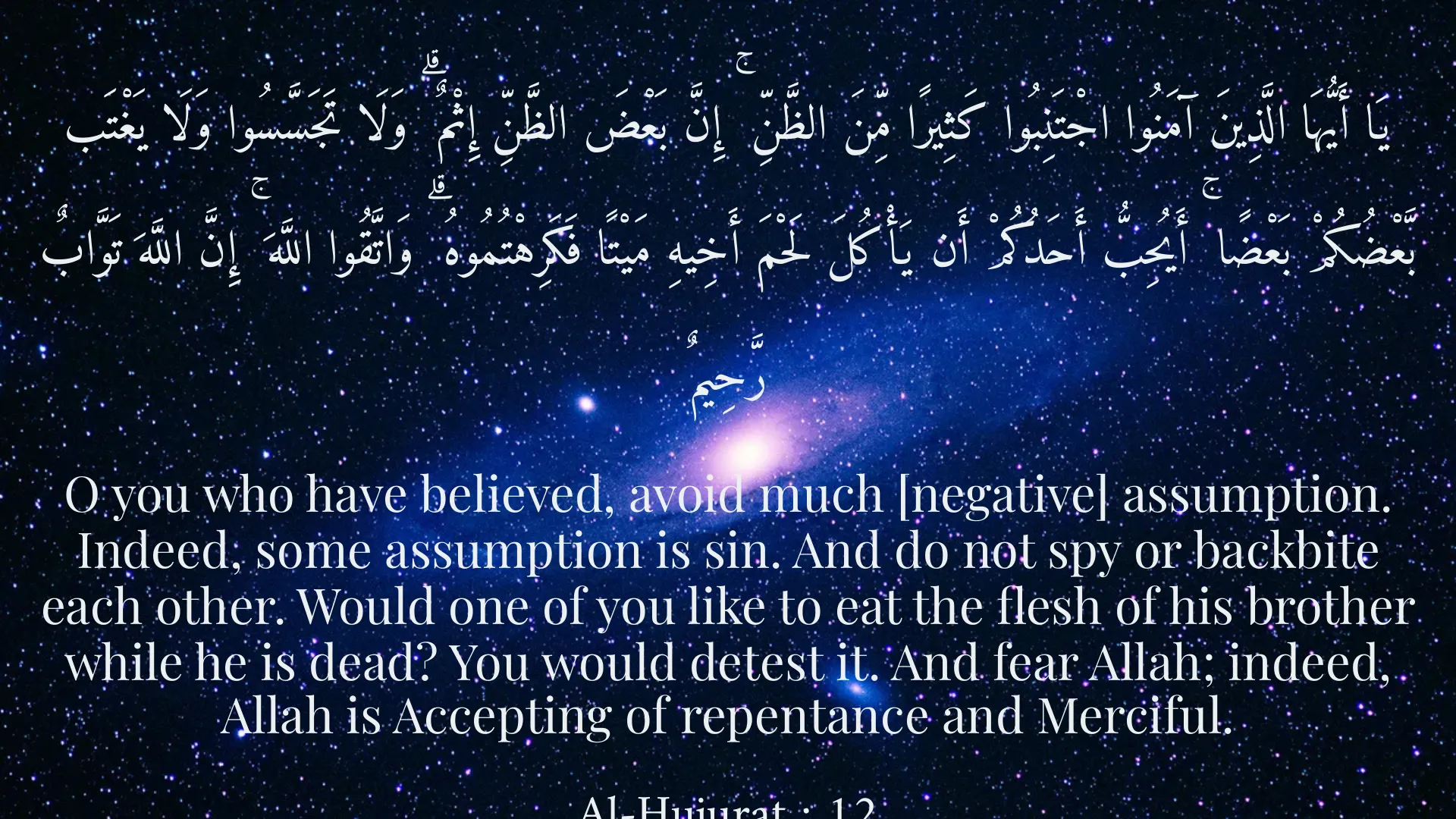
In the Holy Quran, judging others is strongly condemned, underscoring a fundamental principle that shapes the fabric of a harmonious society and the moral guidance for individuals. This idea is deeply embedded within Islamic teachings, wherein the act of forming judgments about others is not merely discouraged but is explicitly deemed sinful. One of the key verses that encapsulate this principle is found in Surah Al-Hujurat (Chapter of the Rooms), verse 12, which states: 'O you who have believed, avoid much [negative] assumption. Indeed, some assumption is sin. And do not spy or backbite each other. Would one of you like to eat the flesh of his brother while he is dead? You would detest it. And fear Allah; indeed, Allah is Accepting of repentance and Merciful.' This profound verse serves multiple purposes; it emphasizes the sanctity of human dignity, the importance of mutual respect among individuals, and the consequences of harboring ill intentions. This verse opens with a direct address to the community of believers, urging them to avoid negative assumptions about one another. The admonition against negative assumptions reflects a deeper understanding of human fallibility; since individuals may not always have full knowledge of each other's circumstances, it is essential to withhold judgment until one possesses complete and accurate information. The Quran does not merely ask us to avoid gossip or backbiting, but it provides compelling imagery to underline the gravity of such actions. The analogy of consuming the flesh of a dead brother serves as a powerful visual reminder of natural revulsion associated with harming others. This vivid description illustrates the moral repugnance that should be associated with slandering or unjustly criticizing others. Furthermore, the verse highlights a vital element of faith: the need to cultivate a spirit of compassion and understanding within the community. To judge others harshly or to spy on fellow believers is to undermine the foundations of trust and friendship that bind the community together. The act of backbiting is systematically deconstructed in this verse; it reveals how such behavior can erode social cohesion, leading to discord and envy. The act of backbiting is particularly insidious, often cloaked in the guise of friendly conversation, but it ultimately betrays a lack of respect for the character and integrity of those being gossiped about. This destructive behavior can lead to long-lasting grievances and rifts within relationships that may take years to mend. Accompanying this admonition against negative assumptions and backbiting is the command to 'fear Allah.' This call anchors the previous statements in divine accountability, reminding believers that, ultimately, they are answerable to God for their actions. The Quran reassures believers of Allah's mercy and readiness to forgive those who repent, reinforcing the point that no one is perfect and that wrongdoings can be addressed through sincere repentance. In a similar vein, another pertinent verse concerning the treatment of others is found in Surah Al-Baqarah (Chapter of the Cow), verse 188, which states: 'And do not consume one another's wealth unjustly or send it [in bribery] to the rulers in order that [they might aid] you [to] consume a portion of the wealth of the people in sin, while you know [it is unlawful].' This verse expands the conversation around justice, morality, and interpersonal relationships beyond mere words and assumptions to tangible actions. Here, the focus shifts towards the ethical obligations individuals have towards one another concerning their rights and property. This verse reveals a profound layer of societal ethics that delineates the boundaries within which believers must operate. It condemns corruption and exploitation, serving as a reminder that wealth should not be extracted or shared unjustly. This is fundamentally connected to the earlier discussions regarding judgments: just as misjudging others can have destructive social consequences, similarly, unjustly taking from others can lead to societal disintegration and discontent. The teachings of the Quran strongly advocate for equity, urging individuals to respect each other's rights while cultivating a sense of community. The harmony within a society is upheld by ensuring that everyone is treated fairly and with consideration. In many ways, these verses function together to illustrate a comprehensive framework for personal conduct, urging believers to foster an environment in which fellow community members can thrive. Judging others negatively creates an atmosphere of distrust and animosity, which stands in stark contrast to the Quranic ideals of compassion, empathy, and unity. These two verses collectively remind us that judging and backbiting others is not only reprehensible but should be avoided at all costs. The ripple effects of such behaviors are not confined to the individual; they extend to families, communities, and the society as a whole, creating an environment where division rather than unity prevails. These admonitions resonate today, as the prevalence of social media and instantaneous communication has led to an increase in misjudgments and the damaging practice of public shaming. In conclusion, the Holy Quran elucidates a crucial moral framework that highlights the significance of avoiding negative assumptions and refraining from the act of judging others. Surah Al-Hujurat, verse 12, along with Surah Al-Baqarah, verse 188, encourage believers to prioritize justice and respect within interpersonal relationships. By fostering a culture of understanding, empathy, and compassion, individuals not only adhere to their faith but also contribute to a more just and harmonious society. As believers navigate the complexities of human relationships, these Quranic teachings offer timeless wisdom that helps shape an ethical approach to treating one another with dignity, respect, and love.
Related Verses
يَا أَيُّهَا الَّذِينَ آمَنُوا اجْتَنِبُوا كَثِيرًا مِّنَ الظَّنِّ ۚ إِنَّ بَعْضَ الظَّنِّ إِثْمٌ ۗ وَلَا تَجَسَّسُوا وَلَا يَغْتَب بَّعْضُكُمْ بَعْضًا ۚ أَيُحِبُّ أَحَدُكُمْ أَن يَأْكُلَ لَحْمَ أَخِيهِ مَيْتًا فَكَرِهْتُمُوهُ ۗ وَاتَّقُوا اللَّهَ ۚ إِنَّ اللَّهَ تَوَّابٌ رَّحِيمٌ
O you who have believed, avoid much [negative] assumption. Indeed, some assumption is sin. And do not spy or backbite each other. Would one of you like to eat the flesh of his brother while he is dead? You would detest it. And fear Allah; indeed, Allah is Accepting of repentance and Merciful.
Al-Hujurat : 12
وَلَا تَأْكُلُوا أَمْوَالَكُمْ بَيْنَكُمْ بِالْبَاطِلِ وَلَا تَدْفَعُوا بِهَا إِلَى الْحُكَّامِ لِتَأْكُلُوا فَرِيقًا مِّنْ أَمْوَالِ النَّاسِ بِالإِثْمِ وَأَنتُمْ تَعْلَمُونَ
And do not consume one another's wealth unjustly or send it [in bribery] to the rulers in order that [they might aid] you [to] consume a portion of the wealth of the people in sin, while you know [it is unlawful].
Al-Baqarah : 188
Short Story
One day, a man was walking to the market with judgments about others in his mind. Suddenly, he remembered a verse from the Quran that said, 'Avoid negative judgments.' He decided to refrain from making accusations and wrongful judgments and instead look at others with goodwill. From that day on, his life changed, and his relationships with others improved.