Quranic Answer
In the Holy Quran, kindness and benevolence are not merely concepts; they are among the essential moral principles that guide human behavior in the pursuit of a harmonious and compassionate society. From the very first revelations, the Quran has laid a foundation that emphasizes the significance of altruism, compassion, and kindness towards fellow beings. This article aims to explore the multifaceted nature of kindness in the Quran, examining its role as an act of worship, a parameter for social interactions, and its divine implications on both the individual and communal levels. ### The Foundation of Kindness in the Quran The essence of kindness can be seen in Surah Al-Baqarah, verse 177, where Allah addresses the qualities of a true believer. This verse highlights that true benefactors are those who maintain faith in Him and the Last Day, and furthermore, those who assist others in acts of goodness and charity. The Quran categorically positions kindness as fundamental to faith, indicating that a believer's disposition towards acts of goodwill is integral to their spiritual well-being. The call to benevolence transcends mere financial assistance; it encompasses emotional support, understanding, and care for the needs of others around us. ### Worship through Kindness The Quran makes it abundantly clear that acts of kindness are not solely commendable but are also forms of worship. In Surah Al-An'am, verse 151, Allah underscores the necessity of being kind and supportive to others, inferring that kindness is a divine commandment intertwined with worship. This connection illustrates that acts of kindness are not just social obligations; they are religious responsibilities that require active engagement and selflessness. When one participates in acts of kindness, they enter into a relationship with Allah, as such actions are reflective of His attributes. Allah is often described as Al-Ra'uf (The Most Kind) and Al-Rahman (The Most Merciful), traits that He commands His servitors to adopt. Thus, engaging in acts of kindness allows individuals to embody these divine attributes, reinforcing their connection with Allah. ### The Societal Impact of Kindness Moreover, the Quran emphasizes that kindness bears significance not only for the individual but extends to societal welfare. In a world often clouded by selfishness, resentment, and despair, kindness emerges as a formidable tool for fostering cohesion and unity. By promoting kindness, communities can cultivate an environment where mutual respect and empathy thrive. In Surah Ghafir, verse 60, Allah commands His servants to call upon Him, thereby inviting them to embrace kindness. This calling represents a dual commitment: to strengthen one's relationship with Allah while simultaneously uplifting others. A society infused with kindness engenders trust, reduces conflict, and creates a nurturing cradle for future generations. ### Kindness Towards All Creation Kindness is not confined to human interactions; the Quran encapsulates a broader vision that includes kindness towards all of Allah's creations. It compels believers to act justly and compassionately towards animals, the environment, and all forms of life. The ethical framework established by the Quran intricately binds moral behavior towards nature and humanity, thereby positioning kindness as a universal virtue that encompasses all aspects of existence. This holistic approach is essential in fostering a culture of respect for life in all its forms. It reminds humanity that their actions have far-reaching consequences, urging individuals to consider how their choices affect the world around them. ### The Practical Applications of Kindness In practice, kindness can manifest in various forms. Simple acts, such as greeting others with a smile, helping an elderly neighbor, or volunteering for community service, are just a few examples of how kindness can be integrated into daily life. These acts may seem trivial, yet according to the Quran, they contribute to a greater tapestry of compassion that ultimately reflects divine love. Establishing a habit of kindness requires conscious effort. By prioritizing it in our routines, we foster an attitude that resonates with our connection to Allah and our commitment to faith. Engaging in acts of kindness includes extending forgiveness, showing patience, and exercising understanding towards those around us, reinforcing the idea that kindness is a lifestyle and not a one-time act. ### Conclusion In essence, the Quran presents kindness as an inseparable component of faith, a form of worship, and a pathway to achieving a harmonious society. It urges believers to recognize and embody kindness in every facet of life, underlining that every good act performed is an expression of love for Allah and His creation. Embracing kindness not only nurtures the soul but also enhances the humanity within us and bridges divides between individuals and communities. Kindness should be viewed as a timeless principle, upheld by believers as a testament to their faith. The transformative power of kindness leads to a brighter, more compassionate future for all, aligning individual behaviors with the divine will of Allah as laid out in the sacred text of the Quran. Therefore, individuals are called to cultivate and practice kindness relentlessly, revealing not only their character but also their commitment to their faith and the betterment of society.
Related Verses
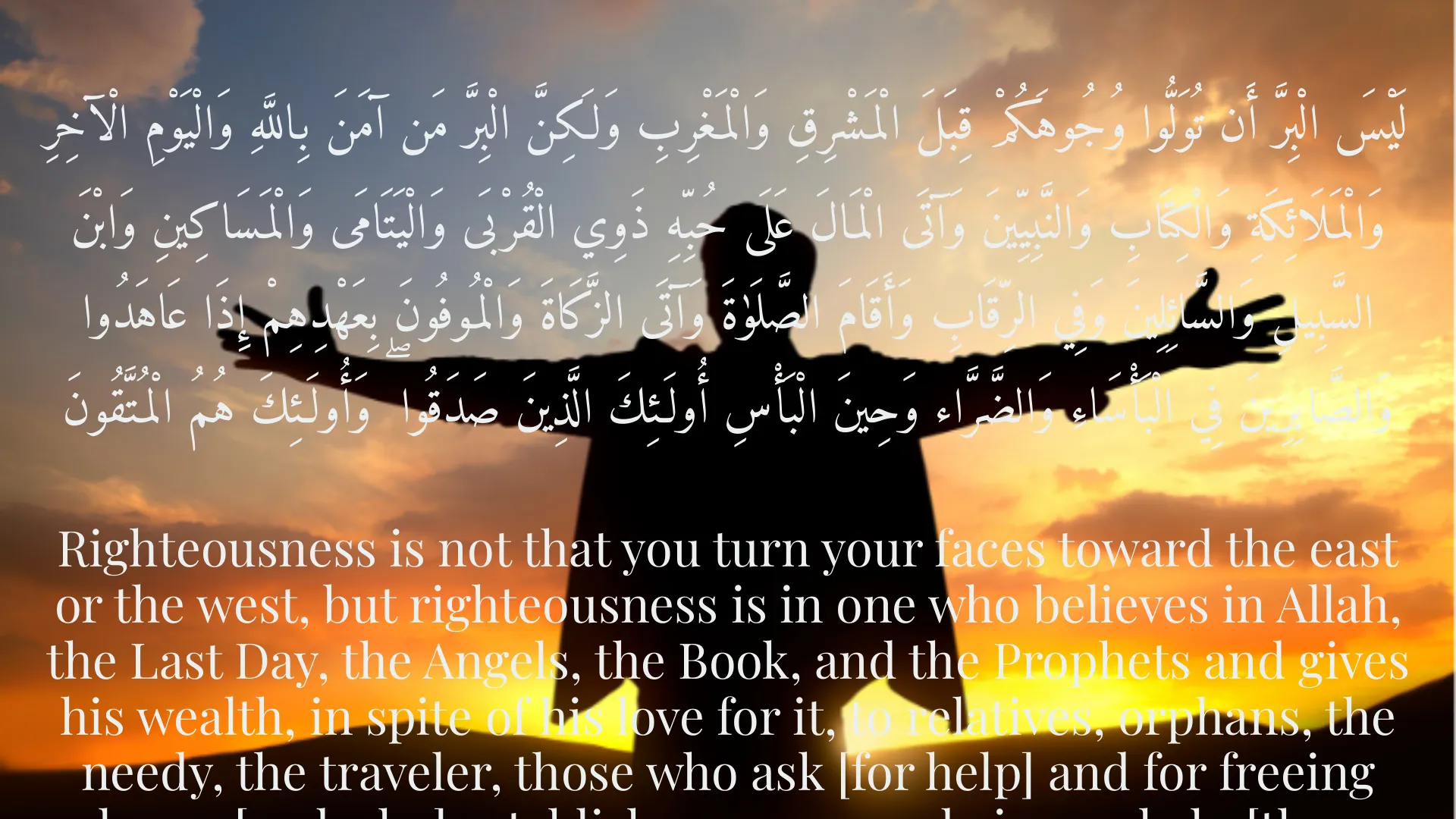
لَيْسَ الْبِرَّ أَن تُوَلُّوا وُجُوهَكُمْ قِبَلَ الْمَشْرِقِ وَالْمَغْرِبِ وَلَكِنَّ الْبِرَّ مَن آمَنَ بِاللَّهِ وَالْيَوْمِ الْآخِرِ وَالْمَلَائِكَةِ وَالْكِتَابِ وَالنَّبِيِّينَ وَآتَى الْمَالَ عَلَى حُبِّهِ ذَوِي الْقُرْبَى وَالْيَتَامَى وَالْمَسَاكِينِ وَابْنَ السَّبِيلِ وَالسَّائِلِينَ وَفِي الرِّقَابِ وَأَقَامَ الصَّلَوٰةَ وَآتَى الزَّكَاةَ وَالْمُوفُونَ بِعَهْدِهِمْ إِذَا عَاهَدُوا وَالصَّابِرِينَ فِي الْبَأْسَاءِ وَالضَّرَّاء وَحِينَ الْبَأْسِ أُولَـئِكَ الَّذِينَ صَدَقُوا ۖ وَأُولَـئِكَ هُمُ الْمُتَّقُونَ
Righteousness is not that you turn your faces toward the east or the west, but righteousness is in one who believes in Allah, the Last Day, the Angels, the Book, and the Prophets and gives his wealth, in spite of his love for it, to relatives, orphans, the needy, the traveler, those who ask [for help] and for freeing slaves; [and who] establishes prayer and gives zakah; [those who] fulfill their promise when they promise; and [those who] are patient in poverty and hardship and at the time of battle. It is those who have been true, and it is those who are the righteous.
Al-Baqarah : 177
وَقُلْ تَعَالَوْا أَتْلُ عَلَيْكُمْ مَا حَرَّمَ رَبُّكُمْ عَلَيْكُمْ أَلَّا تَشْرِكُوا بِهِ شَيْئًا وَبِالْوَالِدَيْنِ إِحْسَانًا ۖ وَلَا تَقْرَبُوا مَالَ الْيَتِيمِ إِلَّا بِالَّتِي هِيَ أَحْسَنُ حَتَّى يَبْلُغَ أَشُدَّهُ ۖ وَأَوفُوا الْكَيْلَ وَالْمِيزَانَ بِالْقِسْطِ ۚ لَا نُكَلِّفُ نَفْسًا إِلَّا وُسْعَهَا ۚ وَإِذَا قُلْتُمْ فَاعْدِلُوا وَلَوْ كَانَ ذَا قُرْبَىٰ ۚ وَبِعَهْدِ اللَّهِ أَوْفُوا ۚ ذَٰلِكُمْ أَمَرَكُمْ بِهِ لَعَلَّكُمْ تَذَكَّرُونَ
And say, 'Come, I will recite what your Lord has prohibited to you - that you not associate anything with Him, and to parents, good treatment. And do not approach the orphan's property except in a way that is best until he reaches maturity. And uphold weights and measures in justice. We do not burden a soul except with that within its capacity. And when you speak, be just, even if it concerns a near relative. And fulfill the covenant of Allah. This has been instructed to you that you may remember.'
Al-An'am : 151
وَقَالَ رَبُّكُمُ ادْعُونِي أَسْتَجِبْ لَكُمْ إِنَّ الَّذِينَ يَسْتَكْبِرُونَ عَنْ عِبَادَتِي سَيَدْخُلُونَ جَهَنَّمَ دَاخِلِينَ
And your Lord says, 'Call upon Me; I will respond to you.' Indeed, those who deny My worship will be entered into Hell, and they will be brought [therein].
Ghafir : 60
Short Story
One day, a man was passing through the market when he noticed a child crying. He approached the child and asked why he was sad. The child said that his mother was sick and needed medicine but he had no money. The man, with compassion and kindness, helped the child by not only buying the medicine but also giving him some extra money. He felt that by doing this, he had not only helped the child but had also engaged in worshiping God.