Quranic Answer
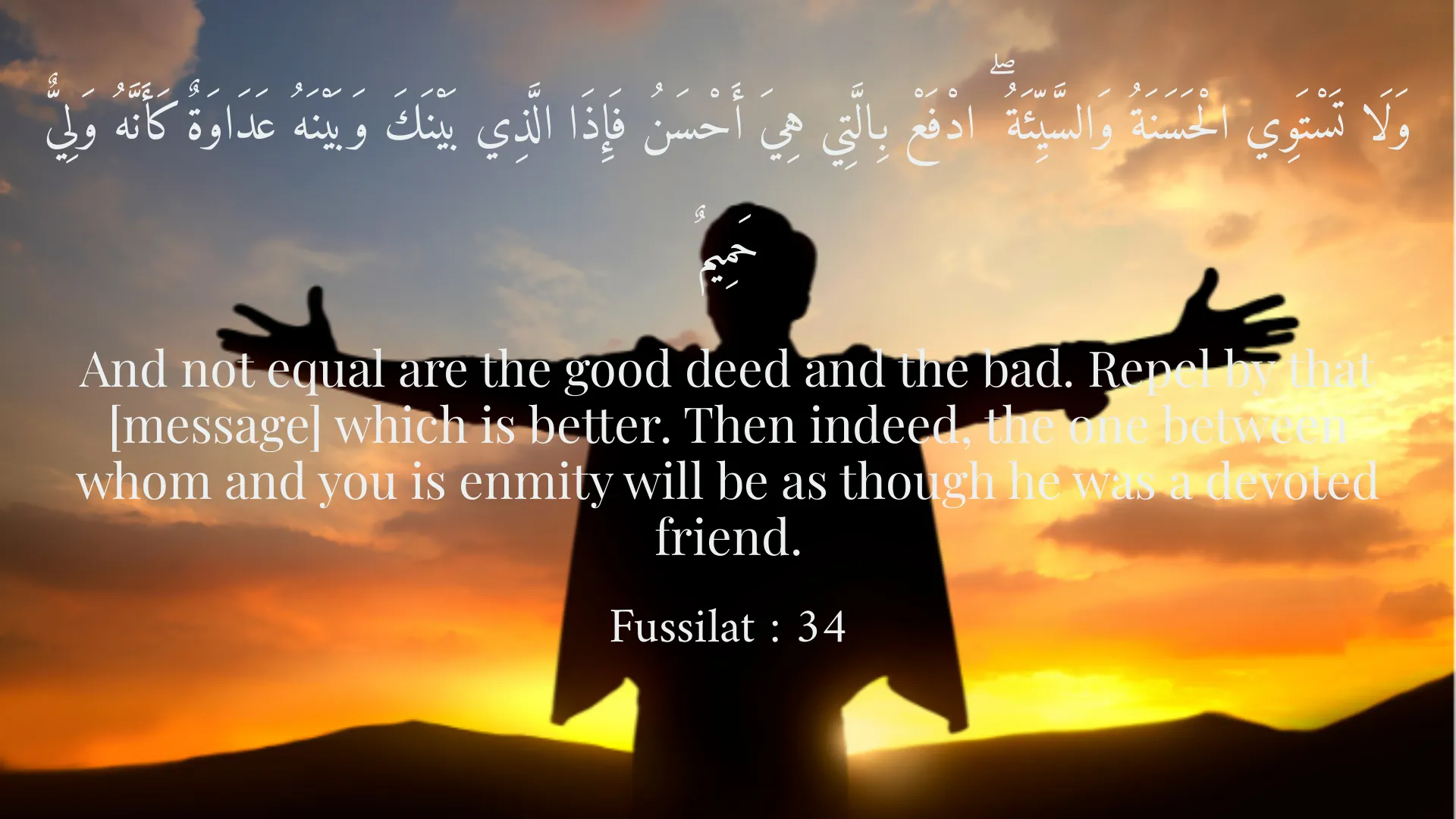
In the Holy Quran, the concept of being kind to enemies is implicitly addressed in various verses, advocating for a spirit of compassion and forgiveness even in the face of hostility. Throughout centuries, the teachings of the Quran have influenced the lives of millions, providing guidance on how to interact with others, including those who may be perceived as adversaries. A profound example of this can be drawn from Surah Fussilat, verse 34, which states: 'And not equal are the good deed and the bad. Repel by that [message] which is better. Then indeed, the one between whom and you is enmity will be as though he was a devoted friend.' This verse encapsulates the essence of transforming enmity into companionship through positive actions. It encourages individuals to rise above negativity by responding with kindness and goodness, ultimately suggesting that adversaries can become friends through efforts rooted in compassion. The significance of this message is multifaceted. It emphasizes the fundamental principle that actions often shape perceptions. By choosing to respond to hostility with benevolence, individuals have the potential to reshape their relationships, fostering an environment where animosity can diminish. Instead of retaliating with anger and resentment, one is encouraged to reflect on the nature of their actions. This process of self-reflection is crucial in Jewish and Christian traditions as well, highlighting a universal principle shared across Abrahamic faiths—replacing aggression with forgiveness. Furthermore, in Surah Al-Imran, verse 133, God calls believers to 'hasten to good deeds.' This imperative applies universally, highlighting the idea that good deeds are not limited to friends or allies but should extend even to adversaries. The emphasis on hastening implies a sense of urgency and responsibility in cultivating goodness in the world around us. It promotes the idea that one should not shy away from showing kindness, irrespective of the circumstances or the recipient. However, it is essential to clarify that advocating kindness toward enemies does not equate to condoning oppression or maintaining detrimental relationships. The Quran does not instruct individuals to be passive in the face of injustice or to accept behavior that is harmful or abusive. Instead, it calls for wisdom in dealings with others. There are instances where standing firm against wrongdoing is necessary while still holding onto one's virtues of kindness and forgiveness. In everyday life, the notion of treating adversaries with respect and dignity has the potential to reshape one’s social landscape. In a world rife with conflict, where divisions often stem from misunderstandings and hatred, Quranic teachings encourage individuals to prioritize reconciliation over revenge. This transmutation of disposition, from one of animosity to one of goodwill, can significantly impact personal relationships, community dynamics, and broader societal interactions. The practice of kindness echoes the idea that we should not allow our hearts to be filled with malice or bitterness, as these emotions can have detrimental impacts on mental health and communal harmony. When individuals learn to extend compassion even to those who may hurt them, they are emulating one of the highest forms of moral integrity. By taking this high road, believers are not just adhering to a religious principle but also embracing a more profound, humane approach to life. Furthermore, several historical examples underline the potency of this principle. The life of the Prophet Muhammad (peace be upon him) exemplifies how he, despite facing immense challenges and conflicts, consistently responded with kindness and compassion. His interactions with his adversaries demonstrated that responding with goodwill could dismantle animosities. It is often recounted how the Prophet forgave those who wronged him and sought reconciliation rather than revenge, establishing a model for future generations. Moreover, the call for kindness towards enemies is also relevant in contemporary sociopolitical contexts. In various global conflicts, where animosity seems to define interactions between different groups, the Quranic message serves as a recommendation for peace and coexistence. Attempts made by individuals and organizations to promote dialogue, understand diverse perspectives, and extend olive branches to adversaries reflect this teaching. Such endeavors can shift narratives rooted in hatred and foster environments conducive to dialogue, healing, and eventual reconciliation. Importantly, it should be acknowledged that practicing kindness toward adversaries also requires significant inner strength and patience. It often demands the overcoming of personal grievances and the ability to empathize with others, even when they have inflicted pain or hardship. This inward journey should be embraced as a path towards personal development and maturity. By engaging in practices that inspire forgiveness and kind-heartedness, individuals can foster not only inner peace but also promote an outer reality that embodies these values. In essence, the teachings of the Quran regarding kindness towards enemies extend far beyond mere admonitions. They represent a holistic philosophy encouraging individuals to transcend their immediate emotional responses, opting instead for a broader vision of peace and cooperation. By embodying these teachings in daily life, one not only works to cultivate personal virtue but also contributes to the larger goal of nurturing a community rooted in love, understanding, and mutual respect. Through the consistent application of these principles, societies can move closer to a state of tranquility, leaving behind a legacy marked by compassion and friendship. In conclusion, the Quran provides insightful and timeless guidance regarding how to treat those who would position themselves as enemies. It is a reminder that kindness and good deeds are perhaps the most potent responses to hostility. By acting on this wisdom, individuals can encourage healing, reconciliation, and ultimately, a more peaceful world.
Related Verses
وَلَا تَسْتَوِي الْحَسَنَةُ وَالسَّيِّئَةُ ۖ ادْفَعْ بِالَّتِي هِيَ أَحْسَنُ فَإِذَا الَّذِي بَيْنَكَ وَبَيْنَهُ عَدَاوَةٌ كَأَنَّهُ وَلِيٌّ حَمِيمٌ
And not equal are the good deed and the bad. Repel by that [message] which is better. Then indeed, the one between whom and you is enmity will be as though he was a devoted friend.
Fussilat : 34
وَ سَارِعُوا الْخَيْرَاتِ
And hasten to good deeds.
Al-Imran : 133
Short Story
Once upon a time, a young man named Amir had a dispute with a man from another tribe. He wanted to take revenge. But one day, he decided to listen to a famous speaker talking about the Quran. There, he heard about the remarkable effect of being kind to enemies. From then on, he decided to help the man, and after a while, their issues were resolved, and a deep friendship formed between them.