Quranic Answer
Your question, "Is loneliness a sign of my weakness?", delves into a profound and universal human experience. In the rich teachings of the Holy Quran, loneliness itself is not inherently regarded as a sign of weakness or a personal flaw. Rather, the Quran offers a more comprehensive and realistic perspective on the human spiritual state. Loneliness is a condition that any human being may experience at various stages of life, whether it stems from a feeling of disconnection from others, a lack of understanding, or simply insufficient social interaction. The Quran does not present this feeling as evidence of weakness; instead, it can be framed as an opportunity for reflection, self-discovery, and, crucially, for strengthening one's connection with the Creator of the universe. Indeed, instead of labeling loneliness as a weakness, the Quran provides profound guidance on how to cope with it and even transform it into a source of spiritual growth and strength. One of the most significant pathways offered is seeking solace in the remembrance of Allah and in prayer. In Surah Ar-Ra'd (The Thunder), verse 28, Allah states: "Those who have believed and whose hearts are assured by the remembrance of Allah. Unquestionably, by the remembrance of Allah hearts are assured." This verse clearly indicates that the primary way to achieve tranquility and overcome any anxiety or feeling of loneliness is through the remembrance and invocation of Allah. When a person feels alone, this divine remembrance can be their strongest companion and solace, filling any void they may perceive. This, in itself, signifies a strength that emanates from faith in God, rather than a weakness. Furthermore, in Surah Al-Baqarah (The Cow), verse 153, it is stated: "O you who have believed, seek help through patience and prayer. Indeed, Allah is with the patient." This verse provides a vital directive for navigating any difficulty or challenge in life, including feelings of loneliness. Patience (sabr) and prayer (salat) are two powerful spiritual tools that help individuals not only overcome negative emotions but also achieve a level of spiritual calm and stability that shields them from vulnerability. From this perspective, experiencing loneliness can be an opportunity to practice patience and strengthen one's resolve and spiritual connection. The Quran also emphasizes Allah's boundless closeness to humanity, which inherently challenges the notion of absolute loneliness. In Surah Qaf, verse 16, we read: "And We have already created man and know what his soul whispers to him, and We are closer to him than [his] jugular vein." This verse profoundly asserts the constant and intimate presence of Allah in every individual's life. If Allah is closer to us than our jugular vein and is aware of all our thoughts and emotions, then how can we truly be "alone" in the ultimate sense? This divine closeness is an inexhaustible source of strength and reassurance that can transform feelings of loneliness into peace and a sense of presence. Thus, a feeling of loneliness might stem from our heedlessness of this presence, rather than an inherent weakness. It is important to note that the Quran generally refers to human weakness, but this weakness is not understood as a defect in creation or an inability to face challenges. Instead, it signifies humanity's inherent need for its Creator. In Surah An-Nisa (The Women), verse 28, it is mentioned: "Allah wishes to lighten your burdens, for humankind was created weak." This weakness is, in fact, humanity's innate need for divine guidance, mercy, and assistance. When a person accepts this inherent weakness and turns towards Allah, they connect to the greatest source of strength. Therefore, the feeling of loneliness can serve as a reminder of this need, rather than an indication of personal weakness. Ultimately, from a Quranic perspective, loneliness can be a test through which one's faith and steadfastness are measured. Prophets of Allah themselves faced challenges and even forms of solitude at various points in their lives. However, this solitude was not a sign of weakness; rather, it was an opportunity for a deeper connection with Allah and for receiving revelation and inspiration (similar to Prophet Muhammad's solitude in Cave Hira before his prophethood). So, if someone feels lonely, they should not perceive it as a sign of their weakness. Instead, they should see it as an opportunity to reassess their connections, both with others and with the Creator, and as a chance for internal and spiritual strengthening. By emphasizing reliance on Allah, patience, prayer, remembrance (dhikr), and the constant divine presence, the Quran teaches humanity how to transform any emotional state, including loneliness, into a bridge towards spiritual perfection and tranquility. In this journey, loneliness can become a blessed solitude, wherein one draws closer to their true self and their Creator, thereby gaining unparalleled strength and peace. This perspective fundamentally shifts the understanding of loneliness from a weakness to a tool for empowerment and growth.
Related Verses
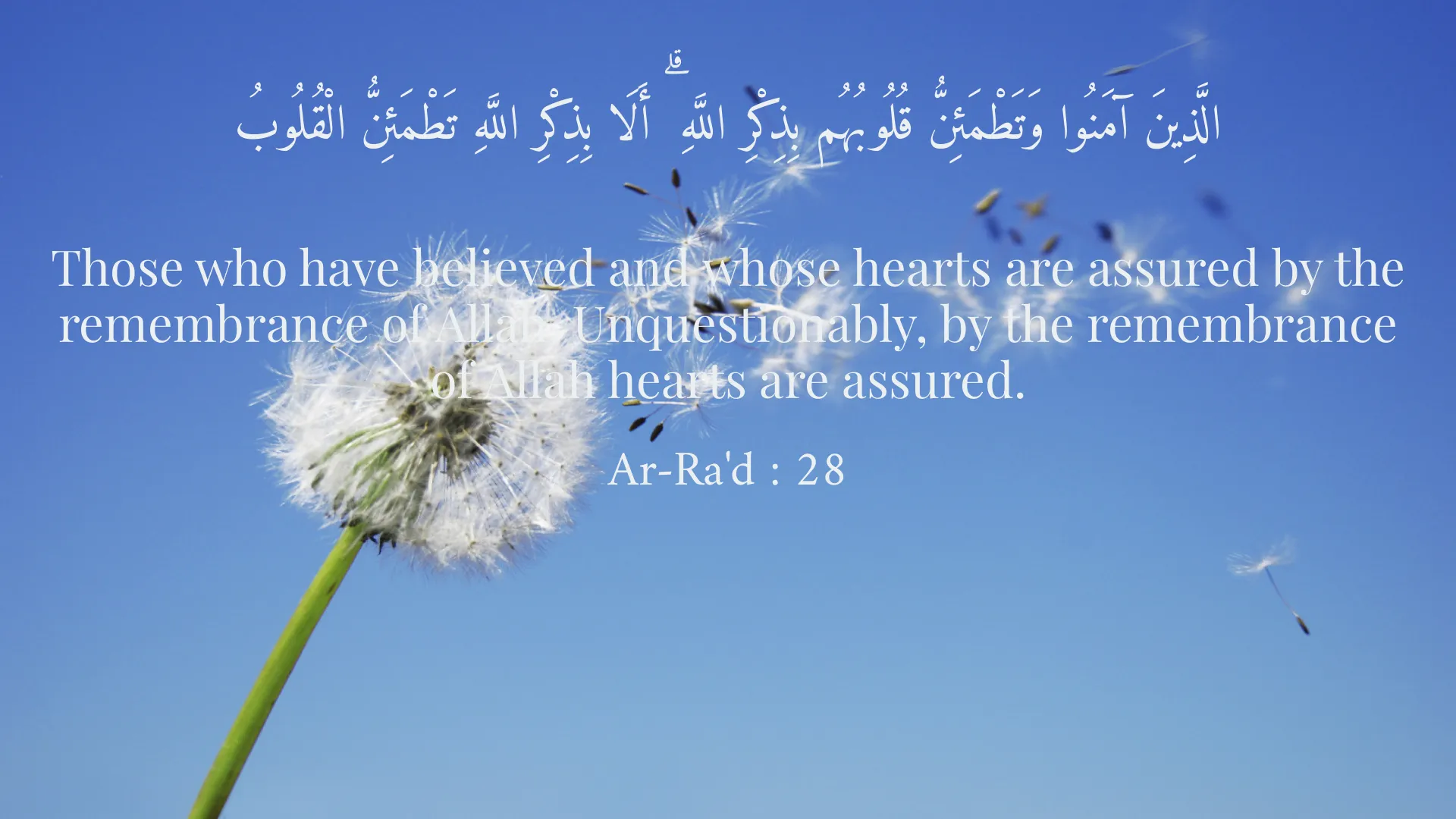
الَّذِينَ آمَنُوا وَتَطْمَئِنُّ قُلُوبُهُم بِذِكْرِ اللَّهِ ۗ أَلَا بِذِكْرِ اللَّهِ تَطْمَئِنُّ الْقُلُوبُ
Those who have believed and whose hearts are assured by the remembrance of Allah. Unquestionably, by the remembrance of Allah hearts are assured.
Ar-Ra'd : 28
يَا أَيُّهَا الَّذِينَ آمَنُوا اسْتَعِينُوا بِالصَّبْرِ وَالصَّلَاةِ ۚ إِنَّ اللَّهَ مَعَ الصَّابِرِينَ
O you who have believed, seek help through patience and prayer. Indeed, Allah is with the patient.
Al-Baqarah : 153
وَلَقَدْ خَلَقْنَا الْإِنسَانَ وَنَعْلَمُ مَا تُوَسْوِسُ بِهِ نَفْسُهُ ۖ وَنَحْنُ أَقْرَبُ إِلَيْهِ مِنْ حَبْلِ الْوَرِيدِ
And We have already created man and know what his soul whispers to him, and We are closer to him than [his] jugular vein.
Qaf : 16
Short Story
It is said that in times not so long ago, a wise and warm-hearted man lived in a secluded part of the city, rarely joining the bustling crowds and spending most of his time in contemplation and remembrance of God. A neighbor, seeing his solitary life, asked him, 'O good man, do you not fear loneliness, or have you turned away from the company of people?' The wise man replied with a gentle smile: 'My dear friend, I fear neither loneliness nor do I shun people. Rather, I know that sometimes amidst a crowd, the heart can become heedless of its Beloved, and heedlessness itself is the greatest loneliness. Whoever has a strong bond with himself and with his God will never truly be alone, even if a mountain of silence encompasses him. It is this solitude that opens the path to one's inner self, and it is there that one finds their strongest support.' Thus, this tale illustrates that conscious solitude is not a weakness; rather, it is a path to true strength and inner peace.