Quranic Answer
### The Importance of Viewing Others Positively According to the Holy Quran The Holy Quran serves as a guiding framework for Muslims, offering principles that govern not only one's relationship with God but also one's interactions with fellow human beings. Among the various teachings, the Quran emphasizes the importance of maintaining positive perspectives about others and avoiding negative perceptions. This principle is echoed through various verses, particularly in Surah An-Nur and Surah Al-Hujurat, which urge believers to cultivate attitudes of respect, kindness, and compassion towards each other. This article will delve deep into the Quranic teachings concerning the ways in which we ought to view and treat others, exploring the consequences of harboring ill thoughts and how such negativity ultimately undermines social harmony and moral integrity. #### Lowering the Gaze: A Call for Respect and Dignity In Surah An-Nur, verse 30, Allah commands believing men to lower their gaze: "Say to the believing men that they should lower [some] of their vision and guard their private parts. That is purer for them. Indeed, Allah is Acquainted with what they do." This directive is significant, as it underscores the necessity to control one’s gaze and prevent the mind from wandering into lustful and disrespectful thoughts toward others. Lowering one's gaze serves as a protective measure, not only for the individual but for society as a whole. It illustrates the concept that respect for others begins with how one perceives them. Acknowledging the inherent dignity of every human being helps foster an environment where compassion, understanding, and mutual respect can thrive. This directive is not exclusive to men. In fact, the Quran extends similar instructions to women, thereby reinforcing the notion that both genders are responsible for upholding this standard. This equality highlights the shared responsibility among believers to treat each other with dignity and respect. When individuals actively choose to look away from what is harmful or disrespectful, they engage in an act of respect that can uplift both their own character and the community’s moral fabric. #### The Dangers of Gossip and Slander In addition to controlling one’s gaze, the Quran explicitly warns against prying into the affairs of others and engaging in gossip and slander. In Surah Al-Hujurat, verse 12, Allah states: "O you who have believed, avoid much [negative] assumption. Indeed, some assumption is sin. And do not spy or backbite each other. Would one of you like to eat the flesh of his brother while he is dead? You would detest it. And fear Allah; indeed, Allah is Accepting of Repentance and Merciful." This powerful verse captures the destructive nature of negative assumptions and slander, equating it to something as grotesque as cannibalism. The Quran emphasizes that such behaviors not only harm the individuals being targeted but also the broader community by fostering mistrust, division, and animosity among its members. Gossip and negative speculation can lead to a cascade of unintended consequences. When one starts to assume the worst about others, it can lead to a cycle of judgment and isolation. This behavior not only damages reputations but also erodes the foundational trust that keeps the community united. The implications are significant: when trust dwindles, social bonds weaken, giving rise to division and conflict. Thus, the Quran encourages believers to maintain a culture of compassion, empathy, and understanding, steering clear of negative judgments that could fracture social ties. #### The Positive Alternative: Compassion and Tolerance The Quran advocates for a perspective grounded in compassion and tolerance. The teachings emphasize the importance of viewing others through the lens of empathy and understanding. This compassionate attitude is particularly crucial in today’s increasingly polarized world, where negative assumptions about others can often dominate dialogues. The act of looking positively at others, rather than negatively, is an essential step toward building bridges of understanding. It enables individuals to see the commonalities shared among them, despite differences in backgrounds, beliefs, or lifestyles. When believers are committed to treating one another with kindness, they create a supportive environment that allows for personal growth and communal strength. Such an atmosphere is conducive to resolving conflicts in a peaceful manner, promoting understanding, and nurturing a sense of belonging among members of the community. #### The Psychological and Social Impact of Negativity The psychological implications of holding negative views about others are profound. Research in psychology indicates that harboring ill thoughts not only affects interpersonal relationships but can also have detrimental effects on one’s mental and emotional well-being. Negative perceptions can lead to a heightened sense of anxiety and stress, both for the individual who harbors such views and for those who are on the receiving end of negativity. The Quran’s teachings, therefore, offer a holistic approach to well-being: by fostering positive relationships and viewing others respectfully, individuals contribute to their own mental peace and societal harmony. Moreover, when negativity dominates interactions, it creates an atmosphere of hostility and fear. Conversely, when individuals strive to embody the Quranic teachings of compassion and openness, they significantly enhance the potential for cooperation and unity within the community. This is vital for spiritual growth, social cohesion, and a thriving society. #### Conclusion: Upholding Dignity Through Positive Perspectives The Holy Quran offers profound insights into how believers should engage with one another. Its teachings serve as a blueprint for developing positive relationships marked by respect, dignity, and compassion. By lowering their gaze, avoiding negative assumptions, and steering clear of gossip, believers contribute to a healthier, more interconnected community. The consequences of ignoring these principles can lead to social fragmentation, mistrust, and moral decay. Therefore, it is incumbent upon every believer to embrace the Quranic principles of viewing others positively, promoting understanding and compassion, and fostering a sense of belonging. Ultimately, adhering to these teachings not only enhances the individual’s moral character but also contributes to the fabric of a harmonious and just society that reflects the true essence of faith.
Related Verses
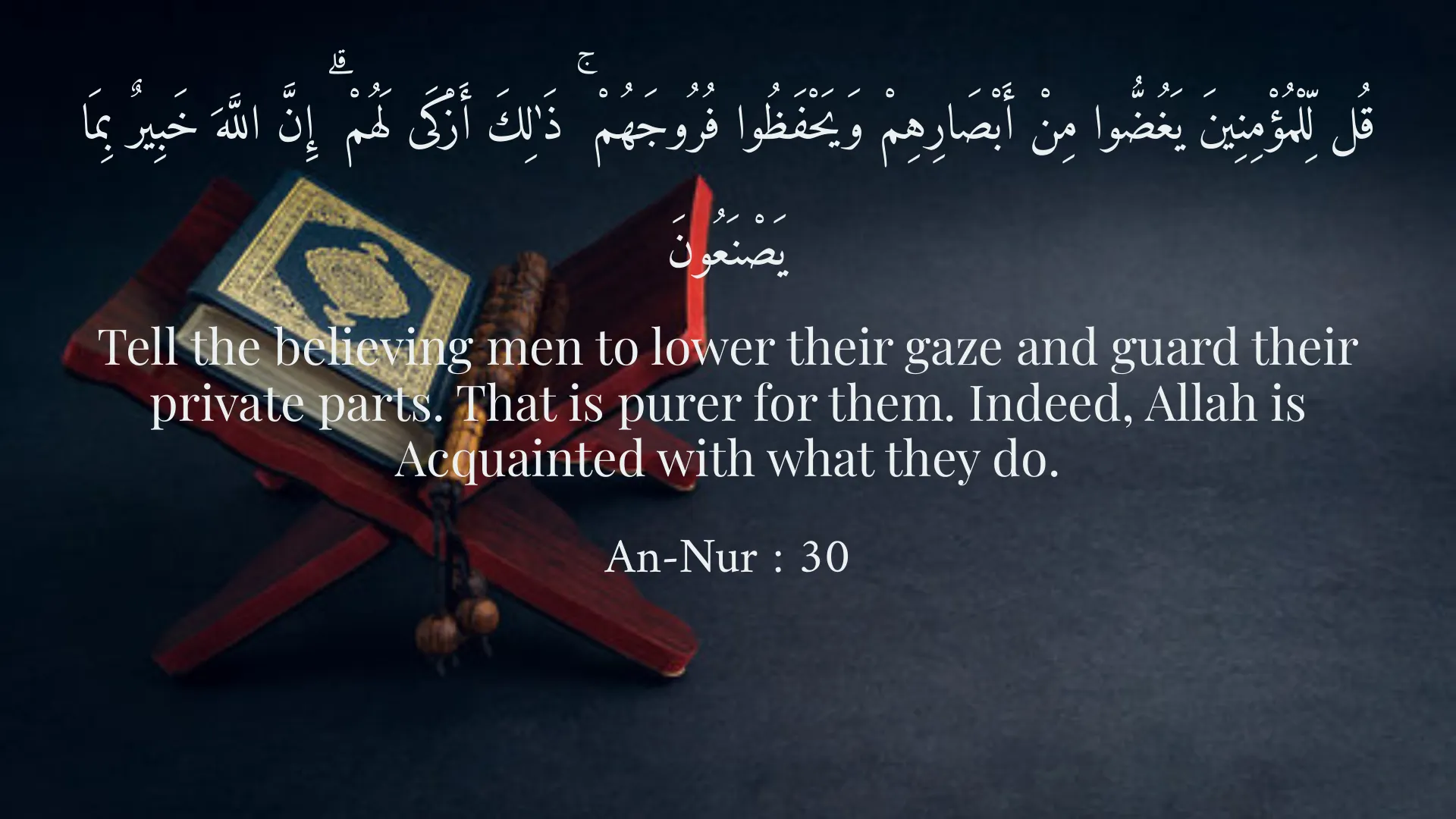
قُل لِّلْمُؤْمِنِينَ يَغُضُّوا مِنْ أَبْصَارِهِمْ وَيَحْفَظُوا فُرُوجَهُمْ ۚ ذَٰلِكَ أَزْكَى لَهُمْ ۗ إِنَّ اللَّهَ خَبِيرٌ بِمَا يَصْنَعُونَ
Tell the believing men to lower their gaze and guard their private parts. That is purer for them. Indeed, Allah is Acquainted with what they do.
An-Nur : 30
يَا أَيُّهَا الَّذِينَ آمَنُوا اجْتَنِبُوا كَثِيرًا مِّنَ الظَّنِّ ۚ إِنَّ بَعْضَ الظَّنِّ إِثْمٌ ۖ وَلَا تَجَسَّسُوا وَلَا يَغْتَب بَّعْضُكُمْ بَعْضًا ۚ أَيُحِبُّ أَحَدُكُمْ أَن يَأْكُلَ لَحْمَ أَخِيهِ مَيْتًا ۚ وَمَن يَفْعَلْ ذَٰلِكَ فَقَدْ خَسِرَ
O you who have believed, avoid much [negative] assumption. Indeed, some assumption is sin. And do not spy or backbite each other. And would one of you like to eat the flesh of his brother while he is dead? It would be disgusting.
Al-Hujurat : 12
Short Story
One day, a man was sitting in a gathering, busy judging others. He was finding a negative trait in every person he saw, thinking about who he could not tolerate. Suddenly, someone approached him and said, 'Why do you look at others this way? Allah has taught us to think well of each other and focus on the good.' The man remembered the Quranic verses and replied, 'You are right!'