Quranic Answer
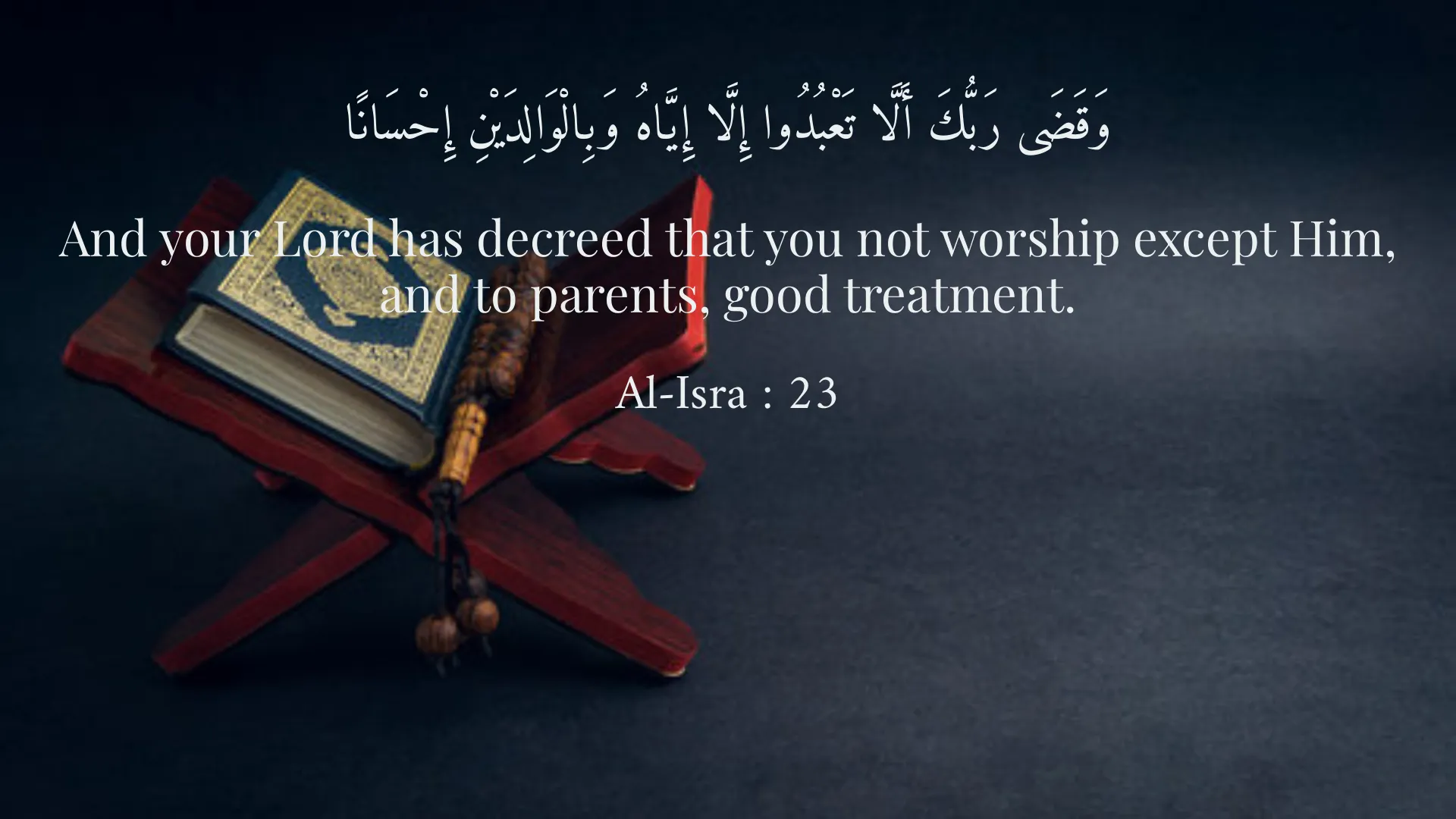
In the Holy Quran, the significance of kindness and love toward parents is emphasized profoundly, reflecting the cornerstone values of respect and gratitude that are deeply interwoven into Islamic teachings. This reverence is not merely a cultural norm; it holds spiritual significance that aligns with the core tenets of worshipping Allah. Among the myriad verses that address the treatment of parents, Surah Al-Isra, verse 23 stands out with a powerful decree: 'And your Lord has decreed that you not worship except Him, and to parents, good treatment.' This particular verse illustrates that showing love and respect to parents is not merely commendable but occupies a significant place alongside the worship of Allah. In essence, it highlights that the path to divine favor is also paved with acts of kindness and helpfulness toward one's parents. Therefore, doing good to one's parents is an integral aspect of a believer's life and an expression of one's faith. This scriptural admonition underscores a fundamental concept in Islamic theology: the relationship between God and humans is intricately tied to one's treatment of others, particularly parents. To further elaborate on this, we can draw upon the wisdom encapsulated in Surah Luqman, verse 14, which provides a specific directive to children to express gratitude towards their parents: 'And We have enjoined upon man [care] for his parents. But if they endeavor to make you associate with Me that of which you have no knowledge, do not obey them. To Me is your return, and I will inform you about what you used to do.' This verse solidifies the understanding that gratitude toward parents is not optional but a mandated responsibility to be fulfilled, as it reflects the very essence of moral integrity. Recognizing the importance of honor and affection, the Quran does not limit the expression of kindness towards parents to mere verbal acknowledgement but expands it to an array of actions that signify respect. For instance, the act of looking at one's parents with love can be seen as a significant gesture of kindness that resonates throughout one's conduct. Even a loving glance towards one's parents can be categorized as a means of worship, illustrating the deep connection that exists between honoring the parental figures in one's life and fulfilling one’s duty to Allah. It elevates the daily acts of kindness into profound spiritual experiences that can bear immense rewards in the Hereafter. Moreover, the teachings of the Prophet Muhammad (peace be upon him) further emphasize the significance of filial piety. He is reported to have said, 'Goodness to parents follows the most essential acts of worship.' This profound statement indicates that serving and respecting one’s parents is among the highest forms of worship after the primary tenets of Islam, establishing a clear hierarchy of moral obligations. The Prophet’s teachings serve not only as guidelines for respect but also as comprehensive principles that govern interpersonal relationships within the family unit. In Islamic teachings, parents are revered figures, deserving of the highest level of respect and care. Their sacrifices, labor, and dedication in nurturing and educating their children create a bond that is heightened by maternal and paternal love. Recognizing this, children are called to cultivate qualities such as patience, humility, and grace when interacting with their parents. This is particularly poignant in Islam, where the mother is given a status that is revered, as evidenced by a narrative in which the Prophet Muhammad (peace be upon him) was asked who deserves the best treatment from a person. He replied three times, 'Your mother', and then added, 'Your father.' This highlights the elevated status of the mother in Islam, reflecting the immense value placed on caregiving and nurturing roles. Additionally, the call to treat parents with kindness does not hinge solely on their behavior towards their children. It extends unequivocally—irrespective of whether parents are deserving of respect based on their actions. This principle profoundly illustrates the depth of commitment to family ties in Islam. Children are encouraged to overlook their parents’ shortcomings, continuing to exhibit respect and compassion toward them, as fulfilling this duty is ultimately regarded as a test of their faith and character. Furthermore, the narrative surrounding kindness to parents continues into discussions of prayer and supplication. Believers are taught that invoking Allah on behalf of their parents, whether alive or departed, blesses the familial bonds with divine mercy. This act of continued connection reinforces the belief that love for parents transcends life and death. In several hadiths, the Prophet encouraged prayer for one's parents, citing this as an integral part of honoring their memory and contributions. The concept of kindness towards parents extends beyond verbal respect—actions do speak louder than words. Acts of service, demonstrating patience during times of illness, and ensuring their needs are met reflect the embodiment of this principle. Furthermore, being involved in their social, emotional, and spiritual well-being can be seen as a way to acknowledge the extensive sacrifices that parents make throughout their lifetime. In summary, the context of kindness and love towards parents within Islam is multifaceted and deeply rooted in the Quran and Hadith. The messages of respect, service, and gratitude serve to reinforce a framework within which familial love functions as both a means of personal growth and a crucial aspect of faith. It reflects that the path to pleasing Allah is intricately connected to how one honors, respects, and loves those who have raised them, cultivated them, and guided them throughout their life. Thus, the esteemed position of parents within Islamic doctrine is undoubtedly one of the cornerstones of a virtuous and fulfilling life for a believer. In return for this love and kindness, the rewards are not merely spiritual but resonate throughout the everyday lives of families, encouraging harmony, respect, and the ultimate enjoyment of Allah’s blessings. By upholding these teachings and embracing our parents with love and respect, we acknowledge the profound impact they have on our lives, and we fulfill a significant aspect of our faith.
Related Verses
وَقَضَى رَبُّكَ أَلَّا تَعْبُدُوا إِلَّا إِيَّاهُ وَبِالْوَالِدَيْنِ إِحْسَانًا
And your Lord has decreed that you not worship except Him, and to parents, good treatment.
Al-Isra : 23
وَوَصَّيْنَا الْإِنْسَانَ بِوَالِدَيْهِ ۚ إِنْ شَكَرْتَ أَشْكُرْتَ لِنَفْسِكَ وَإِنْ كَفَرْتَ فَإِنَّ رَبَّكَ غَنِيٌّ حَمِيدٌ
And We have enjoined upon man [care] for his parents. But if they endeavor to make you associate with Me that of which you have no knowledge, do not obey them. To Me is your return, and I will inform you about what you used to do.
Luqman : 14
Short Story
One day, there was a young boy named Ali who always thought about his parents. He decided to dedicate time each day to show his love for them. On a beautiful day, while his father was working in the garden, Ali approached him, looked at him affectionately, and said, 'Dad, you mean so much to me.' This small gesture made his father smile and feel the love of Ali. This special moment reminded Ali that loving looks and kind words can bring joy to parents' hearts and are indeed a form of worship.