Quranic Answer
The Quran and the Prophetic Traditions: An Exploration of Love and Compassion for Animals The Quran, the holy book of Islam, provides profound insights into various aspects of life, including the treatment of animals. Although it may not overtly focus on love for animals, it indirectly conveys a message of kindness, respect, and appreciation for all living creatures. Through various verses, the Quran highlights the benefits that animals provide to humanity and encourages believers to recognize and act upon their responsibilities towards these beings. This article aims to explore the Quranic perspectives on animals, the teachings of the Prophet Muhammad (peace be upon him) regarding kindness to creatures, and the broader implications of these beliefs on environmental and ethical practices in Islam. ### Animals as Blessings in the Quran One of the key themes in the Quran concerning animals is that they are blessings created by Allah for the benefit of humanity. In Surah Al-An'am (6:38), Allah states, "And there is no creature on earth, nor a bird that flies on its wings, but they are communities like you. We have not neglected anything in the Book. Then unto their Lord they will be gathered." This verse affirms the idea that animals are part of Allah's creation, deserving of respect and ethical treatment. The Quran categorizes animals not only as companions but also as entities that possess their own communities, which signifies their importance in the tapestry of creation. Furthermore, in Surah An-Nahl (16:8), Allah mentions, "And horses, and mules, and donkeys for you to ride and as adornment. And He creates what you do not know." This verse emphasizes the role of animals as means of transportation and adornment. The acknowledgment of these creatures as tools for human benefit speaks to the relationship of interdependence between humans and animals. ### Lessons from Animals In Surah Al-Mu'minun (23:21), Allah offers a profound insight into the significance of animals: "And indeed, for you in the animals is a lesson. We give you drink from that which is in their bellies, from between excretion and blood, pure milk for those who drink." This mention reveals a critical lesson in the complexity of life and the purity that can arise from working with animals. It underscores the respect humans should have towards animals, emphasizing that their existence serves a purpose. This verse can be interpreted as a reminder to treat animals with dignity, understanding their role in the ecosystem, and acknowledging the sustenance they provide. ### Kindness and Compassion towards Animals The teachings of the Prophet Muhammad (peace be upon him) further emphasize kindness and compassion towards animals. Numerous Hadiths illustrate the virtues of treating animals well. For instance, the Prophet is reported to have said, "Whoever is kind to the creatures of Allah, he is kind to himself" (Sahih al-Bukhari). This assertion conveys the intrinsic reward that comes from compassionate treatment, a sentiment echoed throughout Islamic tradition. Moreover, there are heartwarming accounts of the Prophet's interactions with animals, which demonstrate empathy and care. It is documented that he rescued a kitten from a building, allowing it to accompany him. In another instance, he admonished a person who had tied up a dog without providing it food or water, indicating that neglecting an animal's needs is tantamount to an act of cruelty. Such narratives serve as important reminders for Muslims to embody the spirit of kindness. ### The Ethical Treatment of Animals While the Quran and Hadith focus on love and kindness towards animals, they also introduce the concept of the rights of animals. The humane treatment of animals is a critical aspect of Islamic ethical teachings. As stewards of the earth, Muslims are encouraged to be mindful of the welfare of animals, ensuring they are treated justly. The impact of these teachings extends beyond individual interactions. They encourage a broader societal perspective that incorporates animal welfare into agricultural, environmental, and ethical considerations. By recognizing the rights of animals, Muslims not only improve their personal relationships with creatures but also contribute to a more compassionate society as a whole. ### Islamic Values and Animal Welfare In an age where environmental issues and animal rights are becoming increasingly prominent, the Quranic perspectives and prophetic traditions bear significant relevance. Muslims are called to be stewards of the earth, adopting sustainable practices that honor all forms of life. The teachings outlined in the Quran provide guidance on how to engage responsibly with the natural world. Acts of kindness toward animals can take many forms, from advocating against maltreatment to supporting organizations that work towards animal welfare. Furthermore, Muslims are urged to cultivate an awareness of ethical consumption, ensuring that the products they use are derived from humane and sustainable practices. In this context, understanding the importance of animal welfare is not merely a matter of personal kindness; it is a divine obligation that resonates within the core tenets of Islam. ### Conclusion In conclusion, while the Quran may not explicitly list love for animals as a commandment, it articulates a profound respect and appreciation for all beings created by Allah. Through various verses, it emphasizes the essential role animals play in the ecosystem and humanity's responsibility towards them. The teachings of the Prophet Muhammad (peace be upon him) reinforce this perspective, promoting kindness, compassion, and the ethical treatment of animals. Given the moral and ethical framework provided by Islamic teachings, it is clear that Muslims have a duty to uphold the rights of animals and engage in practices that reflect care and compassion. As society continues to evolve in understanding and advocating for animal welfare, the Quranic principles and prophetic traditions stand as guiding lights, encouraging Muslims to foster a deeper connection with all living beings.
Related Verses
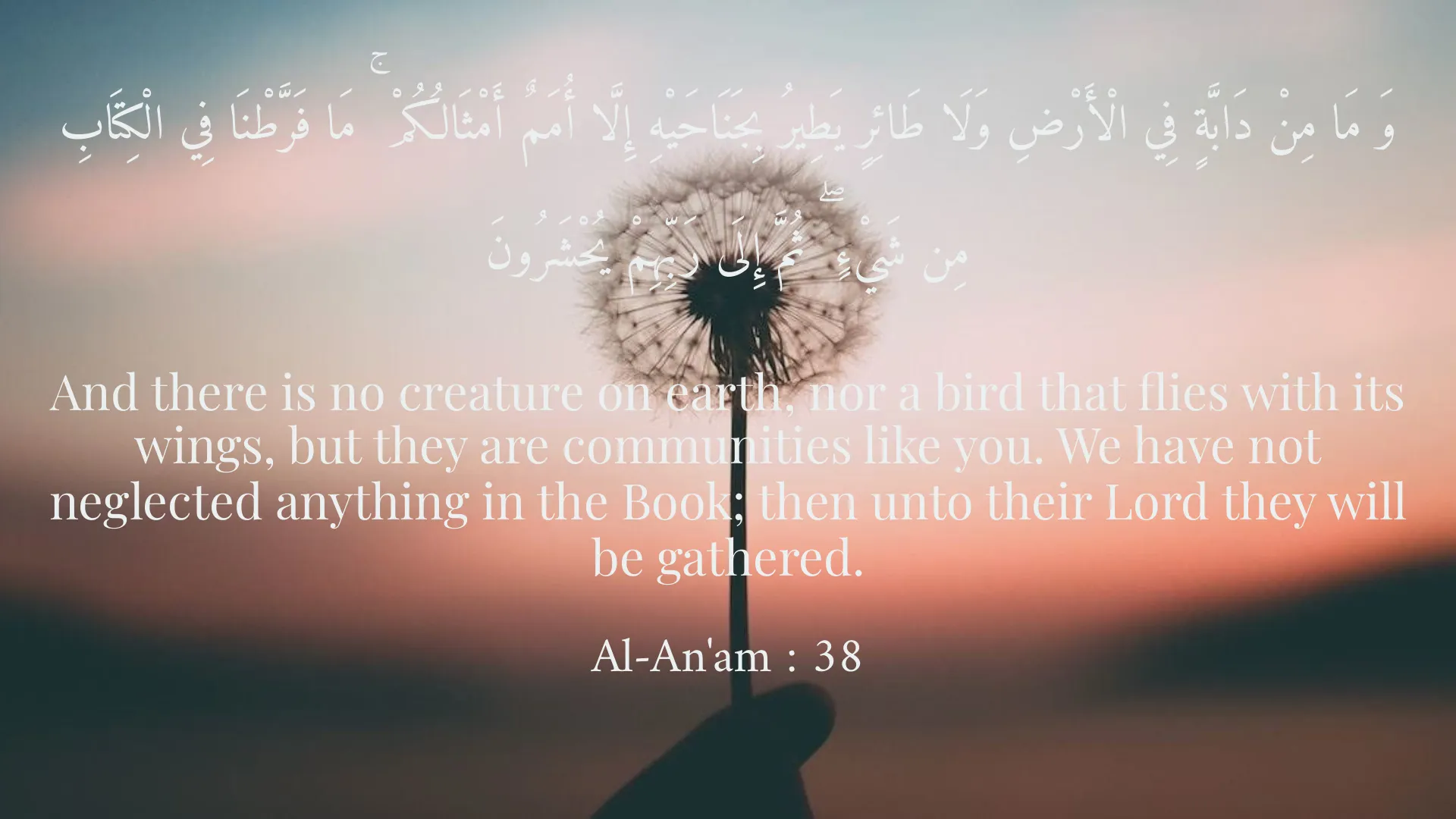
وَ مَا مِنْ دَابَّةٍ فِي الْأَرْضِ وَلَا طَائِرٍ يَطِيرُ بِجَنَاحَيْهِ إِلَّا أُمَمٌ أَمْثَالُكُمْ ۚ مَا فَرَّطْنَا فِي الْكِتَابِ مِن شَيْءٍ ۖ ثُمَّ إِلَى رَبِّهِمْ يُحْشَرُونَ
And there is no creature on earth, nor a bird that flies with its wings, but they are communities like you. We have not neglected anything in the Book; then unto their Lord they will be gathered.
Al-An'am : 38
وَ الْخَيْلَ وَ الْبِغَالَ وَ الْحَمِيرَ لِتَرْكَبُوهَا وَ زِينَةً ۚ وَ يَخْلُقُ مَا لا تَعْلَمُونَ
And horses, and mules, and donkeys for you to ride and as adornment. And He creates what you do not know.
An-Nahl : 8
وَ إِنَّ لَكُمْ فِي الْأَنْعامِ لَعِبْرَةً ۖ نُسْقِيكُمْ مِّمَّا فِي بُطُونِه مِنْ بَيْنِ فَرزٍ وَ دَمٍ ۚ خَالِصًۭا لِّلشَّارِبِينَ
And indeed, for you in the animals is a lesson. We give you drink from that which is in their bellies, from between excretion and blood, pure milk for those who drink.
Al-Mu'minun : 21
Short Story
One day, a man went to the market to buy food for his family. On his way, he saw a stray cat. With kindness, he approached the cat and bought food for it. He thought to himself that he should show love to this voiceless creature. When he returned home, he felt invigorated and happy because he had not only helped his family but also brought joy to the heart of the cat.