Quranic Answer
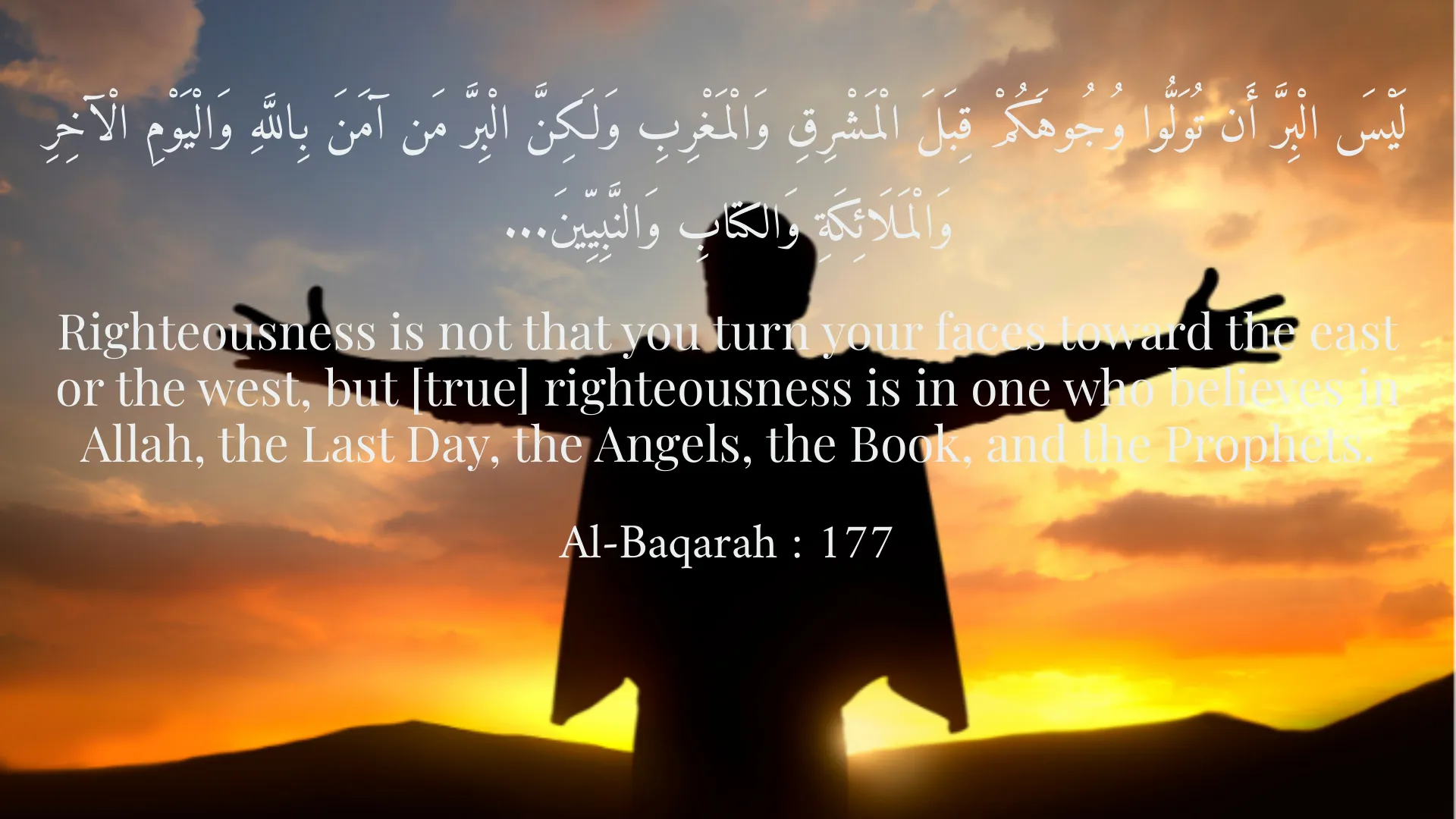
The Holy Quran, revered as the word of God by Muslims, delineates a moral and ethical framework for believers, urging them to uphold their obligations and refrain from sinful behaviors. In this context, the act of neglecting one's duties is recognized not only as a wrongdoing but also as a form of disobedience to Allah. The essence of fulfilling religious obligations is intricately tied to the overall spiritual wellbeing of an individual, as emphasized through various verses in the Quran. One of the pivotal verses that reflects the significance of executing obligatory actions is found in Surah Al-Baqarah. In verse 177, it is stated: 'Righteousness is not that you turn your faces toward the east or the west, but [true] righteousness is in one who believes in Allah, the Last Day, the Angels, the Book, and the Prophets.' This profound statement outlines that the essence of righteousness transcends mere religious rituals or directional prayers; it emphasizes a holistic approach to faith. To be genuinely righteous is to cultivate strong belief in Allah and the fundamentals of Islam, which includes a commitment to obligatory deeds. One pivotal obligation that is highlighted in the Quran is the act of giving charity, which aligns closely with the expectation of believers to act righteously. Charity, or Zakat, is not merely a financial obligation; it symbolizes a spiritual exercise that fosters altruism, empathy, and community cohesion. By performing such actions, individuals do not just comply with divine commandments, but they also actively contribute to the betterment of society. The ethos of helping others in need encapsulates the social responsibility that accompanies being a believer. Thus, neglecting such fundamental obligations can indicate a deviation from the true essence of Islamic principles. Furthermore, in Surah An-Nisa, verse 31, Allah assures believers that: 'And if you avoid what you are forbidden, We will remove from you your misdeeds.' This verse encapsulates the relationship between sin avoidance and the mercy of Allah. It serves as a reminder that adhering to divine commandments and refraining from major sins can lead to forgiveness for smaller transgressions. This divine promise of mercy underscores the importance of striving towards moral rectitude and spiritual growth. It reinforces the fact that while human beings are fallible, there is always an avenue for redemption through sincere repentance and genuine efforts to honor divine guidelines. Reflecting on the consequences of neglecting obligations is paramount, as such actions can yield serious ramifications in both this worldly life and the hereafter. In the worldly context, neglecting one's basic duties can lead to a disruption of social order and personal relationships. An individual who fails to fulfill obligations may experience a sense of spiritual emptiness, guilt, and disconnection from the community. This detachment can also ripple through familial relationships, undermining the bonds that tie individuals together. On a broader scale, the neglect of obligations may contribute to societal decay, where the values of community service and mutual responsibility are overshadowed by self-interest and apathy. In the hereafter, the stakes are even higher. The Quran warns that those who neglect their obligations and choose to engage in sinful behavior may face divine consequences. The Day of Judgment, a prominent theme in Islamic teachings, emphasizes accountability for one's deeds. Believers will be held responsible for how they spent their lives, whether they honored their commitments, and if they sought to live righteously. The Quran urges individuals to take their devotional duties seriously, as these actions ultimately shape one's character and trajectory in the afterlife. The moral imperative of fulfilling obligations extends beyond the individual, as it significantly impacts the community as a whole. In line with Islamic teachings, a society thrives when its members actively engage in their spiritual and social responsibilities. By promoting a culture of accountability, empathy, and support, believers significantly contribute to the establishment of a just, compassionate, and united community. Therefore, neglecting obligations can disrupt this harmony, leading to further divisions and misunderstandings among individuals. The Quran presents a clear narrative regarding the importance of obligations and the repercussions of neglecting them. This theological stance reveals the profound relationship between faith and practice, portraying a tapestry of interconnections that guide believers toward a life marked by piety and purpose. The Quranic admonitions serve as both a warning and a guide, encouraging individuals to seek proximity to Allah through the scrupulous observance of obligations and the avoidance of sins. Each act of worship and adherence contributes not only to individual spiritual fulfillment but also to collective wellbeing. In conclusion, avoiding the neglect of obligations and striving to cultivate a deep relationship with Allah is of paramount significance. The Quran consistently illustrates that fulfilling one’s duties is not merely an expectation but a pathway to personal and communal fulfillment. By embracing these teachings, believers can navigate their lives with a sense of purpose, compassion, and commitment to the values espoused by Islam. Ultimately, the quest for righteousness and obedience to divine commandments is a lifelong journey filled with opportunities for growth, empathy, and societal contribution.
Related Verses
لَيْسَ الْبِرَّ أَن تُوَلُّوا وُجُوهَكُمْ قِبَلَ الْمَشْرِقِ وَالْمَغْرِبِ وَلَكِنَّ الْبِرَّ مَن آمَنَ بِاللَّهِ وَالْيَوْمِ الْآخِرِ وَالْمَلَائِكَةِ وَالكتابِ وَالنَّبِيِّينَ...
Righteousness is not that you turn your faces toward the east or the west, but [true] righteousness is in one who believes in Allah, the Last Day, the Angels, the Book, and the Prophets.
Al-Baqarah : 177
وَإِن تَجْتَنِبُوا كَبَائِرَ مَا تُنهَوْنَ عَنْهُ نُكَفِّرْ عَنكُم سَيِّئَاتِكُمْ...
And if you avoid what you are forbidden, We will remove from you your misdeeds.
An-Nisa : 31
Short Story
One day, a young man named Ali was reflecting on his life and remembered the verses of the Quran. He realized that neglecting his obligations not only distanced him from God's mercy but also had negative impacts on his life. From that moment on, Ali promised himself that he would never neglect his obligations and strive to get closer to Allah every day.