Quranic Answer
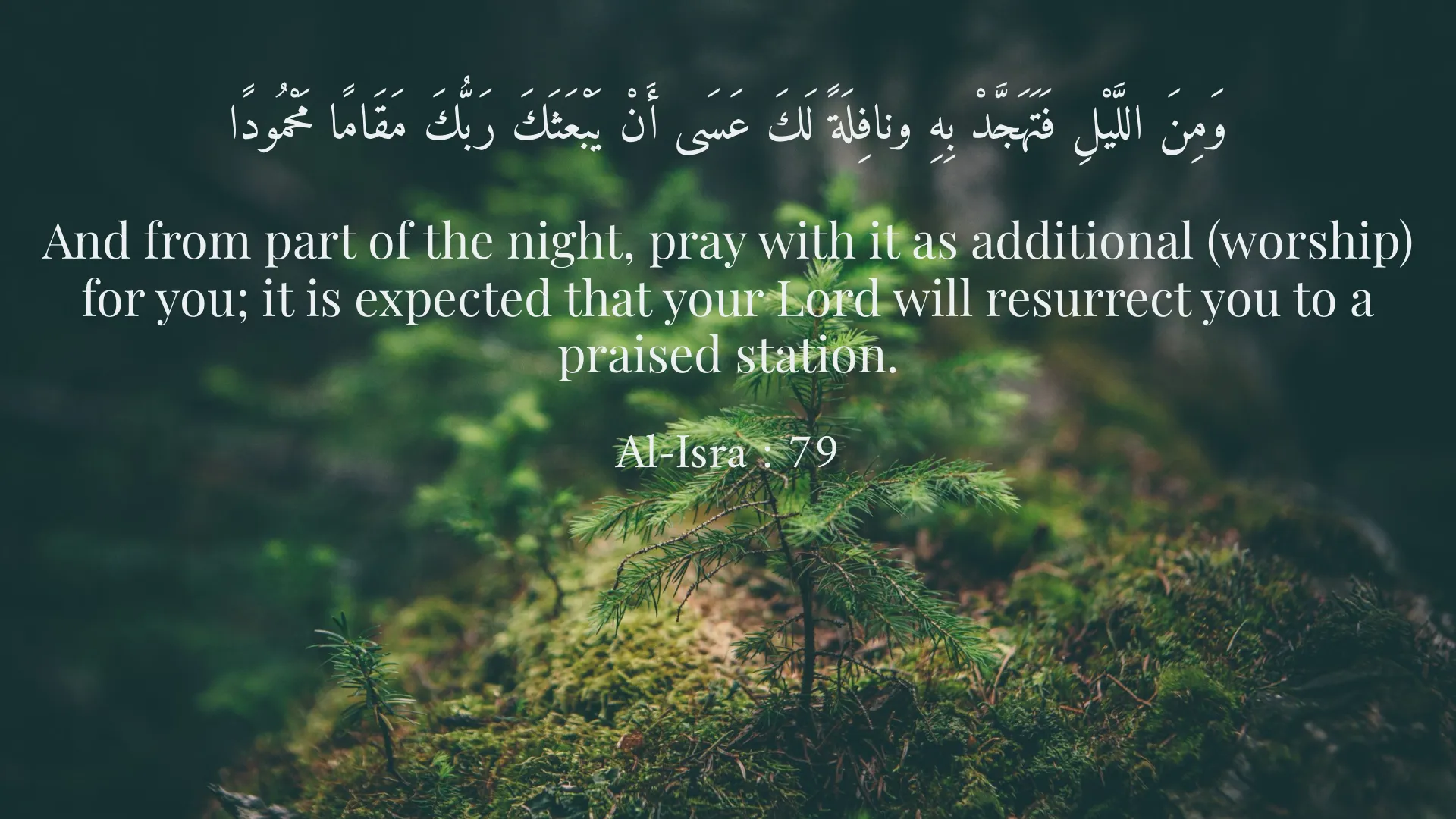
Night prayer, often referred to as Tahajjud or Qiyam al-Layl in Islamic tradition, represents a profound aspect of worship that resonates deeply among believers. Though it is not explicitly named in the Holy Quran, its significance is abundantly addressed through various verses that underscore its virtues. This article seeks to expand on the practice of night prayer, exploring its benefits, spiritual significance, and the sublime connection it fosters between the believer and Allah. The concept of night prayer is prominently highlighted in Surah Al-Isra (17:79), where Allah instructs, 'And from part of the night, pray with it as additional (worship) for you; it is expected that your Lord will resurrect you to a praised station.' This divine command signals the importance of dedicating time for prayer during the tranquil hours of the night, suggesting that such acts of devotion are not mere rituals but rather profound engagements with the Creator. One pivotal aspect of night prayers is the solitude that this time provides. As darkness envelops the surroundings, believers find themselves in a serene environment conducive to reflection and supplication. In such moments, free from the distractions of the daytime, one can engage in a heartfelt dialogue with Allah. This intimate setting allows individuals to express their innermost thoughts, seek forgiveness, and implore for mercy and guidance. Scholars have long emphasized that night prayer is an opportunity to draw closer to Allah, as stated in various Hadith (sayings of the Prophet Muhammad) that highlight the advantages of Tahajjud. Additionally, Surah Adh-Dhariyat (51:17-18) provides insight into the lifestyle of devout believers: 'They used to sleep but little at night, and in the hours before dawn, they would seek forgiveness.' This verse indicates that the practice of night prayer is hallmark of the faithful, serving as a spiritual endeavor that nourishes the soul. The phrase 'before dawn' illustrates the timing of such prayers, which occurs in the latter part of the night, a time when Allah’s mercy is said to be abundant. Night prayers also serve as a remarkable tool for spiritual growth. Engaging in these acts of worship allows individuals to cultivate a deep sense of consciousness and awareness of Allah. The idea that worship at night is especially cherished is reiterated in various prophetic traditions. For instance, the Prophet Muhammad (peace be upon him) stated, 'The best prayer after the obligatory prayers is the prayer at night.' This saying underscores the elevated status granted to night prayers and emphasizes their critical role in achieving personal and spiritual transcendence. Moreover, these prayers foster a sense of unity and community among believers. While Tahajjud can be performed individually, congregational prayers at night, such as Taraweeh during Ramadan, create strong bonds among Muslims. These collective acts of worship resonate deeply, bringing people together in a shared pursuit of spiritual elevation, thus reinforcing communal ties. Furthermore, scientific studies have begun to explore the benefits of early morning worship and late-night prayer. The tranquility of the night often leads to reduced stress and anxiety, promoting mental well-being. Engaging in spiritual practices such as night prayer has been correlated with positive psychological outcomes, helping individuals feel a heightened sense of purpose and fulfillment. The reflective nature of this hour encourages mindfulness, allowing practitioners to engage in a holistic approach to their health that encompasses both spiritual and mental wellness. The rewards associated with night prayer extend beyond the immediate benefits experienced during the act itself. One’s commitment to night worship is reflected in Allah’s promises of reward, as highlighted in the aforementioned verses. Night prayers are not merely duty; they embody voluntary acts that can lead to significant spiritual decorations in the Hereafter. Believers find solace in the knowledge that such persistence in prayer during the night is a source of immense blessings and mercy, not only in this life but also in the hereafter. Furthermore, the nature of night prayer allows for personalization. Every individual can tailor their prayers to meet their specific needs, desires, and circumstances. Whether it be seeking forgiveness, praying for loved ones, or simply expressing gratitude, the night prayers can be a canvas for personal supplication, highlighting the distinction and connection each believer has with their Lord. In conclusion, while the term 'night prayer' may not be explicitly found in the Quran, the encouragement and virtues surrounding it resonate powerfully within Islamic teachings. Such acts are more than rituals; they are essential threads woven into the fabric of a believer's spiritual journey that emphasizes the importance of dedication, reflection, and connection. By engaging in night prayers, Muslims are not only following divine instruction but also actively participating in a time-honored spiritual tradition that seeks to enrich their relationship with Allah. Ultimately, night prayers stand as a testament to faith, proving to be a source of solace, growth, and divine favor in the lives of those who embrace this sacred practice.
Related Verses
وَمِنَ اللَّيْلِ فَتَهَجَّدْ بِهِ ونافِلَةً لَكَ عَسَى أَنْ يَبْعَثَكَ رَبُّكَ مَقَامًا مَحْمُودًا
And from part of the night, pray with it as additional (worship) for you; it is expected that your Lord will resurrect you to a praised station.
Al-Isra : 79
إِنَّهُمْ كَانُوا قَلِيلًا مِّنَ اللَّيْلِ مَا يَهْجَعُونَ
Indeed, they used to sleep little of the night.
Adh-Dhariyat : 17
وَبِالْأَسْحَارِ هُمْ يَسْتَغْفِرُونَ
And during the hours before dawn, they would ask forgiveness.
Adh-Dhariyat : 18
Short Story
One day, a person named Reza was reflecting on his nights and realized that nighttime was a perfect opportunity for contemplation and prayer. He decided to dedicate a few minutes of his night to night prayer to foster a better understanding of Allah and himself. After some time, Reza noticed that his spirit had grown and he had found greater inner peace. He was very pleased with this experience and continued it.