Quranic Answer
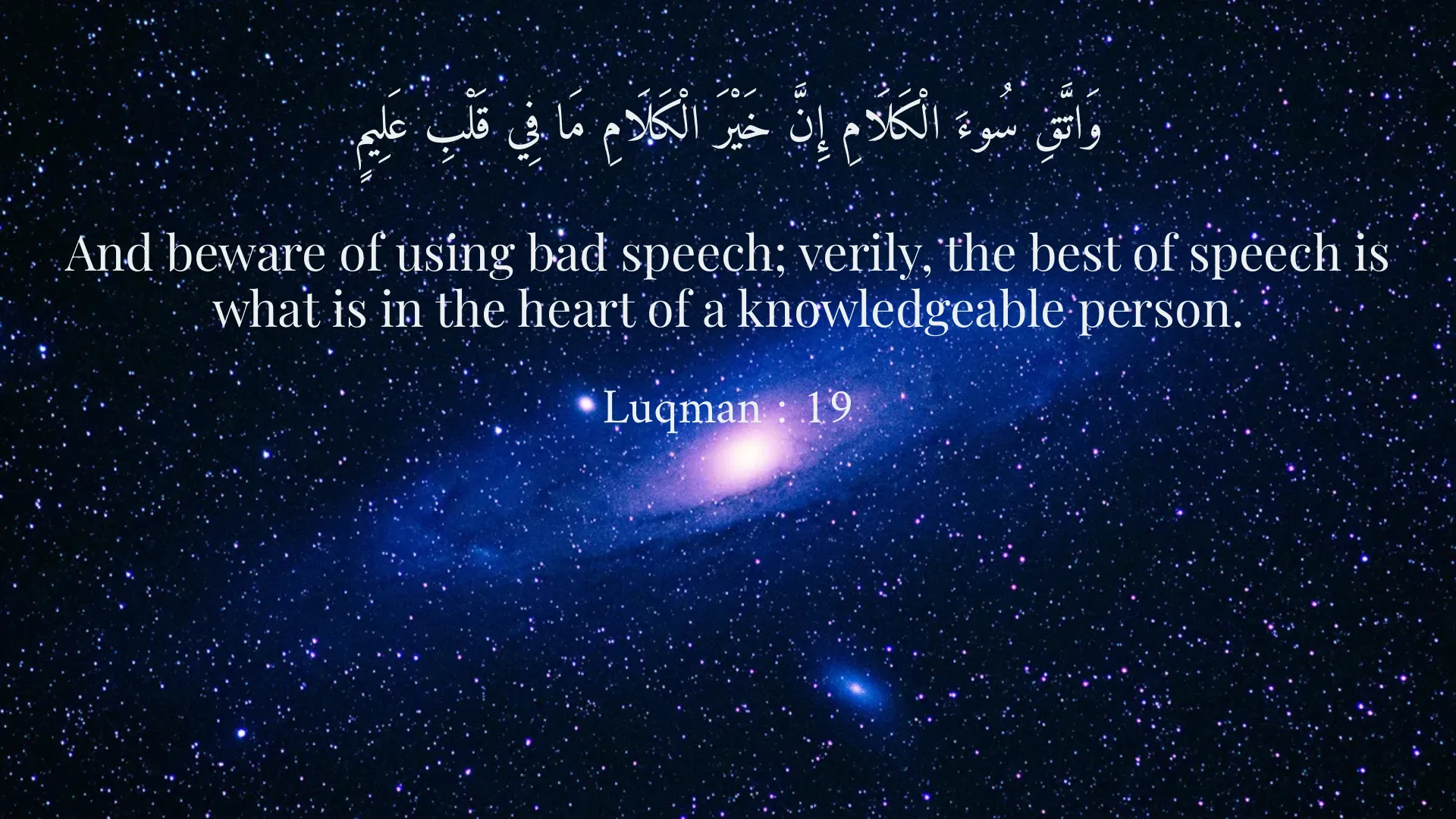
In the Holy Quran, the importance of kind speech and politeness in communication is greatly emphasized, serving as a guiding principle for interpersonal interactions. This profound message resonates with the universal notion that how we communicate plays a crucial role in shaping relationships and building communities. Allah’s words serve as a reminder that while conveying messages, especially difficult or bitter truths, the manner in which we express ourselves reflects not only our character but also our adherence to ethical and moral standards. One of the striking verses that highlight the significance of polite speech is found in Surah Luqman, verse 19: 'And beware of using bad speech; verily, the best of speech is what is in the heart of a knowledgeable person.' This verse emphasizes that the true essence of communication transcends mere words; it involves the intention and knowledge behind those words. A person who possesses knowledge and wisdom should strive to express themselves in a way that is gracious and respectful. The Quran, therefore, advocates for a form of communication where bad speech is discouraged, and instead, eloquence and understanding take precedence. The idea that the 'best of speech' originates from a place of knowledge underscores a deeper principle; it suggests that effective communication is rooted in understanding and compassion. Those who engage in discussions should always be mindful not to let their emotions cloud their judgment, leading them to speak harshly or disrespectfully. Moreover, in Surah Al-Imran, verse 159, God commands His Messenger, Prophet Muhammad (peace be upon him), to treat people with kindness and politeness: 'And by mercy from Allah, you were lenient with them.' This directive is crucial in establishing how leaders and individuals of influence conduct themselves when interacting with others. The significance of leniency in communication is paramount, particularly in challenging situations where disagreements or misunderstandings may arise. This verse serves as a poignant reminder that even in the face of adversity, a gentle approach can foster understanding and resolve conflicts more effectively than aggression or harshness. The Prophet Muhammad (peace be upon him) is known for his exemplary conduct, and his ability to remain polite and kind even in the most trying circumstances serves as a model for all generations. The ethical implications of politeness extend beyond mere social niceties; they are rooted in the philosophy of respect for others. Extension of courtesy and kindness in our language can contribute significantly to peaceful coexistence and harmony within diverse communities. When one's communication style prioritizes compassion and understanding, it fosters a conducive environment for dialogue and collaboration. In contrast, harsh words and rudeness can create unnecessary barriers and escalate tensions, leading to divisions and discord among individuals or groups. In today's fast-paced, often contentious world, where misunderstandings can easily escalate into conflicts, the principle of kind speech and politeness is more relevant than ever. Modern communication channels, particularly social media, have blurred the lines of civility. People often express themselves impulsively without considering the impact of their words. The quickness with which messages can be sent does not always allow for the thoughtful reflection implicit in courteous communication. This cultural shift toward informality can sometimes lead to a degradation of respectful discourse, particularly when addressing sensitive issues. Herein lies the importance of revisiting the Quranic principles of communication to mold a society that values politeness and constructive dialogue. Furthermore, the Quran strongly underscores the idea that truthful discourse should not come at the expense of kindness. There may be circumstances where unpleasant truths need to be articulated; however, the delivery of such messages ought to be laced with gentleness. The emphasis on addressing bitter truths with tact and dignity aligns with the core Islamic belief in treating others with respect, regardless of the situation. A phrase often used in various cultures is, 'It’s not what you say, but how you say it.' This is particularly true in the Islamic context; the manner of expressing difficult truths can significantly influence receptivity and understanding among listeners. To illustrate this in practical terms, consider the responsibility that comes with giving advice or criticism. In many instances, even constructive criticism can lead to defensiveness if delivered without proper care. Muslim scholars, in their teachings, have consistently highlighted the art of advising others with a heart full of compassion and empathy. This approach not only conveys respect for the individual receiving the advice but also nurtures a culture of open communication where individuals feel valued and understood. Such kindness in addressing even the most difficult subjects can build stronger relationships, encourage personal growth, and promote a community rooted in mutual respect and support. It is also pertinent to note that politeness in language is not just a cultural artifact but is ingrained in the social fabric of Islamic teachings. The value placed on courteous communication reflects a person's noble character and is an embodiment of Islamic and ethical principles. Muslims are encouraged to emulate the character of the Prophet Muhammad (peace be upon him), who was known for his gentle language and exquisite manners. His approach to communication serves as a timeless guide for all believers, emphasizing that regardless of personal frustrations or disagreements, maintaining a respectful and kind demeanor is essential. In conclusion, the Holy Quran places a significant emphasis on the value of kind speech and politeness in communication. The verses discussed illustrate how essential it is for individuals to practice courteousness, especially when addressing challenging or bitter truths. The teachings urge followers to adhere to principles of kindness and respect, reinforcing the idea that effective communication is an integral part of creating a harmonious society. Thus, it can be concluded that while expressing difficult truths may be necessary at times, finding ways to convey them with grace and courtesy can promote understanding, foster respect, and cultivate meaningful relationships. Embracing this principle of communication rooted in the Quran not only aligns individuals with ethical standards but also serves to elevate the overall quality of discourse in society.
Related Verses
وَاتَّقِ سُوءَ الْكَلَامِ إِنَّ خَيْرَ الْكَلَامِ مَا فِي قَلْبِ عَلِيمٍ
And beware of using bad speech; verily, the best of speech is what is in the heart of a knowledgeable person.
Luqman : 19
فَبِمَا رَحْمَةٍ مِّنَ اللَّهِ لِنتَ لَهُمْ
And by mercy from Allah, you were lenient with them.
Al-Imran : 159
Short Story
One day in a village, there was a man who always spoke bitter truths to others. He thought that telling the truth at any cost was right. One day, a child approached him and asked why he always spoke harshly. The man realized that his lack of politeness drove people away. He decided to try and express the truths gently and politely, and in this way, his relationships improved.