Quranic Answer
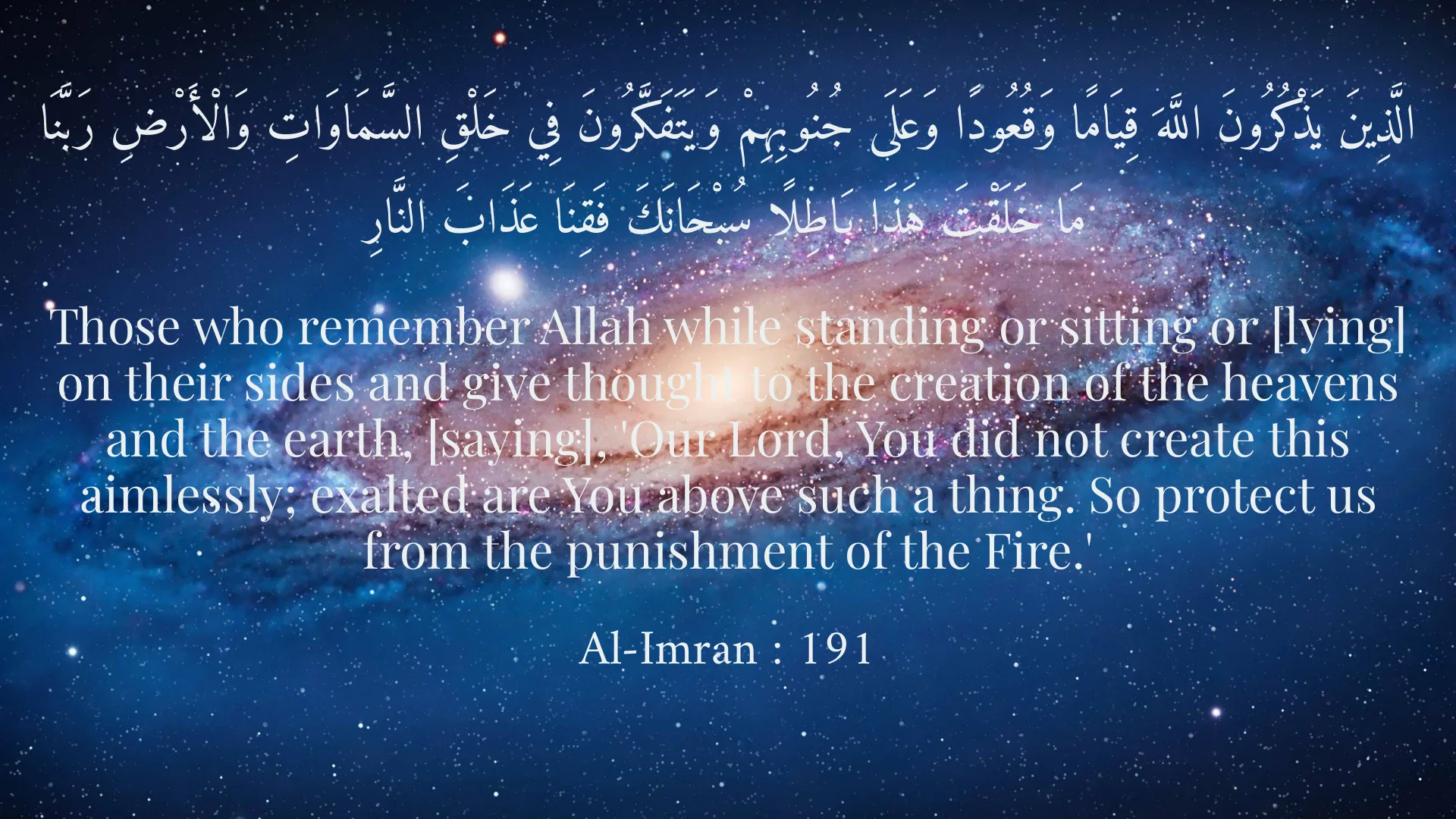
In the Holy Quran, reflection and contemplation on the creation is introduced as a significant and valuable act of worship that connects individuals to the divine. This notion transcends mere observation; it evokes a deeper understanding and reverence for the Creator and the intricate designs of the universe surrounding us. The Quran encourages believers to engage in this reflective practice as a pathway to realizing the greatness of Allah, fostering spiritual growth, and cultivating humility in the hearts of individuals. One of the pivotal verses that underscore the importance of contemplation is found in Surah Al-Imran, verse 191. The verse reads: 'Who remember Allah while standing or sitting or [lying] on their sides and give thought to the creation of the heavens and the earth, [saying], "Our Lord, You did not create this aimlessly; exalted are You above such a thing. So protect us from the punishment of the Fire."' This verse is profound in its breadth, calling upon believers to reflect on creation in multiple postures—whether they are standing, sitting, or lying down. The emphasis on diverse positions signifies that contemplation should be a continuous endeavor, embedded in the daily lives of individuals. It is an invitation to pause amidst the chaos of life and engage in a moment of divine remembrance, creating a bridge between the mundane and the sacred. By doing so, humans are encouraged to contemplate the awe-inspiring nature of the heavens and the earth. Moreover, this contemplation serves as a means of spiritual elevation. The verse asserts that Allah’s creations are not arbitrary or purposeless; rather, they are manifestations of His wisdom and design. In recognizing this purpose, believers cultivate an understanding of their own existence, leading them to humble themselves before Allah, acknowledging their limitations and needs. Reflection on creation not only leads to an appreciation for the universe but also cultivates a sense of accountability and awareness of one's actions in relation to the divine. Furthermore, Surah Al-Hashr, verse 24 exemplifies this directive through the advertisement of Allah's attributes. The verse reads: 'He is Allah, the Creator, the Inventor, the Fashioner; to Him belong the best names. Whatever is in the heavens and the earth is exalting Him. And He is the Exalted in Might, the Wise.' Through this verse, believers are invited to reflect upon the very essence of Allah, His attributes, and His dominion over creation. Contemplating Allah’s names and attributes incites a profound reflection that reveals not only His greatness but also the beauty and intricacy of creation. Each name, whether it denotes mercy, justice, wisdom, or power, complements the understanding of the natural world and encourages believers to reflect on their own character and behavior. True worship and acknowledgment of the divine are rooted in recognizing these attributes, aligning one's life with the moral and ethical standards that Allah has set forth. The act of contemplating creation and God’s attributes is not an isolated intellectual endeavor; it is a multi-faceted approach that fosters spiritual and intellectual awakening. As individuals engage in this reflective process, they become increasingly aware of their position in the vast web of existence. This heightened awareness translates into reliance and trust in God, as they come to understand that everything in creation is interconnected and ultimately rooted in a common Creator. Furthermore, reflection on the natural world can lead to a re-evaluation of one’s values and priorities. In a fast-paced world driven by materialism and instant gratification, moments of contemplation provide a necessary pause, allowing individuals to reconnect with the divine and prioritize the spiritual aspects of life. It serves as a reminder that, amidst temporal distractions, the ultimate purpose lies in one’s relationship with Allah and striving for His pleasure. In addition, Islamic teachings emphasize that the cognitive act of contemplation is a form of worship that deserves recognition and reward. This reflects the importance that Islam places on thought and reasoning as integral to faith. Believers are encouraged to question, ponder, and engage with their beliefs through personal reflection. This engagement stimulates the quest for knowledge, leading to a deeper understanding of the world and the divine. Such contemplation can have a transformative impact on the individual, shaping their character and ethics. When one recognizes the greatness of Allah through creation, it instills a sense of gratitude and humility that permeates their actions and interactions with others. This divine connection fosters compassion, empathy, and a commitment to social justice, as the reflective individual sees themselves as part of a larger community of creation under the sovereignty of Allah. Moreover, this approach to contemplation is supported by the teachings of many Islamic scholars and thinkers throughout history. Scholars such as Ibn al-Qayyim and Al-Ghazali have elaborated on the significance of reflection as a means of attaining wisdom and closeness to God. Their insights underscore the necessity of integrating contemplation into daily life to achieve spiritual fulfillment and enlightenment. In conclusion, reflection on creation is not merely an intellectual exercise; it is a profound and transformative act of worship that brings individuals closer to Allah. The Holy Quran encourages this practice, highlighting its importance throughout its verses. By contemplating the natural world and the attributes of the Creator, believers can develop a deeper understanding of their purpose, cultivate humility, and foster a sense of connection to the divine. As individuals embark on this journey of reflection and contemplation, they will find spiritual and intellectual awakening, leading to a more meaningful and fulfilling existence. Indeed, the act of contemplation not only enriches the soul but elevates one’s entire being, allowing individuals to navigate life with grace and purpose under the guidance of their Creator.
Related Verses
الَّذِينَ يَذْكُرُونَ اللَّهَ قِيَامًا وَقُعُودًا وَعَلَى جُنُوبِهِمْ وَيَتَفَكَّرُونَ فِي خَلْقِ السَّمَاوَاتِ وَالْأَرْضِ رَبَّنَا مَا خَلَقْتَ هَذَا بَاطِلًا سُبْحَانَكَ فَقِنَا عَذَابَ النَّارِ
Those who remember Allah while standing or sitting or [lying] on their sides and give thought to the creation of the heavens and the earth, [saying], 'Our Lord, You did not create this aimlessly; exalted are You above such a thing. So protect us from the punishment of the Fire.'
Al-Imran : 191
هُوَ اللَّهُ الْخَالِقُ الْبَارِئُ الْمُصَوِّرُ لَهُ الْأَسْمَاءُ الْحُسْنَى
He is Allah, the Creator, the Inventor, the Fashioner. To Him belong the best names.
Al-Hashr : 24
Short Story
One day, a wise man was sitting at a table, contemplating creation and the laws governing it. Suddenly, he concluded that everything that exists is a testament to God’s power and wisdom. He thought to himself that with each reflection on creation, he would get closer to understanding God more. With this thought, his heart felt a greater sense of peace, and he decided to be an advocate for love toward God.