Quranic Answer
Remembering death is a profound and philosophical topic that holds special significance for everyone, including young people. In various cultures and philosophies, death is not merely seen as an end; instead, it is often regarded as a vital aspect of life that can offer deeper perspectives on our existence and purpose. In the Islamic context, the remembrance of death is profoundly emphasized, and this serves as a powerful reminder of life's transient nature and the importance of living in accordance with spiritual values. The Holy Quran frequently addresses the theme of mortality and the afterlife, encouraging believers to reflect on their actions and the consequences that those actions will have in the world beyond. One particularly poignant reference can be found in Surah Al-Imran, verse 185, where it is stated: 'Every soul will taste death.' This simple yet powerful declaration unveils the universality of mortality; no one can evade it, which prompts introspection about how we choose to live our lives in the time that we have. Understanding that life is finite can inspire us to prioritize meaningful experiences and relationships, redirecting our focus away from superficial pursuits often promoted by modern society. Youth in particular, who are in the formative years of their lives, may become overwhelmed by societal pressures that emphasize material success, status, and appearance. The consciousness of death acts as a grounding force; it reminds them that worldly life is transient and that they must make proper use of their opportunities. Furthermore, the remembrance of death can promote spiritual growth by urging individuals to detach from worldly matters and focus on the moral and spiritual dimensions of life. This detachment does not imply a rejection of the world but rather an enlightened approach to living in it. Young people, in the process of forming their character and behaviors, can find motivation through the awareness of mortality, inspiring them to take their studies and life opportunities more seriously. By fostering a greater sense of responsibility, the recollection of death can provoke thoughts about the impacts of their choices, shaping their ethical understanding and sense of duty. Moreover, the Quran assures believers of life after death. In Surah Yaseen, verse 78, Allah emphasizes His omnipotence in creating humans and reviving them after death, signifying that life is part of a continuous cycle. This perspective offers a sense of hope and comfort, alleviating fears associated with the end of life. Instead of viewing death as the termination of existence, it is seen as a transition to a different phase of life. This can significantly alter how young individuals engage with their present lives, recognizing that their actions here will resonate in the afterlife. In practical terms, encouraging young people to remember death can instill values such as empathy, kindness, and community service. When the fleeting nature of existence is acknowledged, young individuals may be more inclined to engage in positive behaviors that contribute to the welfare of others. They may strive to cultivate genuine relationships, seek to leave a meaningful legacy, or engage in charitable deeds, understanding that these actions stem from the authentic essence of humanity rather than from societal pressure alone. Additionally, the concept of death's inevitability can also serve as a catalyst for personal growth and resilience. Accepting mortality can empower young people to cope with fears, anxieties, and uncertainties in life. It encourages them to confront challenges head-on, reminding them that no matter how daunting the situation may seem, it is temporary. In fostering resilience, the acknowledgment of death can help them approach adversity with a more balanced perspective, equipping them not only to endure but to thrive. In a broader cultural context, societies that promote the remembrance of death often experience more profound social bonds and communal support networks. This collective understanding encourages individuals to support one another in times of grief and loss, cultivating an environment where emotional vulnerability is met with compassion and solidarity. The act of remembering and discussing death can pave the way for profound societal shifts, encouraging a more reflective and accountable community. In conclusion, the remembrance of death is a vital topic that transcends age, culture, and belief systems. It has the power to remind us of life's transitory nature, fostering a sense of urgency in making the most of our time on Earth. Particularly for young individuals who are in the critical stages of growing into their identities, understanding and accepting mortality can inspire a deeper sense of responsibility, motivation, and connection to both self and others. The Quran eloquently articulates these themes, offering guidance to humanity on how a life mindful of death can lead to spiritual fulfillment and greater societal harmony. Through this lens, remembering death becomes not a source of despair, but a clarion call to live more meaningful and purpose-driven lives, ultimately enriching both our present reality and the potential of the afterlife.
Related Verses
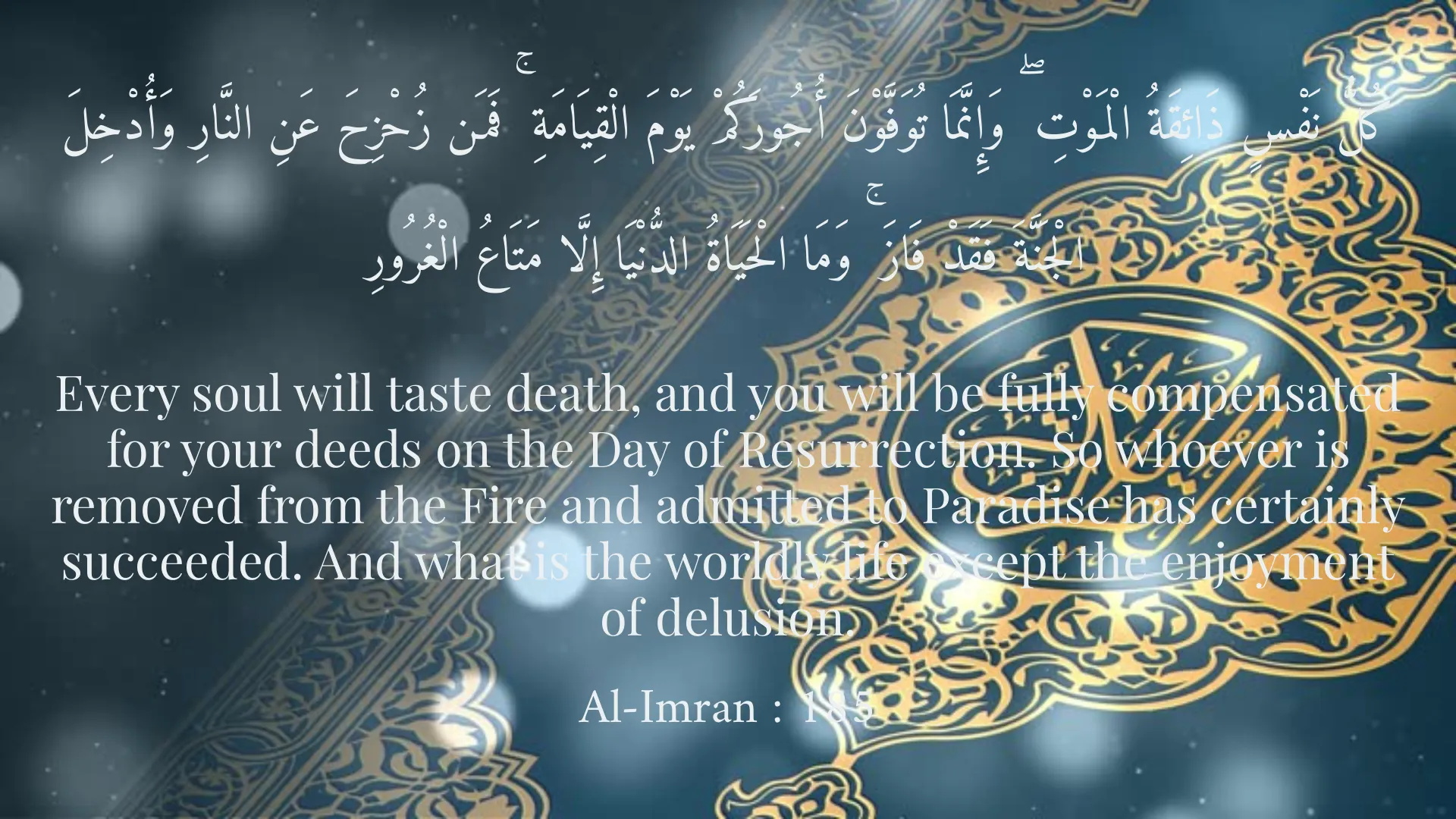
كُلُّ نَفْسٍ ذَائِقَةُ الْمَوْتِ ۖ وَإِنَّمَا تُوَفَّوْنَ أُجُورَكُمْ يَوْمَ الْقِيَامَةِ ۚ فَمَن زُحْزِحَ عَنِ النَّارِ وَأُدْخِلَ الْجَنَّةَ فَقَدْ فَازَ ۚ وَمَا الْحَيَاةُ الدُّنْيَا إِلَّا مَتَاعُ الْغُرُورِ
Every soul will taste death, and you will be fully compensated for your deeds on the Day of Resurrection. So whoever is removed from the Fire and admitted to Paradise has certainly succeeded. And what is the worldly life except the enjoyment of delusion.
Al-Imran : 185
وَضَرَبَ لَنَا مَثَلًا وَنَسِيَ خَلْقَهُ قَالَ مَن يُحْيِي الْعِظَامَ وَهِيَ رَمِيمٌ
And he presents for us an example and forgets his own creation. He says, 'Who will resurrect the bones while they are disintegrated?'
Yaseen : 78
Short Story
One day, a young man named Amir asked his teacher, 'Why do you always talk about death?' The teacher replied, 'Do not forget death, for its remembrance makes you appreciate life and make the most out of your opportunities.' After a few weeks, Amir concluded that he must take full advantage of his moments, paying attention not only to his worldly goals but also to his upbringing and behavior towards others.